A crew member was badly hurt on a large work ship on the River Thames, England, on the evening of Tuesday 20 October 2026. The crew member fell from height inside the ship and had a severe head injury. The ship sent a Mayday call on VHF radio channel 16.
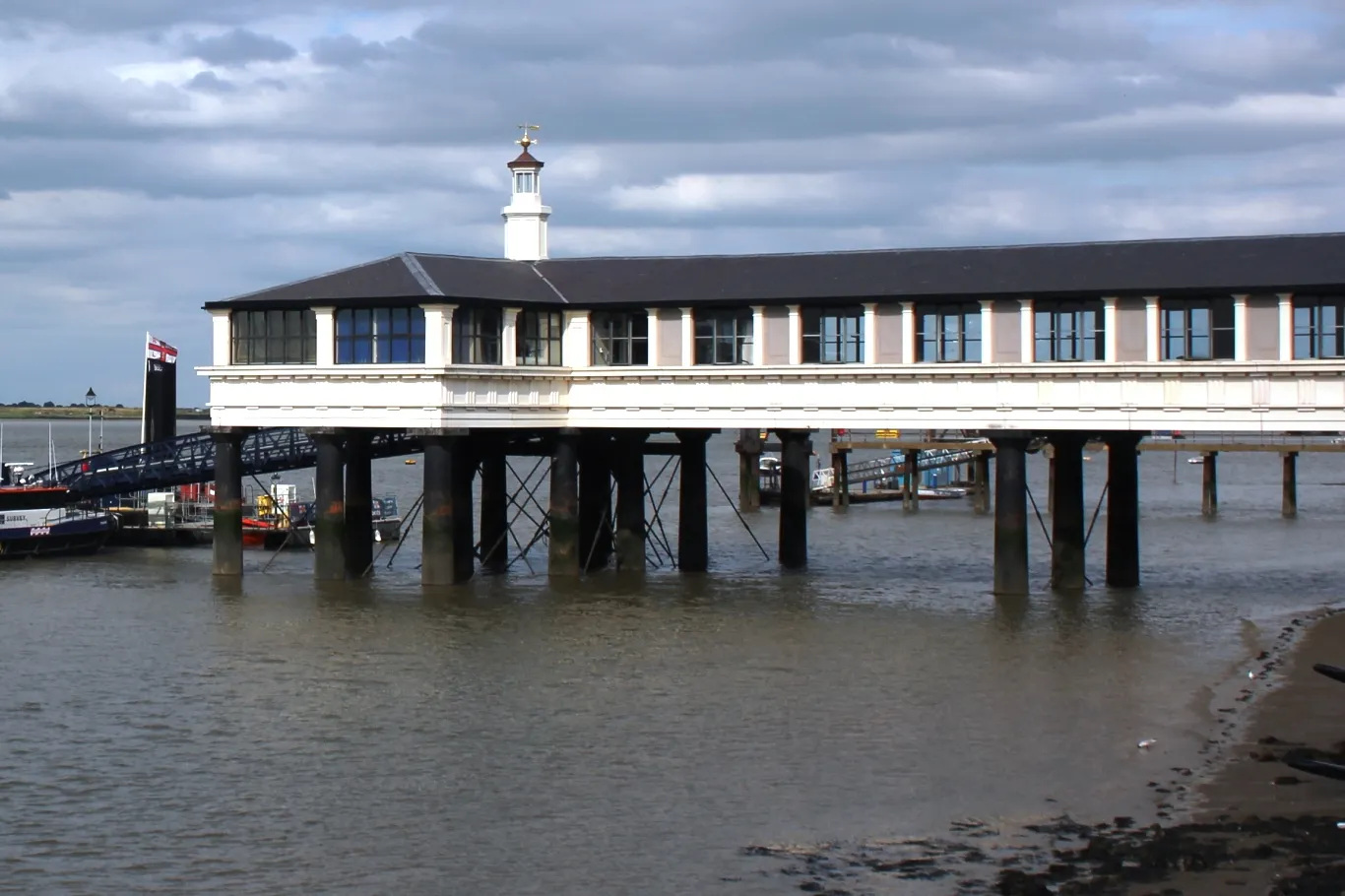
The RNLI (Royal National Lifeboat Institution), the UK's sea rescue charity, sent its Gravesend lifeboat. The lifeboat was asked to launch at 19:40 local time. It went at full speed down the river to London Gateway port, in the area called Sea Reach. The work ship was alongside a barge there.
A hard job in a small space
Two lifeboat crew members climbed on board using a pilot ladder. They carried special medical equipment. The ship's crew met them and took them to the generator room, where the injured crew member was.
The lifeboat crew checked the crew member and confirmed a serious injury. The patient needed very careful handling. The generator room was tight, with narrow spaces between bulkheads and steep stairs. The rescuers and the ship's crew talked through the safest way to bring the patient out.
To minimise further injury and reduce risk to the casualty, a multi-stage evacuation plan was agreed. - Tyler Bonham, Duty RNLI Thames Commander
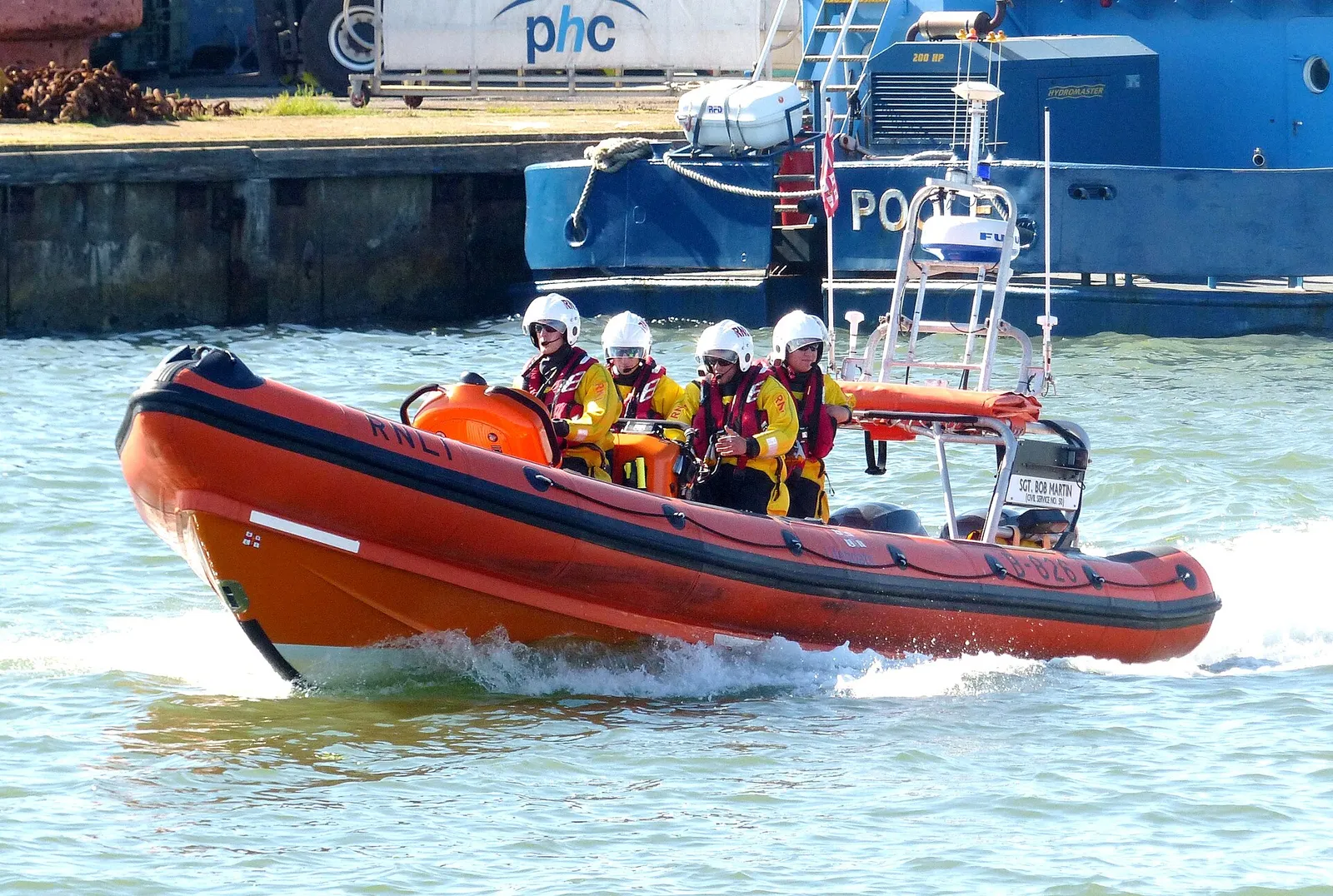
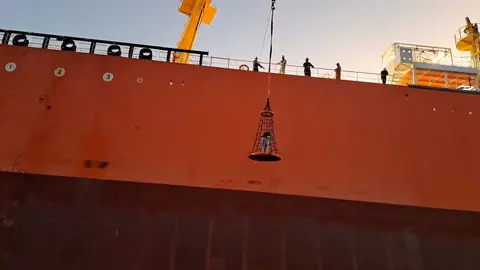
First, they helped the patient out of the generator room and up to the deck. There they secured the patient in a stretcher. Then they used the ship's own equipment to lower the stretcher onto a tug waiting alongside. The RNLI chose the tug because it was bigger and more stable than the lifeboat.
The two lifeboat crew members stayed with the patient on the tug. The tug made the short trip to a floating pontoon, where an ambulance crew and a doctor were waiting. After the handover, the lifeboat went back to its station.
The RNLI has not named the ship or the injured crew member. It has not said how the fall happened or how the patient is now.
What crews can learn from this
This rescue worked because the ship's crew and the rescuers planned it together. Every case is different, but these simple steps help any crew:
Before work at height, use a harness or guard rails, and check ladders and gratings.
Know how you would carry a stretcher out of each machinery space. Practise it in drills, not only on deck.
If someone is badly hurt, call for help early. Give the position, the injury and the number of people hurt.
Prepare a safe way on board for rescuers, such as a pilot ladder, and send a crew member to guide them.
Use the ship's cranes, davits or other lifting gear only if the crew is trained and the rescuers agree.
Write down what happened and what first aid was given. Send it ashore with the patient.
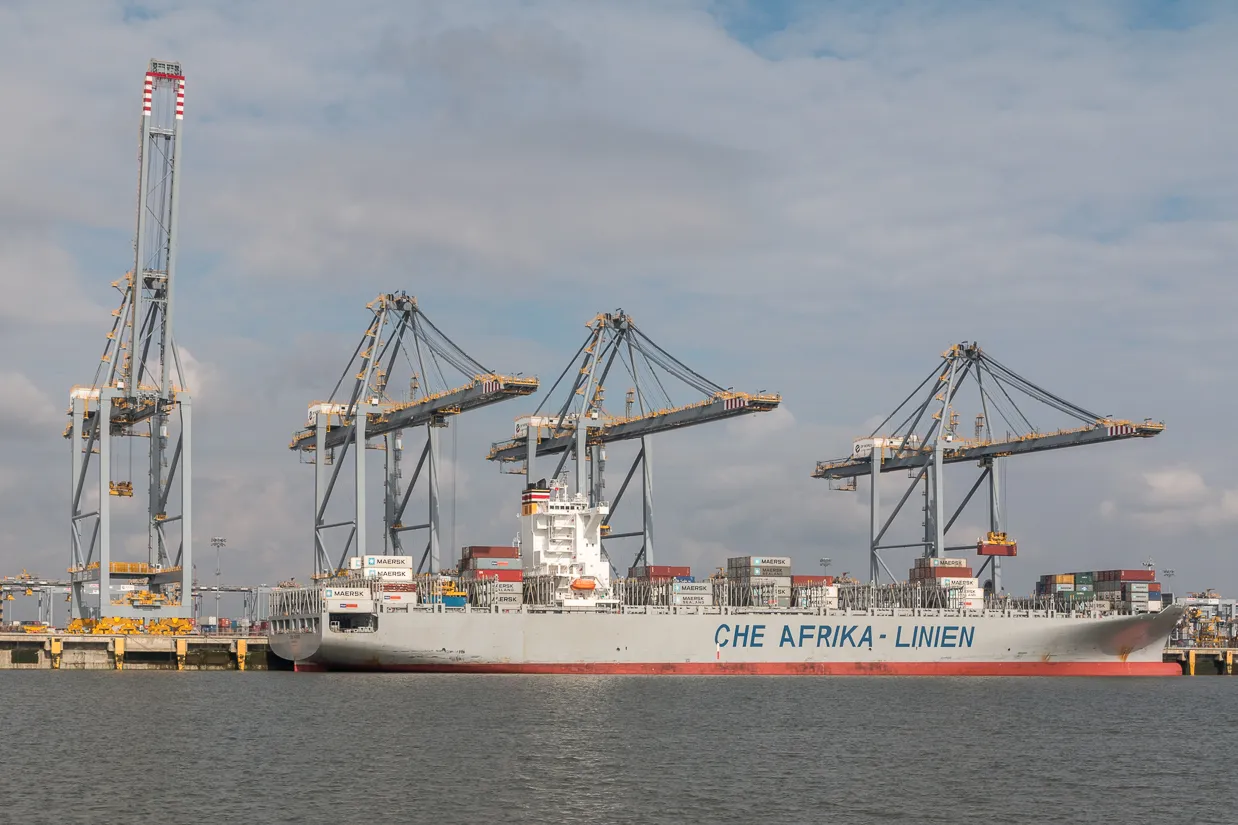
Cover photo: A container ship at London Gateway container terminal, Essex, October 2014. This is an illustrative photo, not the ship in this story. Photo: Christine Matthews/Geograph via Wikimedia Commons, CC BY-SA 2.0.
Sources: RNLI: Gravesend Lifeboat responds to Mayday following serious injury onboard ship (21 Oct 2026), News Shopper: Gravesend Lifeboat rescues worker after River Thames fall.