The Joint Maritime Information Center (JMIC) raised the security threat level for the Arabian Gulf to SUBSTANTIAL in its advisory of 18 October 2026. It said the change followed four Iranian attacks in the Gulf since 7 October, and that another attack is "a strong possibility". The Strait of Hormuz stays at SEVERE, the second-highest level on JMIC's five-step scale.
Two days earlier, IMO Secretary-General Arsenio Dominguez said IMO's advice was unchanged: ships should avoid transiting the Strait of Hormuz and trading in the region. "The situation continues to escalate," he told the Chinese news agency Xinhua in an interview at IMO headquarters in London on 16 October.
Latest incidents
JMIC listed four new incidents reported to the United Kingdom Maritime Trade Operations (UKMTO) between 16 and 18 October. On 16 October two tankers were attacked in the central Arabian Gulf off Al Jubayl, Saudi Arabia. One was struck by an unknown projectile and the other was damaged by a small boat attack. All crew were reported safe. JMIC said India's shipping minister identified the first tanker as the ST3.
On 18 October a tug was struck by two projectiles about 20 nautical miles northeast of Khor Fakkan, UAE, and one crew member was slightly injured. A day earlier a skiff fired shots at an LNG tanker in the Gulf of Aden (see our earlier report).
On 17 October Iran's Islamic Revolutionary Guard Corps (IRGC) Navy claimed that two supertankers had struck mines in the Strait of Hormuz. JMIC said there is "no substantiation to these claims". It still advises mariners to stay alert for attempted mining in and near the traffic separation scheme.
UKMTO shared the advisory on its official X account. The post below shows its first page, with the new incidents, and links to the full document.
Post on X
Loading it connects to X, which may set cookies and see your visit. See our Privacy policy.
Crowded anchorages are exposed
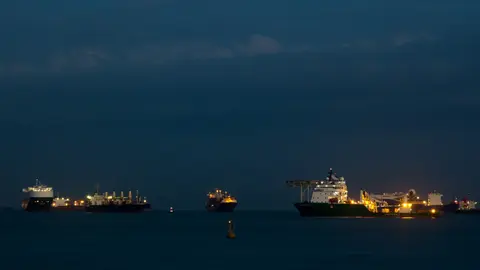
Many ships are waiting outside the strait. On 18 October JMIC counted about 217 vessels at anchor off Fujairah and Khor Fakkan, the highest number in the reporting period, and about 166 between Dubai and Ras Al Khaimah. It said the tug attack shows that ships gathered there "remain exposed to attack", even though they are outside the strait.
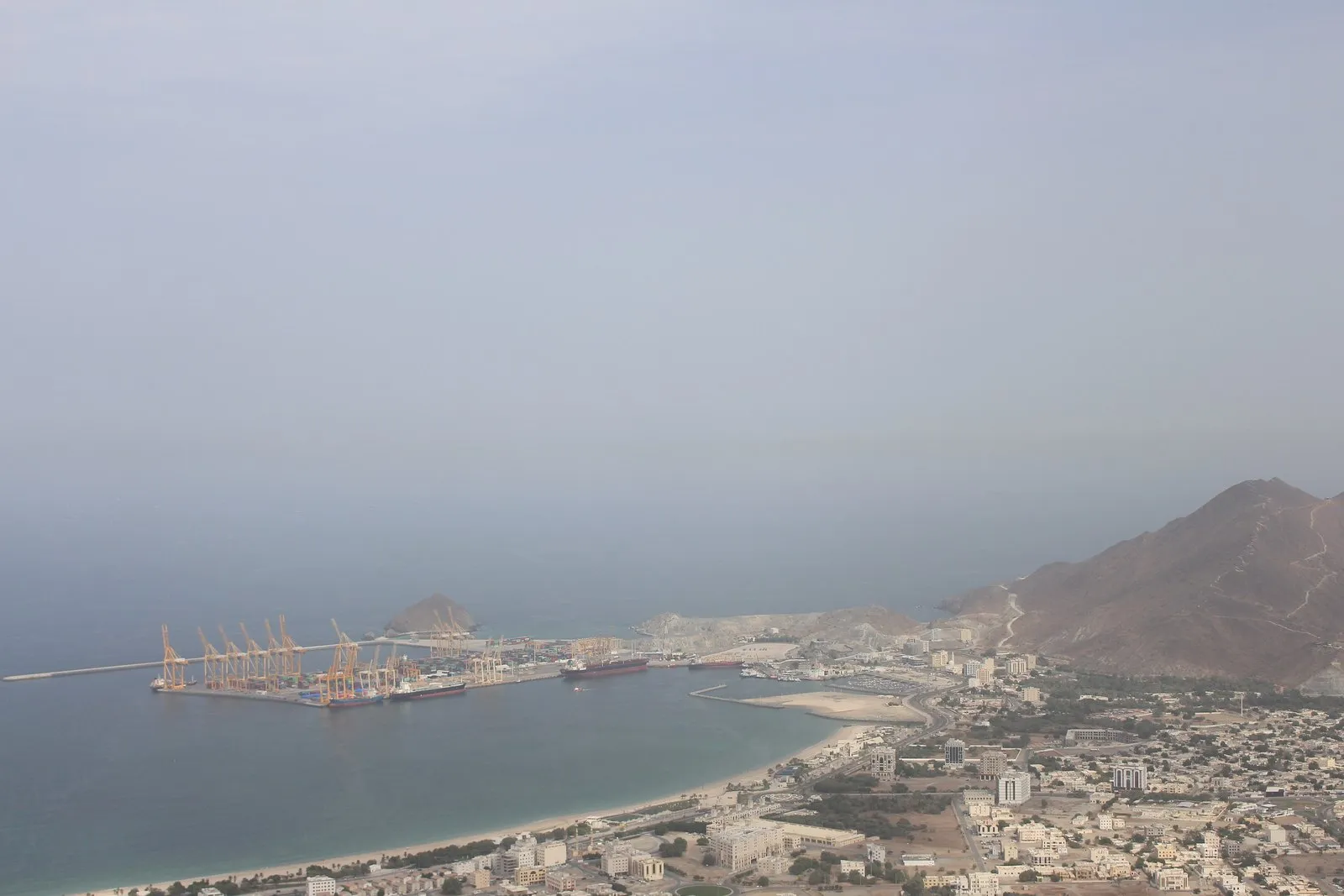
According to JMIC, ships that stay still for long periods, or keep AIS (Automatic Identification System) on while stationary, may face a higher risk of being targeted. It suggests that ships at anchor consider the following:
Keep some movement and avoid predictable patterns where practicable.
Reposition from time to time within the anchorage, subject to the master's judgement and port or vessel traffic service (VTS) coordination.
Register with UKMTO and report to it regularly, whether or not AIS is switched on.
Review AIS policy in line with company risk assessments, while staying compliant with SOLAS.
Satellite navigation (GNSS) interference remains high, and JMIC advises mariners to cross-check positions by radar and visual means.
IMO: seafarers' lives come first
Dominguez said more than 110 vessels had been hit and at least 24 seafarers confirmed dead since the conflict began in late February. He said IMO continues to support around 6,000 seafarers who have been trapped in the region since then.
"Costs will increase globally; it's a reality, but we cannot put the lives of innocent seafarers at risk anymore," Dominguez said.
According to Xinhua, he said IMO is reviewing its guidance on risk assessments before ships enter conflict zones. IMO is also working with shipowners and seafarers' representatives to help crews get supplies and uphold their rights under the Maritime Labour Convention (MLC), including the right to refuse to transit dangerous areas without retaliation and the right to repatriation support.
What it means for crews
If your ship is ordered into the Gulf or the Strait of Hormuz, ask your company for the voyage risk assessment and security plan.
Report any suspicious activity to UKMTO watchkeepers at watchkeepers@ukmto.org or +44 (0) 2392 222060.
Monitor VHF channel 16. JMIC advises keeping 30 nautical miles from US naval units to reduce the risk of misidentification.
IMO's Middle East page lists helplines, support resources and regional contact points for seafarers.
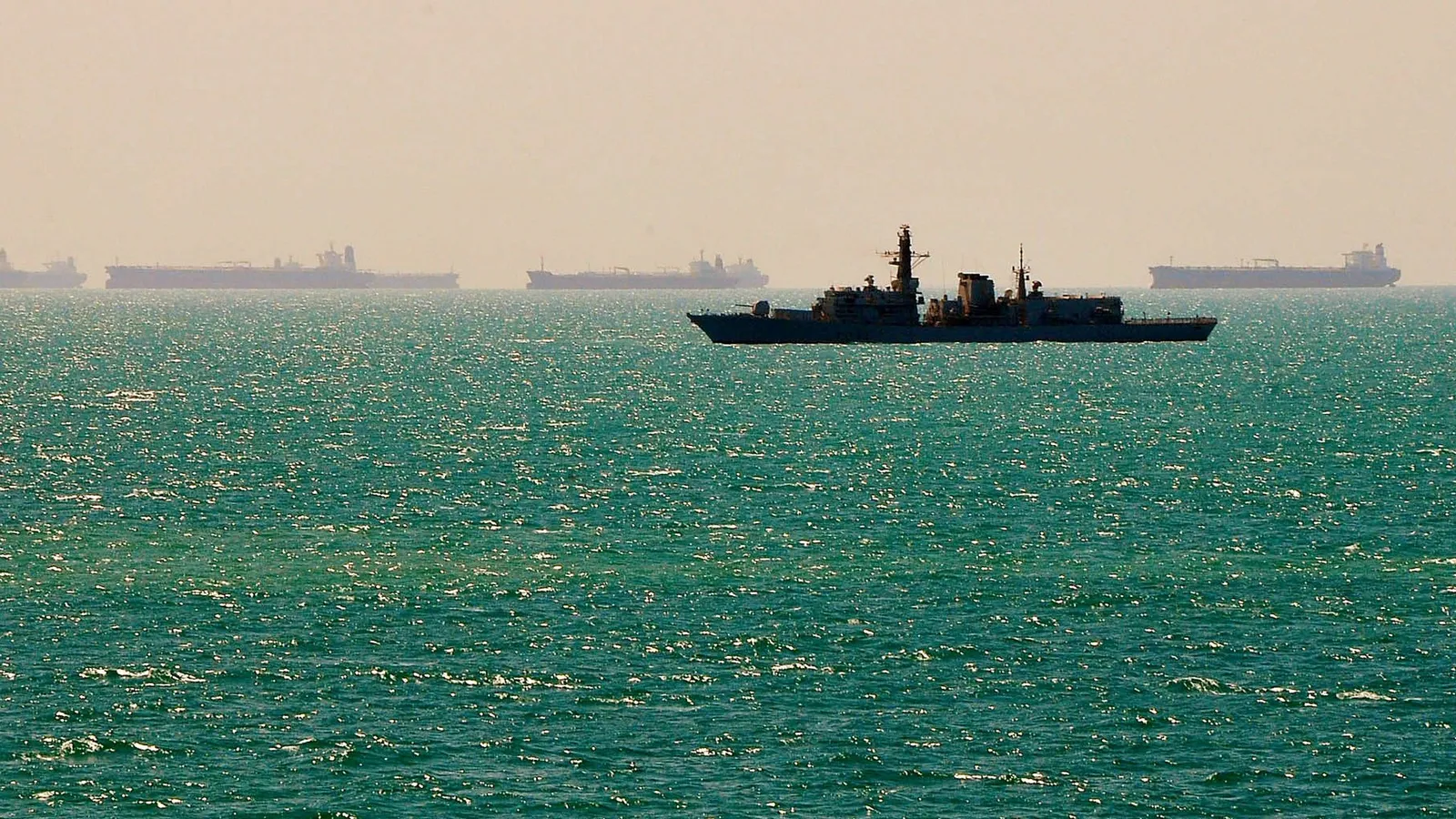
Cover photo: The Royal Navy frigate HMS Richmond patrols in the northern Gulf near Iraq's Al Basra Oil Terminal as merchant ships wait to load, March 2009. The photo is illustrative. Photo: Mass Communication Specialist 2nd Class Daniel Barker, U.S. Navy/Wikimedia Commons, public domain.
Sources: JMIC: Update 106 to JMIC Advisory Note (18 Oct 2026), UKMTO Operations Centre on X: Update 106 JMIC Advisory Note (18 Oct 2026), UKMTO Warning 177-26 (18 Oct 2026), Xinhua: Interview - IMO chief urges ships to avoid Strait of Hormuz amid escalating attacks (17 Oct 2026), IMO: Middle East - Strait of Hormuz information for shipping and seafarers, IMO: Middle East - Highlighted (confirmed) incidents.