India's maritime administration has started a campaign to warn seafarers about fake job offers. The Directorate General of Maritime Administration (DGMA) is the Indian government office for ships and seafarers. It was earlier called the Directorate General of Shipping.
On 23 October 2026, the DGMA posted this message: "A genuine-looking job offer isn't enough. Verify before you trust." It asks seafarers to check that the recruiter is authorised, to check the job details and to be careful with unusual payment demands. "Never let urgency override verification," the DGMA wrote. This means: do not let a recruiter rush you into skipping the checks.
Post on X
Loading it connects to X, which may set cookies and see your visit. See our Privacy policy.
Licensed agencies join the campaign
In India, a crewing agency needs a Recruitment and Placement Service Licence (RPSL) to send seafarers to ships. Several licensed agencies and shipping companies have joined the campaign, the Indian news agency IANS reported on 23 October.
Scammers took crores of rupees from Indian seafarers in 2025 and 2026, IANS reported. One crore is 10 million rupees. Some victims also lost their personal documents.
IANS also gave these numbers for October 2026: 538 agencies have a valid RPSL, 396 have an invalid or expired licence, and 66 are temporarily suspended. Suspended agencies may not recruit seafarers.
"Genuine RPSL holders never charge seafarers for employment or placement. All visa and medical costs are borne by the shipowner," one licensed agency said, IANS reported.
How the fake offers work
According to the IANS report and the agencies quoted in it:
The victims are both new deck cadets looking for their first ship and experienced officers looking for a better contract.
Fake jobs are offered on merchant ships, cruise ships and offshore platforms.
The offers often promise very high pay, say "no experience required" or promise fast promotion.
The scammers almost always ask for money in advance, or for scans of all your documents.
They spread the offers in WhatsApp groups, Telegram channels, Facebook pages and even LinkedIn profiles.
Some open offices or use shared offices in Navi Mumbai and Chennai. They choose company names that look like real ship management firms.
They use official words like RPSL number, CDC (Continuous Discharge Certificate, the seafarer's record book), MLC (Maritime Labour Convention) and flag state rules to sound real.

What it means for crews
Before you accept an offer from an Indian agency, check its licence on the DGMA's list of valid, invalid and suspended RPSL. An expired or suspended licence is a warning sign.
Do not pay for a job, a visa, a joining ticket or a "processing fee". Real licensed agencies do not ask for this money.
Be careful with very high pay, "no experience" offers and pressure to decide fast.
Do not send scans of your CDC, passport or certificates before you have checked the agency.
If something went wrong with a recruiter, you can register a complaint on the DGMA's e-NAVIK portal. The DGMA says its grievance system works 24 hours a day.
Outside India, check the agency with your own country's maritime authority.
Earlier this week, Crewboard reported on India's new online licence system for crewing agencies and on crewing agencies warning that scammers use their names.
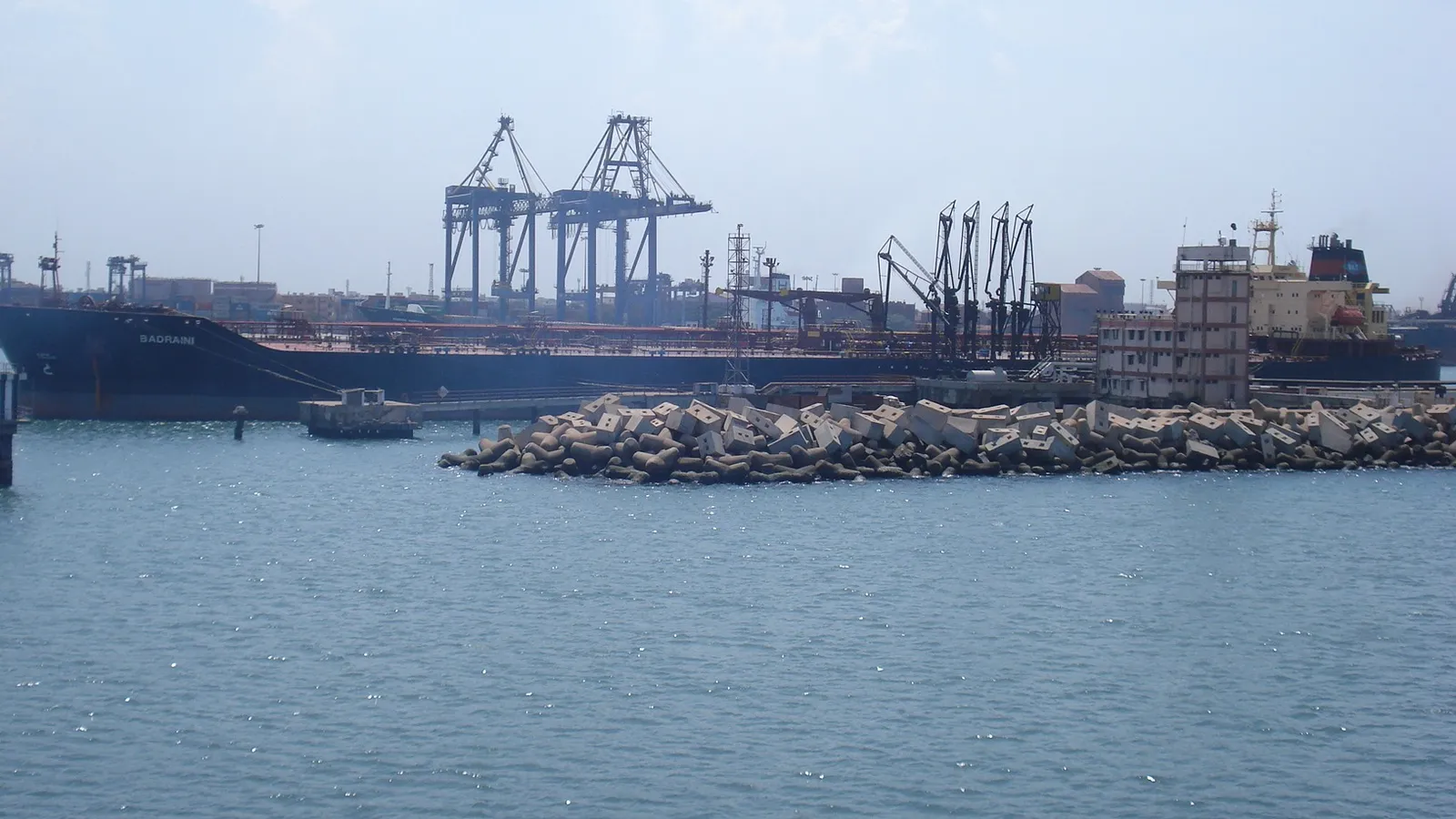
Cover photo: Ships and cranes at the Port of Chennai, India, in June 2007. Illustrative photo. Photo: Alexey Seleznev/Wikimedia Commons, CC BY 3.0 (cropped).
Sources: IANS via NewKerala: DGMA, RPSL holders launch campaign against fake maritime job rackets (23 Oct 2026), DGMA India on X: Verify before you trust (23 Oct 2026), DGMA: List of Valid / Invalid / Temporarily Suspended RPSL.