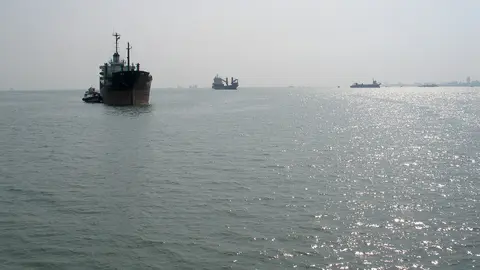
Long hours and little sleep are common at sea. Tired crew make more mistakes, and fatigue plays a part in many accidents. That is why there are international rules on hours of rest.
This guide explains these rules in simple words. It covers all ranks on ships that trade internationally. The facts are correct as of November 2026.
The question is in the news again. Australia recently banned a bulk carrier from its ports because its rest records were faked. Read our post on the Wooyang Venus ban. Captain Kuba Szymanski leads InterManager, an association of ship managers. On 13 November, he wrote that crews can feel pressure to make the records fit the rules. His article is on Splash247.
Two sets of rules: MLC and STCW
Two international conventions set the limits. Your flag state puts them into its own law.
The Maritime Labour Convention (MLC), Standard A2.3, covers all seafarers on board. The text is in the MLC on the ILO website.
The STCW Convention, regulation VIII/1, covers watchkeepers. It also covers crew with safety, security and pollution prevention duties. The details are in section A-VIII/1 of the STCW Code. The IMO page on hours of work and rest explains this.
Both use the same basic numbers.
The basic limits
Under the MLC, each flag state sets either maximum hours of work or minimum hours of rest. The limits are:
Rest: at least 10 hours in any 24-hour period, and at least 77 hours in any 7-day period.
Or work: no more than 14 hours in any 24-hour period, and no more than 72 hours in any 7-day period.
"Any 24-hour period" means any 24 hours in a row, not only from midnight to midnight. So a long day followed by an early start can break the rule.
Rest also has rules on how it is split:
Rest can be split into no more than two periods.
One of the two periods must be at least 6 hours long.
The time between two rest periods must not be more than 14 hours.
Short breaks do not count as rest. Rest is the time outside working hours.
For example, a watchkeeper on a "4 on, 8 off" watch usually meets these rules. But extra work in port, drills or paperwork in the rest time can break them quickly.
Drills, call-outs and emergencies
Drills: musters, fire drills and lifeboat drills must disturb rest as little as possible. They must not cause fatigue.
Call-outs: you may be on call, for example when the engine room is unmanned at night. If you are called out during your rest, you must get enough extra rest to make up for it.
Emergencies: the master can stop the rest schedule when the safety of the ship, people or cargo is at risk. This is also allowed to help other ships or people in distress. After the situation is normal again, the master must give you enough rest.
Exceptions: what is allowed and what is not
The STCW Code allows some exceptions for watchkeepers, but only in exceptional cases. The US rules that put STCW into law show the limits clearly in 46 CFR 15.1111:
The 10 hours of rest may be split into three periods instead of two. One must still be at least 6 hours long, and the others at least 1 hour each.
This is allowed on no more than two days in any 7-day period.
Even with an exception, you must get at least 70 hours of rest in any 7-day period.
Exceptions to the weekly hours may not last more than two weeks in a row.
Under the MLC, a flag state may also allow exceptions through a collective agreement. These must follow the rules as far as possible, for example with longer leave. Your flag state's rules or your agreement say which exceptions apply on your ship.
The table on the wall and the records
The MLC says every ship must post a table of the working arrangements in an easy-to-reach place. It shows the schedule at sea and in port for every position. It also shows the maximum work or minimum rest hours. The table must be in the ship's working language and in English.
Daily records of your work or rest hours must also be kept. The rules on records are:
They are kept in a standard format. The ILO and IMO made model formats for the table and records.
The master, or a person the master names, signs your record. You sign it too.
You have the right to get a copy of your own records.
Only sign records that are true. If you sign false hours, the record no longer protects you. It can also cause trouble for you after an accident or inspection.
If your records do not show the real hours
Sometimes crew are told to write fewer hours than they really worked. This is not allowed. Here is what you can do:
Keep your own notes of the hours you really work. Write the date, the time and the job. A notebook or your phone is fine.
Ask for a copy of your signed records. This is your right under the MLC.
Talk to the master first if you feel safe to do so. Under the MLC, you can always complain directly to the master.
Use the ship's complaint procedure. You must get a copy of it with your employment agreement. It names a person on board who can give confidential advice.
You may bring a person with you to help in the complaint. The MLC says flag states must forbid and punish any action against a seafarer for making a complaint.
Complain ashore if needed. In a port, you can report the problem to the port state control officer. You can also contact the flag state, an ITF inspector or your union.
Contacts that can help:
Find an ITF inspector or union near your port.
SeafarerHelp is a free and confidential helpline for seafarers, open 24 hours a day. It is run by the International Seafarers' Welfare and Assistance Network (ISWAN).
Crewboard's useful links for seafarers list official help lines and other official contacts.
How to protect yourself from fatigue
Know your watch schedule and check it against the table on the wall.
Sleep in your main rest period. Try to get at least 6 hours in one block.
Tell the officer of the watch or the master if you feel too tired to work safely. Being too tired on watch is a safety risk.
Plan for busy days in port, drills and inspections. Ask for extra rest afterwards if your rest was cut.
Before you sign a contract, ask how many crew the ship carries and what the watch system is.
The IMO has guidelines on fatigue (MSC.1/Circ.1598) for companies and seafarers. They explain the causes of fatigue and how to manage it. Read also our post on a report about tired crews and poor mental health.
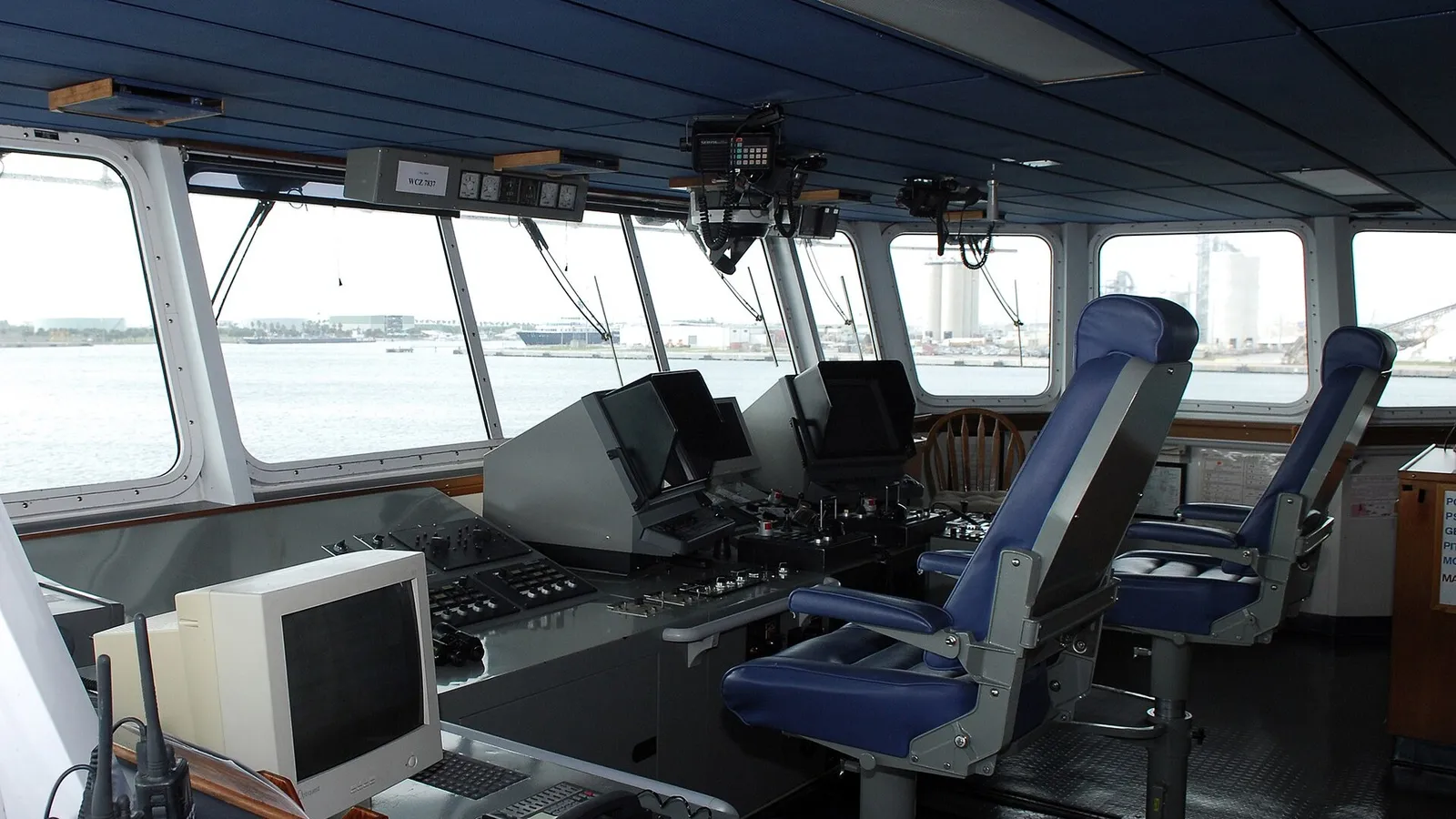
Cover photo: The bridge of the cargo ship Delta Mariner in port, November 2008. Illustrative photo. Photo: NASA/Dimitri Gerondidakis, public domain (cropped).
Sources: ILO: Maritime Labour Convention, 2006, as amended (Standard A2.3, Regulation 5.1.5, Regulation 5.2.2), IMO: Seafarers' hours of work and rest (STCW regulation VIII/1), ILO/IMO: Guidelines for the development of tables of seafarers' shipboard working arrangements and formats of records of hours of work or rest, IMO: Guidelines on fatigue (MSC.1/Circ.1598), US eCFR: 46 CFR 15.1111, Work hours and rest periods, Splash247: When rest hour records stop reflecting reality, by Kuba Szymanski (13 Nov 2026).
How we choose, write and correct our articles: editorial policy.