Update, 26 November 2026: The Coast Guard director, Georg Lárusson, gave more details at a press conference in Reykjavík, Vísir reports.
He said one of the vessel's life rafts was stuck and did not come free as it should. The second life raft came free, but it drifted away from the crew. So the men in the water had no life raft.
The crew tied themselves together in the water. Lárusson said they used what they had learned in safety training for fishermen. The captain took an emergency radio with him. The Coast Guard could talk to the men for almost the whole time.
Coast Guard staff kept talking to the men in the dark. They gave advice on how to survive and news about the helicopter and ships on the way.
The men were in the water for about four hours. Lárusson said people can survive at most five to six hours in these survival suits. If help had come one hour later, more people could have died, he said.
The rescue swimmers found the men tangled in nets and other gear from the vessel. They had to cut them free before they could lift them. Lárusson met six of the survivors and said they were coping well.
Why the vessel sank is still not known. An investigation will find out, Lárusson said. The names of the three men who died have not been published. The operator of the vessel is GPG Seafood, the local news site Austurfrétt reports.
Iceland's Transport Safety Investigation Board has started a first investigation. Three investigators are collecting information, but they have not interviewed anyone yet. Jón Pétursson, head of the board's marine section, told Morgunblaðið (mbl.is) this.
A Coast Guard timeline shows the men were in two groups in the sea, one of 11 and one of 6. All 17 were out of the water by 22:54 local time. The helicopter landed at Egilsstaðir at 23:37, Iceland Review reports.
The earlier report follows.
The Icelandic fishing vessel Jökull ÞH 299 sank about 60 nautical miles east of Iceland on 25 November 2026. All 17 crew members ended up in the sea. A Coast Guard helicopter lifted them out of the water. Three of them died and 14 survived, the Icelandic Coast Guard said on 26 November.
The vessel's home port is Raufarhöfn, a small fishing village in north-east Iceland. The names of the three people who died have not been published.
What happened
Shortly after 17:00 local time, the captain called the Coast Guard control centre. He said the vessel had a leak.
The Coast Guard told the crew to put on their survival suits. A survival suit is a waterproof suit that keeps you warm and floating in cold water.
Soon after, the captain declared an emergency. He said the crew were leaving the vessel. Then the vessel sank.
Emergency beacons were sending signals. Some crew members held on to each other in a line, and one had a radio, RÚV reported.
The Coast Guard plane TF-SIF arrived shortly after 20:00. Its crew dropped life rafts, but the men in the water could not reach them, Vísir reported.
The Coast Guard helicopter arrived at 21:15. The fishing vessels Barði and Svanur also came to help.
Winds were 13 to 20 metres per second, and waves were 4 to 5 metres high, Iceland Review reported.
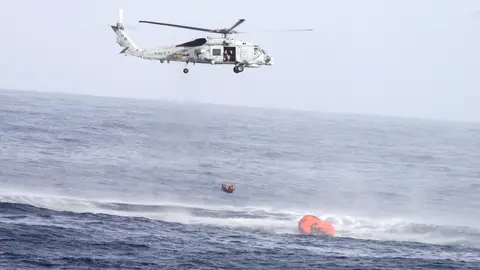
The helicopter worked for about two hours in very hard conditions. It had to fly away once to burn fuel and become lighter. Then it could take everyone on board.
The helicopter landed in Egilsstaðir in east Iceland shortly before midnight. Doctors and ambulances were waiting. Some crew members were later flown to Reykjavík.
The cause of the leak is not known yet. The Icelandic authorities held a press conference on the morning of 26 November, RÚV reports in its live blog. We will update this post when there is news about the cause.
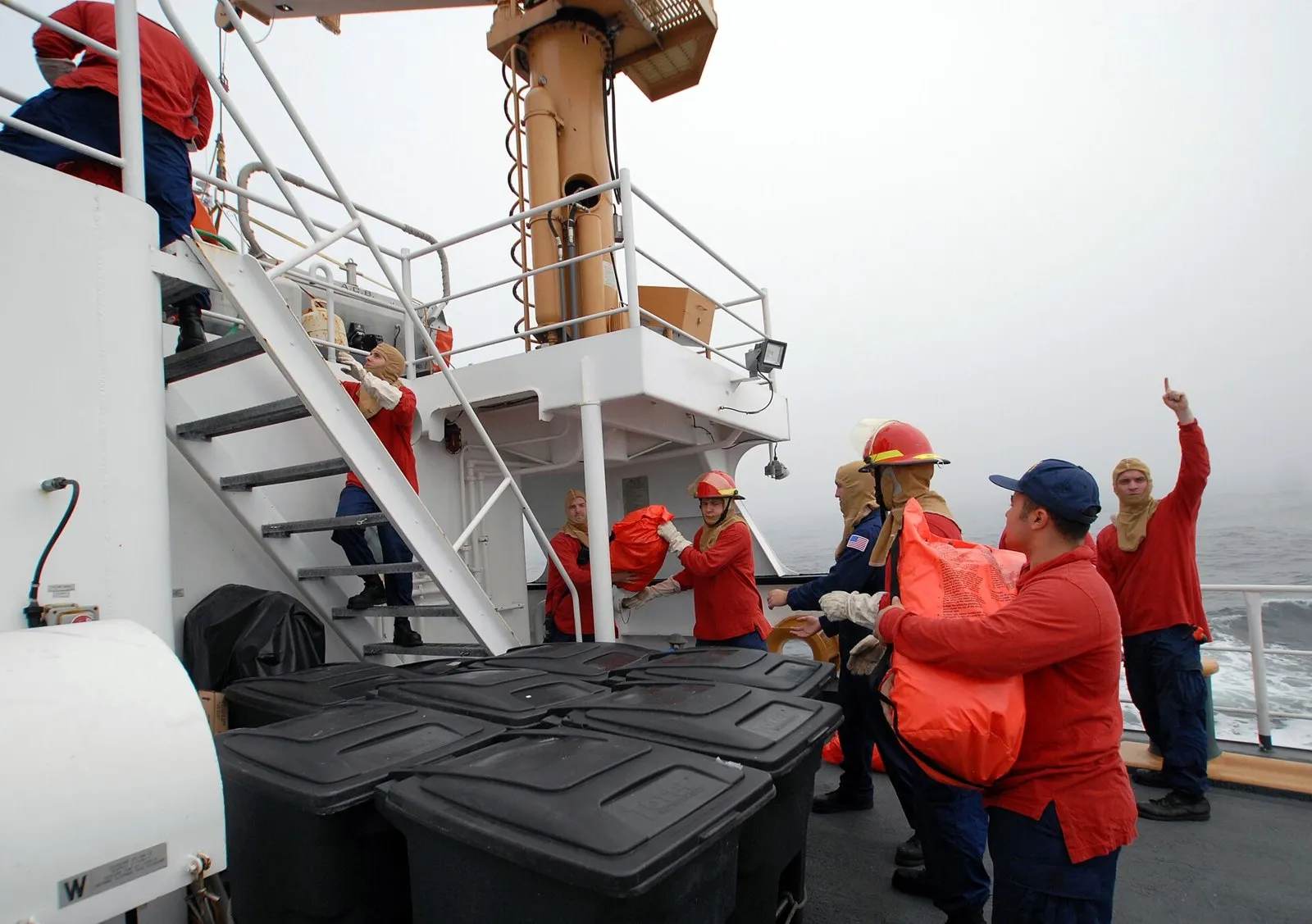
What it means for crews: how to survive if you must leave the vessel
In this case the crew were in the water for about four hours. Survival suits keep people alive for at most five to six hours in these conditions, the Coast Guard said. Cold water is the biggest danger in northern seas. These steps give you more time.
Report a leak or water coming in early. Do not wait until the vessel is about to sink. Give your position on the radio, and repeat it.
Know where your survival suit is. Practise putting it on in a drill. Under the international rules for life-saving equipment, you should be able to put it on alone in two minutes.
Check the life rafts and their release gear in port. The hydrostatic release is the part that frees the raft if the vessel sinks. It must not be painted over, tied down or out of date. Learn how to free and launch a raft by hand.
Check your suit before the trip. Look at the zip, the seals and the light. Make sure it is your size.
Put the suit on before you go on deck to leave the vessel, if there is time. Wear warm clothes under it.
Activate the EPIRB, or take it with you. An EPIRB is an emergency beacon that sends your position to rescue centres by satellite. A personal locator beacon (PLB) on your suit or lifejacket also helps.
Take a handheld VHF radio if you can. Rescuers can then talk to you and find you faster.
In the water, stay together. Hold on to each other in a line or a circle. A group is easier to see from the air and keeps warmer.
Do not swim far to reach something. Swimming makes you lose heat fast. Move only if a life raft or rescuers are close.
Keep your legs together and arms close to your body to save heat. Keep your face away from the waves.
Before every trip, tell your family the name of the vessel and the area where you will work.
Read also how eight fishermen were rescued after their boat sank in Thailand. Another post tells how one fisherman was rescued and three went missing off Langkawi. Keep emergency contacts and safety links from Crewboard useful links.
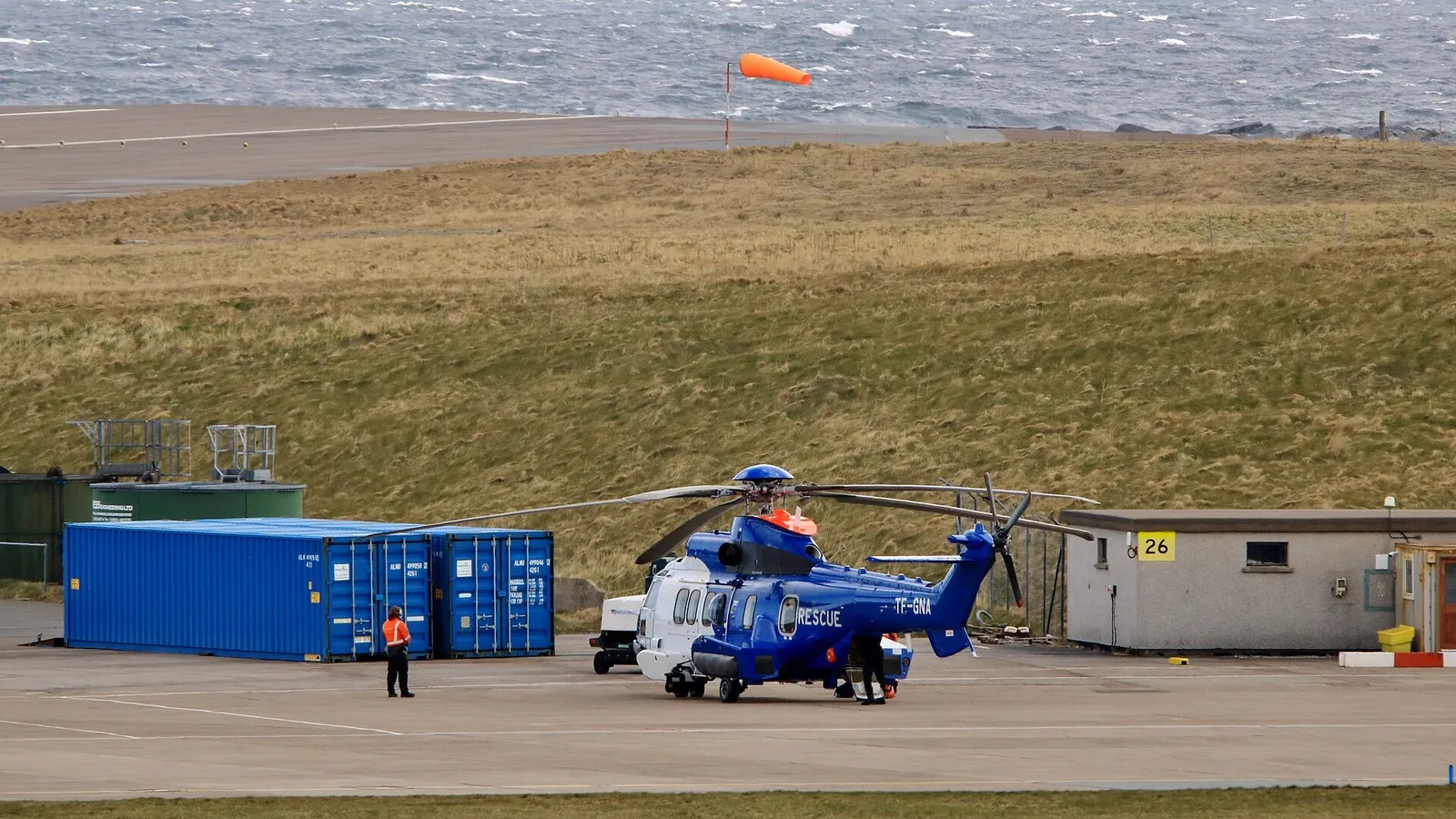
Cover photo: an Icelandic Coast Guard rescue helicopter, TF-GNA, at Sumburgh Airport in Shetland. Illustrative photo, not necessarily the helicopter used in this rescue. Photo: Ronnie Robertson/Wikimedia Commons, CC BY-SA 2.0 (cropped).
Sources: Vísir: Coast Guard director at the press conference (26 Nov 2026, in Icelandic), Austurfrétt: Three died and fourteen rescued when Jökull ÞH sank (26 Nov 2026, in Icelandic), Vísir: Three died in the sea accident, Coast Guard statement (26 Nov 2026, in Icelandic), Iceland Review: Three dead, fourteen rescued after Jökull sinks off East Iceland (26 Nov 2026), RÚV English: Jökull ÞH sinks with loss of three crew, live blog (26 Nov 2026), RÚV English: Fishing vessel sinks off Eastfjords (26 Nov 2026), RÚV: Large response in Egilsstaðir (25 Nov 2026, in Icelandic), Vísir: Timeline of the rescue (26 Nov 2026, in Icelandic).
How we choose, write and correct our articles: editorial policy.