Seafarers on ships covered by Norwegian collective agreements now get extra pay in parts of the Black Sea. They also get it in the southern Red Sea and the Gulf of Aden. A collective agreement is a deal on pay and conditions between shipowners and unions.
The Norwegian Shipowners' Association and three Norwegian seafarer unions signed two protocols in Oslo on 25 November 2026. A protocol is a written agreement that adds to the main agreement. The new rules started at midnight, Norwegian time, Maritim Logg reported.
What the new rules say
Seafarers get a bonus of one day's basic wage. They get it for each day the ship works, sails or stays in port in the High Risk Area.
The bonus is not counted for holiday pay. It does not change other payments that are based on the basic wage.
Ships in these areas must use extra security measures from the latest Best Management Practice (BMP). BMP is the industry's official guide on protecting ships from attacks.
Seafarers have the right to leave the ship before it goes into the area, under the Norwegian Ship Labour Act.
Seafarers on NIS or model agreements may also end their contract, if nobody told them about the risk before they signed. If they later accepted the risk in writing, this does not apply.
The protocols cover Norwegian (NOR) and Nordic NIS agreements. They also cover foreign seafarers on NIS ships and on foreign-flagged ships with Norwegian model agreements, the protocol text says.
Each side can end a protocol with one week's written notice.
NIS is the Norwegian International Ship Register. Many foreign seafarers work on NIS ships.
Which areas
In the Black Sea, the High Risk Area lies south of the existing warlike area. It covers large parts of the sea, from off Romania and Bulgaria to the east. A 12-mile strip along the Romanian and Bulgarian coasts is left out. The old warlike area from March 2022 still applies. It covers the Sea of Azov, parts of the Black Sea and Ukrainian ports.
The southern Red Sea and Gulf of Aden protocol replaces one from January 2024, the Norwegian Maritime Officers' Association says. It gives the same bonus of one day's basic wage.
The unions asked for this after crews in the Black Sea reported more drones and sea mines. Union representatives at the offshore company Solstad pushed for it, Splash247 reported. In October, nine merchant ships were hit or sunk off Romania and Bulgaria, Maritim Logg wrote.
What it means for crews
Before you sign, ask which agreement covers your contract. Ask if the ship trades to the Black Sea, the Red Sea or the Gulf of Aden.
If you work under a Norwegian agreement, check your pay slip. Each day in the High Risk Area should show one extra day of basic wage.
Keep your own record of the dates the ship entered and left the area. Use the logbook times if you can.
If you do not want to sail into the area, tell the master in writing before the ship enters it. Contact your union or the ITF (International Transport Workers' Federation) for help.
Other agreements have their own rules. The International Bargaining Forum (IBF) list sets war-risk pay for many ITF agreements.
Ask the company what security measures are in place, such as a safe place on board, drills and lookouts.
Read how the IBF changed its High Risk Area off Bulgaria and Romania. Look for contracts in external vacancies on Crewboard, and find union and helpline contacts in Crewboard useful links.
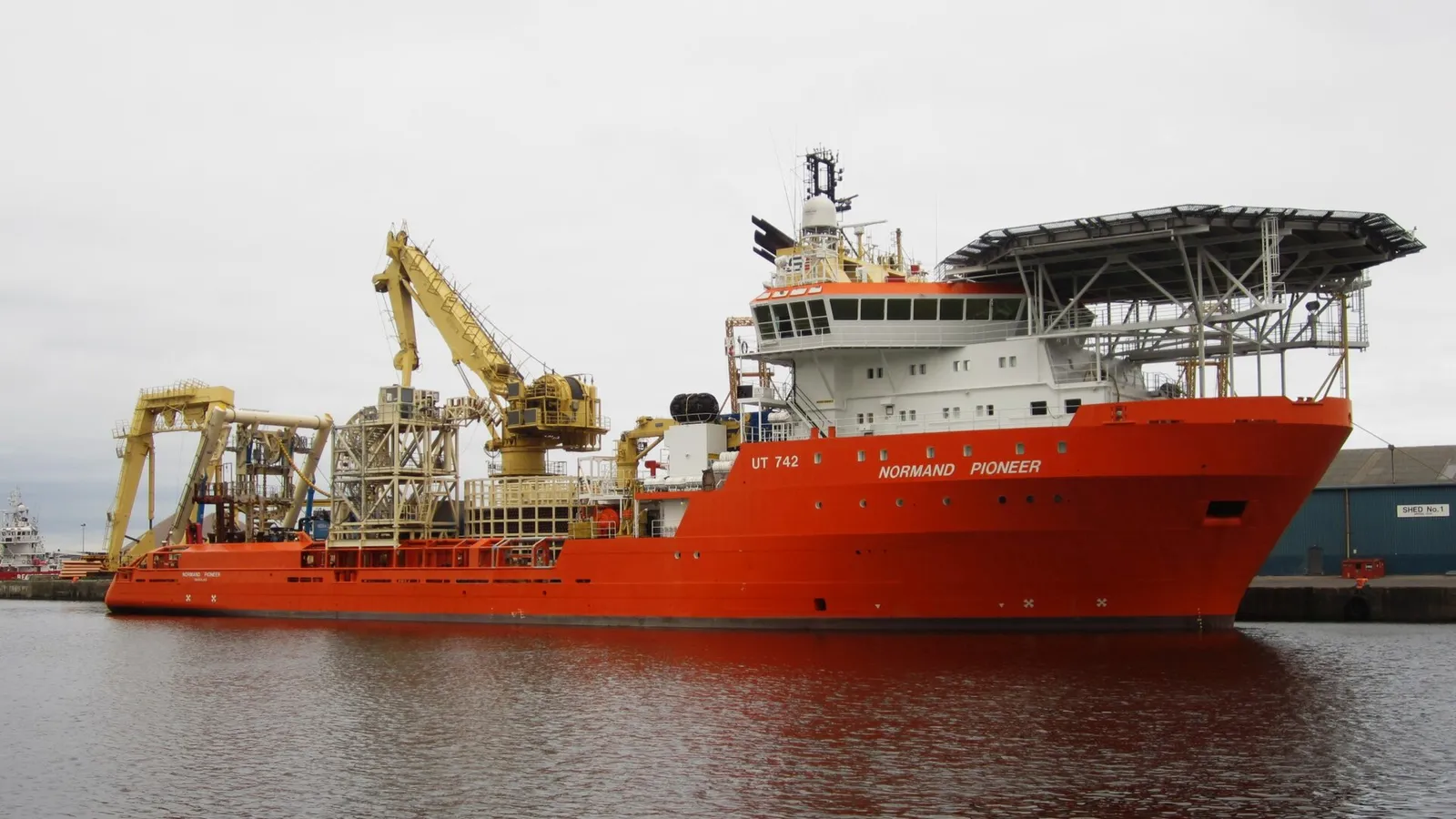
Cover photo: the offshore construction vessel Normand Pioneer moored in the Port of Leith, Scotland. Illustrative photo, not one of the ships in the Black Sea. Photo: Graham Robson/Wikimedia Commons (Geograph), CC BY-SA 2.0.
How we choose, write and correct our articles: editorial policy.