The Philippines wants many more of its people working at sea. Migrant Workers Secretary Hans Leo Cacdac spoke about it on Wednesday, 21 October 2026. He said the country wants a 35% share of the world's seafarers by 2030. Today the share is 28%.
Cacdac spoke at the Kapihan sa Manila Hotel, a weekly news forum in Manila. He said the goal means at least about 150,000 more Filipino seafarers in the global market. He also said seafarer protection stays part of the plan.
Where the numbers come from
The Department of Migrant Workers (DMW) says Filipinos are now 28% of the world's seafarers. That is about 350,000 to 400,000 people, according to the DMW figures reported by GMA News.
The 35% target is part of the Seafarers' Voyage Plan 2030. This is a national plan for Filipino seafarers up to 2030. Government agencies, unions and manning agencies signed a joint commitment to it on 23 September 2026. This happened at the Philippine Maritime Convention 2026 in Manila.
The signers included the DMW and MARINA, the Philippine maritime authority. They also included the AMOSUP seafarers' union and the Joint Manning Group (JMG), a group of Philippine manning agency associations.
Why the DMW expects more jobs
Cacdac said ships are moving to new, cleaner fuels. Ship systems are also becoming more digital and automated. He said this brings many chances for training and retraining, so more Filipino crew can find work.
The plan has four main parts. They are protecting seafarers, building skills for the future, delivering on promises, and keeping the seafaring industry strong.
Protection: stronger enforcement of the Magna Carta of Filipino Seafarers, the Philippine law on seafarers' rights. Also better crisis help, repatriation (bringing seafarers home) and access to labour justice.
Training: changes to maritime education, more places for onboard training as cadets, and clearer career paths.
Welfare: better services and a national programme to help seafarers return to life ashore.
Services: more maritime services delivered online.
At the September convention, JMG chairman Marlon Roño called the target "doable". But the 35% share is still a goal, not a result.
What it means for crews
For Filipino seafarers: the DMW links new jobs to ships that use new fuels. Training for fuels such as LNG (liquefied natural gas), methanol and ammonia may help you get hired.
For cadets: the plan promises more onboard training places. Ask your school or manning agency what is available.
For crews from other countries: a growing Filipino share means more competition for some jobs. Up-to-date certificates and new-fuel training also matter for you.
For crewing companies: the Philippines plans to keep a large and growing pool of trained crew.
Always check that a manning agency is licensed by the DMW before you pay anything or sign a contract.
Read more on Crewboard:
Methanol-fuelled ships: what early users learned about crew training
Philippines signs agreement with the Mission to Seafarers for more welfare and mental health support
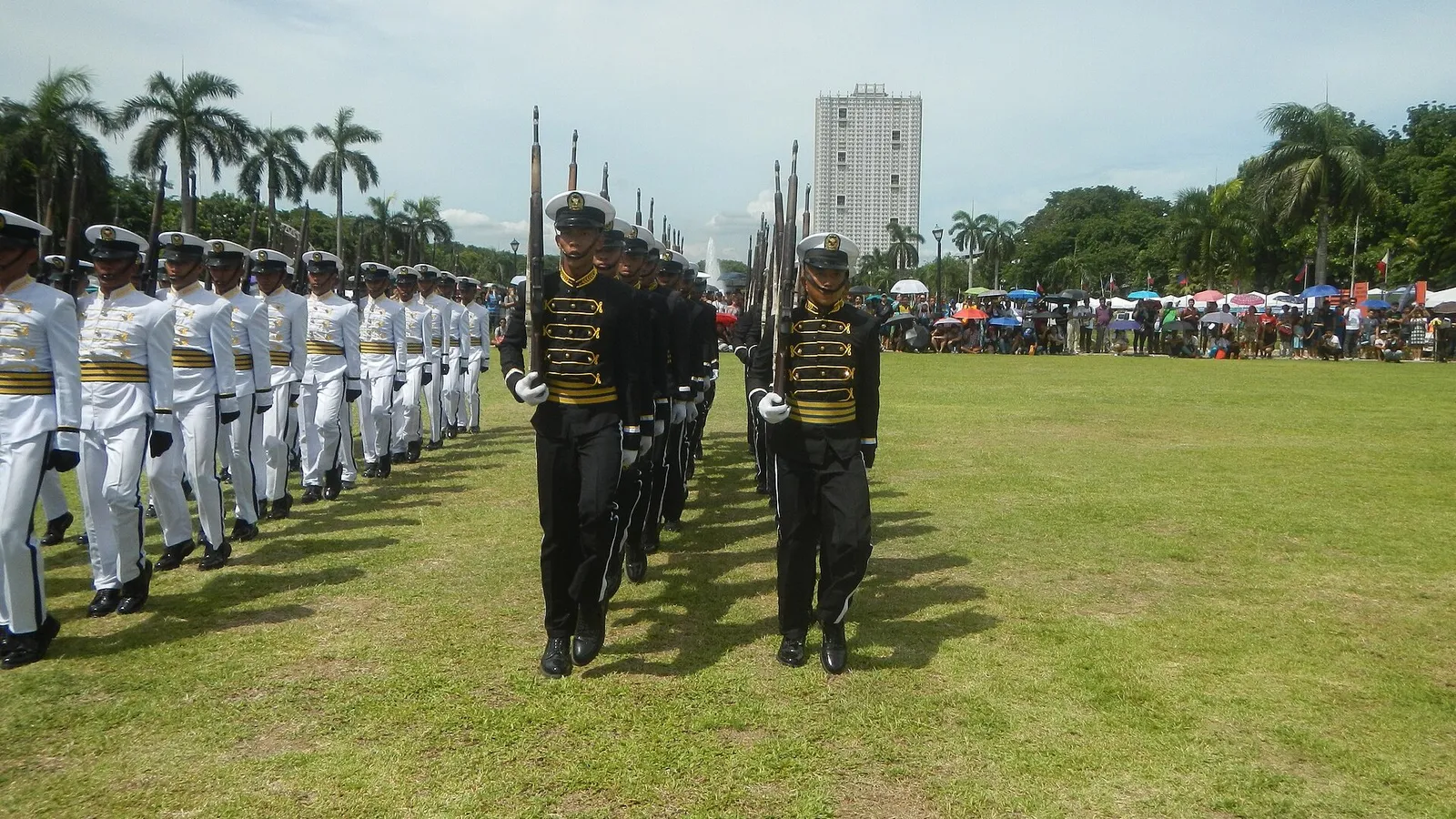
Cover photo: Cadets of the Philippine Merchant Marine Academy in Rizal Park, Manila, June 2019. Illustrative photo. Photo: Judgefloro/Wikimedia Commons, CC0 (cropped).
Sources: GMA News: DMW: Additional 150,000 seafarers in the global market eyed by 2030 (21 Oct 2026), The Global Filipino Magazine: PH sets 2030 goal: 35 percent of the world's ship crews to be Filipino (24 Sep 2026), FAS Maritime on LinkedIn: From 1 in 5 to 1 in 3: PH charts bigger global role for Filipino seafarers (PhilMarCon 2026).