A seafarer who falls ill or is injured at sea often waits many hours for a doctor. A UK charity now wants shipping companies to measure how ready their ships are for this.
The Seafarers Hospital Society (SHS) has published a new set of checks for medical emergencies on board. The checks are called key performance indicators, or KPIs. A KPI is a number or a yes/no question that shows how well something works. Maritime news sites reported the new toolkit on 3 and 4 November 2026.
Who made it
The SHS is a UK charity that has helped seafarers with their health for a long time. It worked on the new checks with two groups of maritime doctors. They are the International Maritime Health Association (IMHA) and the International Maritime Health Foundation (IMHF). The groups met at a workshop in June 2026.
The checks are voluntary. They do not add new legal rules. They work together with the rules that already exist in the MLC, STCW and SOLAS conventions. A company fills in a confidential online survey, and only that company sees its answers, the SHS says.
The four levels
The toolkit has four levels. A company starts at level 1 and moves up as it improves.
Level 1, the base level. The ship has what the rules ask for. The medical chest and emergency equipment are inspected. There are written procedures for a medical emergency. The ship can reach a Telemedical Assistance Service (TMAS). A TMAS is a service where doctors ashore give medical advice to ships by radio, phone or email.
Level 2, counting and recording. The company records every medical emergency. It measures how many minutes pass before someone first checks the sick person. It also checks how quickly the ship contacts TMAS.
Level 3, results. The company counts medical evacuations, cases treated on board with TMAS help, and deaths. It has a plan for crises, training for officers, yearly drills and resilience training for all crew. Resilience training helps people notice when they or others are not coping. Crew can report problems anonymously.
Level 4, best practice. Crew have refresher medical training from the last five years. Ships hold medical drills, and the medical chest is restocked. Crew get mental health check-ins and support after a bad incident. Every emergency is reviewed afterwards to learn from it.
"When a medical emergency occurs at sea, preparedness, timely decision-making, and effective communication can make a critical difference to a seafarer's outcome," said Sue Stannard, the president of the IMHA.
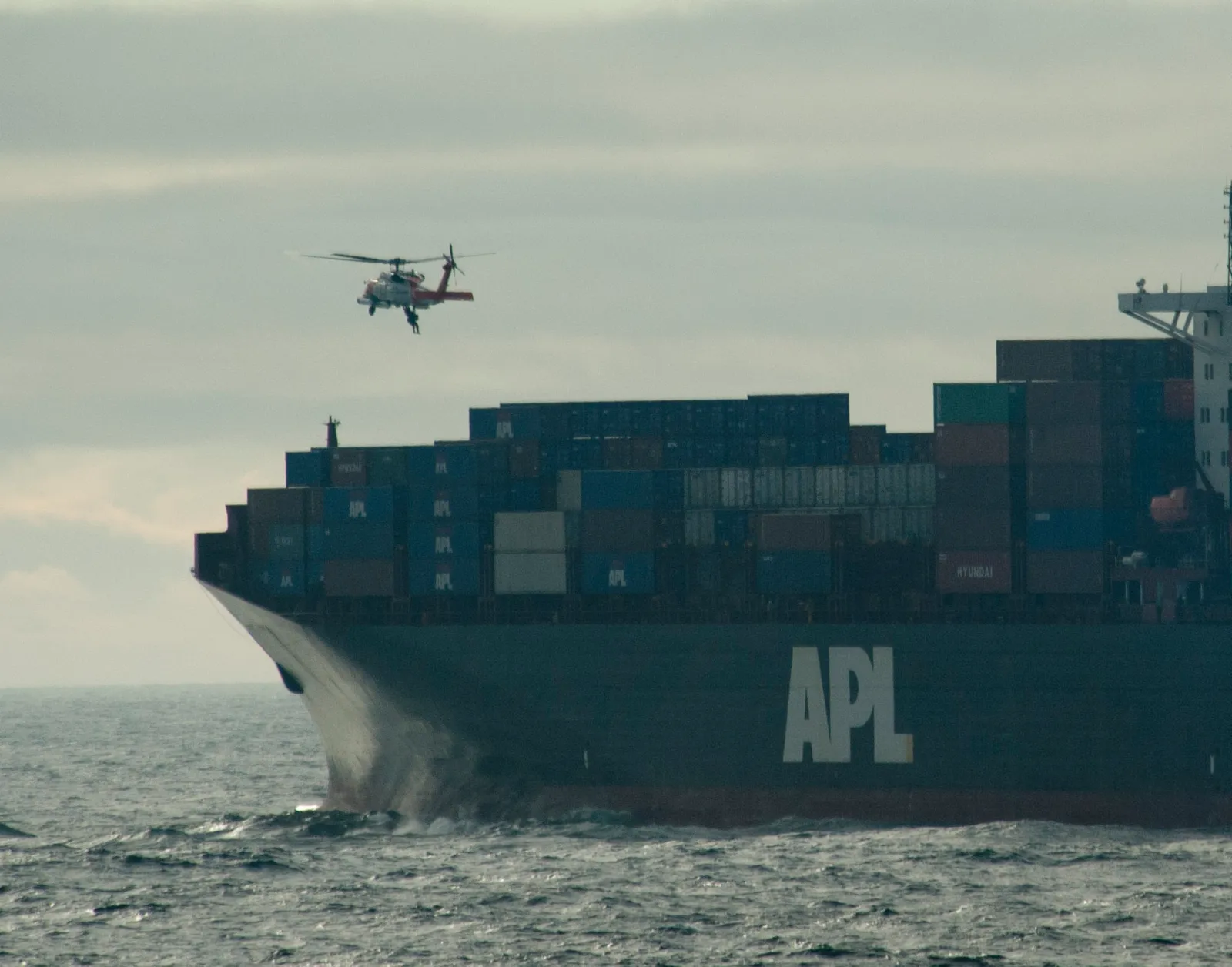
Medical evacuations from merchant ships happen often. Read our recent story about a sick crew member lifted from the container ship Ever Elite off San Francisco. In that case, the ship sailed about 190 miles towards the coast before a helicopter could reach it.
What it means for crews
The toolkit is written for companies, not for crews. But its checks are a good list for any seafarer to look at on their own ship.
Know where the medical chest and the first aid kits are. Ask when they were last inspected and restocked.
Find the written procedure for a medical emergency. Know who on board is in charge of medical care.
Ask the master or the medical officer how the ship contacts TMAS. Keep the TMAS contact details next to the radio and phone on the bridge.
In an emergency, check the sick or injured person at once. Contact TMAS early. Do not wait until the person gets worse.
Write down the time, the symptoms and every medicine given. Doctors ashore will ask for this.
Take part in medical drills seriously. Practise moving a person on a stretcher in narrow spaces and up ladders.
Keep your medical training up to date. Check the expiry dates on your certificates before your next contract.
After a death, a serious injury or a frightening event, it is normal to feel bad. Ask your company for support, or call a seafarer helpline. Find helplines in Crewboard's useful links for seafarers. Read also why more young UK seafarers fail their ENG1 medical because of mental health.
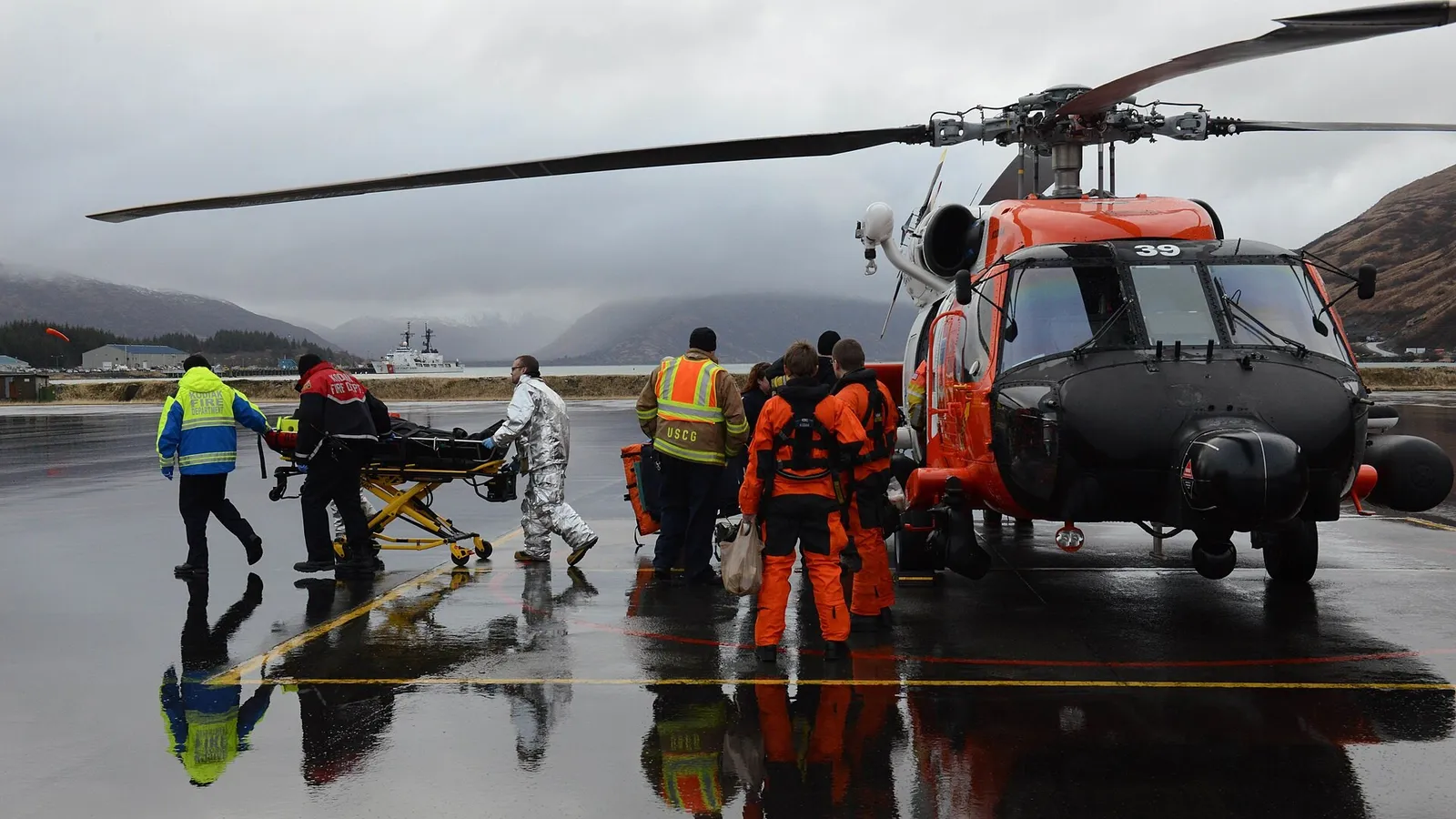
Cover photo: An injured crew member of the cargo ship Cemtex Venture is moved from a helicopter to medical staff. This was at Air Station Kodiak, Alaska, in February 2016. Illustrative photo. Photo: Petty Officer 1st Class Kelly Parker/US Coast Guard, public domain (cropped).
Sources: Seafarers Hospital Society: Best Practice KPIs, Seafarers Hospital Society: Health KPIs for medical emergencies onboard (PDF), World Ports Organization: Seafarers Hospital Society develops new KPIs for medical emergencies at sea (3 Nov 2026), Splash247: New framework sets benchmarks for medical emergencies at sea (4 Nov 2026).
How we choose, write and correct our articles: editorial policy.