The US Coast Guard wants to remove six training requirements for some US mariners. The plan affects masters and deck officers on small ships near the coast, some engineers, and electro-technical ratings. It is a proposal, not a final rule.
The Coast Guard published the proposed rule in the Federal Register on 1 October 2026. The Federal Register is the official daily journal of the US government. Anyone can send comments until 30 December 2026.
In the US, the Coast Guard issues the Merchant Mariner Credential (MMC). This is the US seafarer's licence. STCW endorsements in the MMC show that a mariner meets the international STCW rules on training and watchkeeping.
Which courses would be removed
The Coast Guard says these six requirements go further than STCW asks:
Leadership and managerial skills training for a master on ships under 500 GT (gross tonnage) in near-coastal waters, to get or renew the endorsement.
Bridge resource management training for an officer in charge of a navigational watch (OICNW) on ships under 500 GT in near-coastal waters.
Proof of leadership and teamworking skills for the same OICNW endorsement, to get or renew it.
Engineering Terminology and Shipboard Operations training for an officer in charge of an engineering watch, or a designated duty engineer, on ships of 750 kW (1,000 HP) or more.
Computer Systems and Maintenance training for an electro-technical rating (ETR) on ships of 750 kW or more.
High Voltage Power Systems training for an ETR on the same ships.
Why the Coast Guard wants this
The Coast Guard says small near-coastal ships usually have only one licensed person on the bridge. That officer is also the helmsman and the lookout. So it says team and management courses do not make these ships safer.
For engineers, it says they already learn the terms and shipboard operations in their other training. Exams and sea service also test this knowledge. For ETRs, it says they only work on computer and high-voltage systems under an officer's direct supervision.
The Coast Guard estimates that about 825 mariners a year would save money on these courses. The savings include course fees, travel and time away from work. It also says training schools may lose some income from these courses.
The proposal would also correct some text in the rules. For example, the Radar Observer requirement is listed twice in one section today.
What it means for crews
Nothing changes yet. Until the Coast Guard publishes a final rule, the current training requirements still apply.
If you plan to get or renew one of these endorsements soon, follow the current rules. Ask the National Maritime Center (NMC), the Coast Guard office that issues credentials, if you are not sure.
You can comment on the proposal until 30 December 2026. Use the regulations.gov page for docket USCG-2025-0392. The link is below. Comments can be anonymous.
This rule is only for US credentials. Seafarers with certificates from other countries must still follow their own flag state's rules.
You can read the full proposal on the Federal Register website and send a comment on regulations.gov.
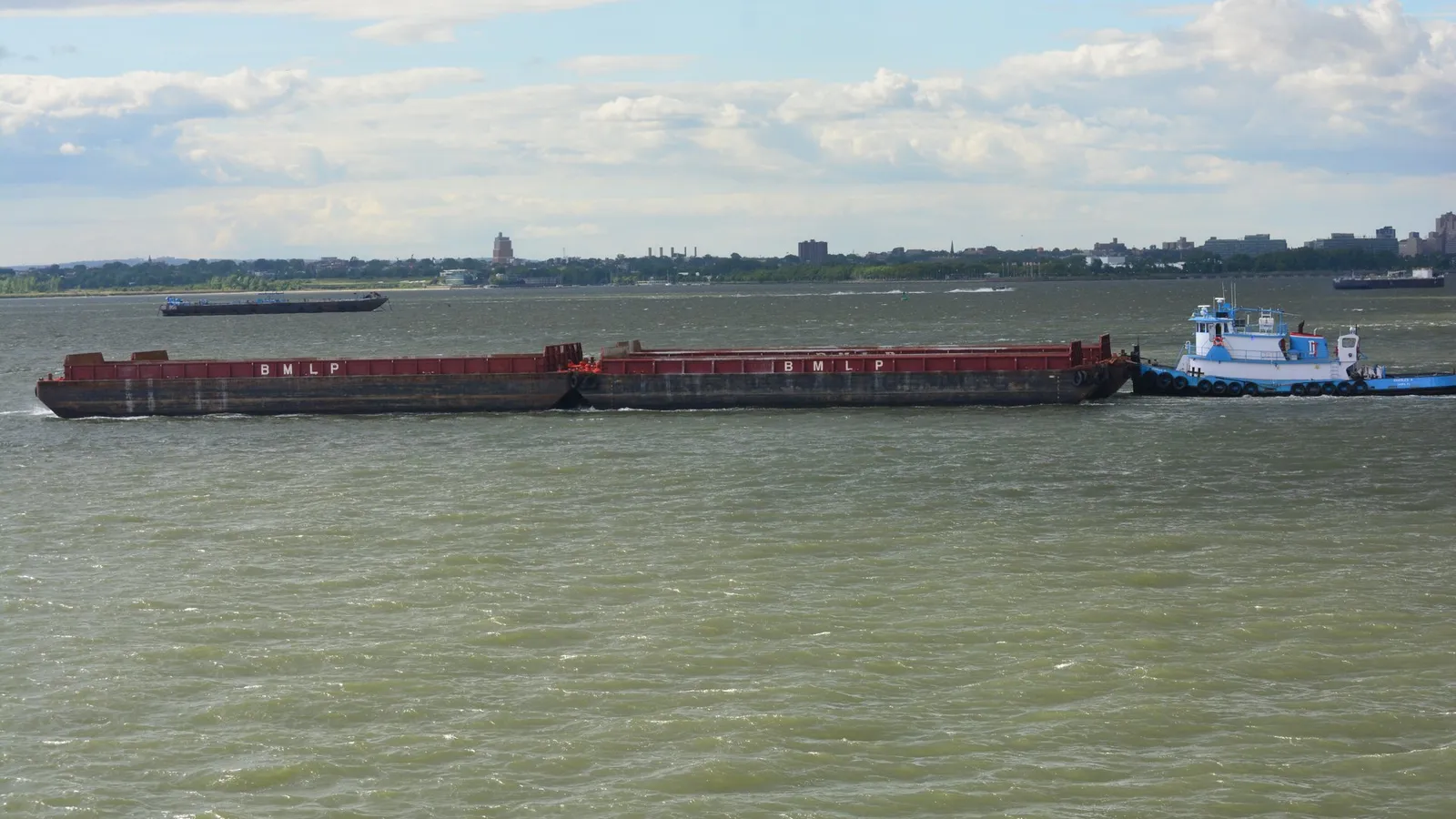
Cover photo: The tug Charles A. pushing two barges in New York Harbor, May 2026. Illustrative photo. Photo: Joe Mabel/Wikimedia Commons, CC BY-SA 4.0 (cropped).
Sources: Federal Register: Clarification of Certain Mariner Training Requirements, proposed rule (1 Oct 2026), Regulations.gov: comment on docket USCG-2025-0392.
How we choose, write and correct our articles: editorial policy.