Six crew of the cargo ship Lady Sandra were rescued from a life raft off the coast of Guyana. Their ship ran aground off Clonbrook, on the East Coast of Demerara, early on Sunday, 8 November 2026. The Guyana Defence Force Coast Guard brought all six to safety.
Guyana's Maritime Administration Department (MARAD) gave the details in a statement on Wednesday, 11 November. Guyana Standard published the full statement.
What happened
The Lady Sandra left Georgetown on Saturday, 7 November. It was carrying cement to New Amsterdam, in the Berbice region. There were six crew on board.
During the voyage, the main engine failed. The Master anchored the ship at about 19:45 that evening. He then called the ship's manager, who arranged help from a tug.
Before the tug could help, the ship dragged its anchor. This means the anchor did not hold, and the wind or current moved the ship. At about 01:00 on Sunday, 8 November, the ship ran aground on the foreshore.
At about 05:34, the crew saw that water was coming into the ship. They left the ship and got into a life raft. The Coast Guard rescued them and took them to its base, the Boathouse. A medical team checked them, and they were allowed to go home.
MARAD has told the owners to secure the ship and tow it away as soon as possible. Its investigation is still going on, Demerara Waves reports. MARAD has not said why the engine failed or why the anchor did not hold.
What crews can learn: when the engine fails near the coast
An engine failure close to land can turn into a grounding in a few hours. In this case the crew acted well: the Master anchored, asked for a tug, and the crew left in a life raft when water came in. Here are some general safety points for any small cargo ship.
When the engine stops near the coast, anchor early, while there is still enough water and space. Then tell the coastal authority and your company.
Keep a careful anchor watch. Check the ship's position often with radar, GPS and fixed marks on land. Set an anchor alarm if you have one.
If the anchor starts to drag, act fast. Pay out more chain, drop the second anchor if you can, and ask the tug to hurry.
Call for help early, before the ship grounds or takes in water. Use VHF channel 16 and DSC (Digital Selective Calling), the alarm button on your radio.
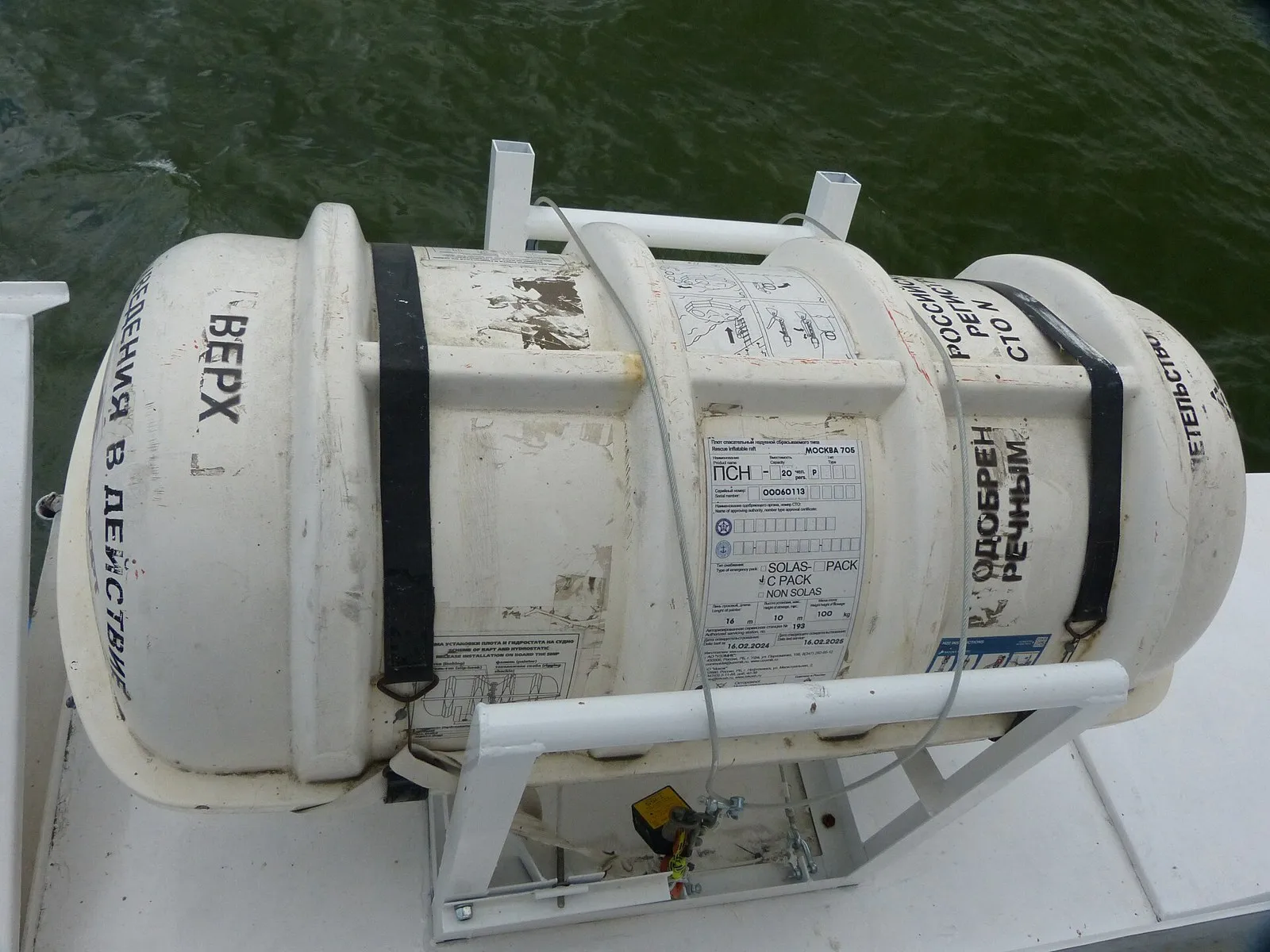
If you must abandon ship, put on your lifejacket first. Take the EPIRB (the emergency beacon that sends your position) and a handheld VHF radio into the life raft.
Know where the life raft is, how to launch it, and how to get in without jumping into the water. Practise this in drills.
Keep emergency numbers and seafarer help lines from Crewboard's useful links page.
Read more rescues on Crewboard. All 14 crew were saved when a cargo ship with steel sank in the Yellow Sea. Seven crew were rescued after a cargo boat capsized off Jomalig in the Philippines.
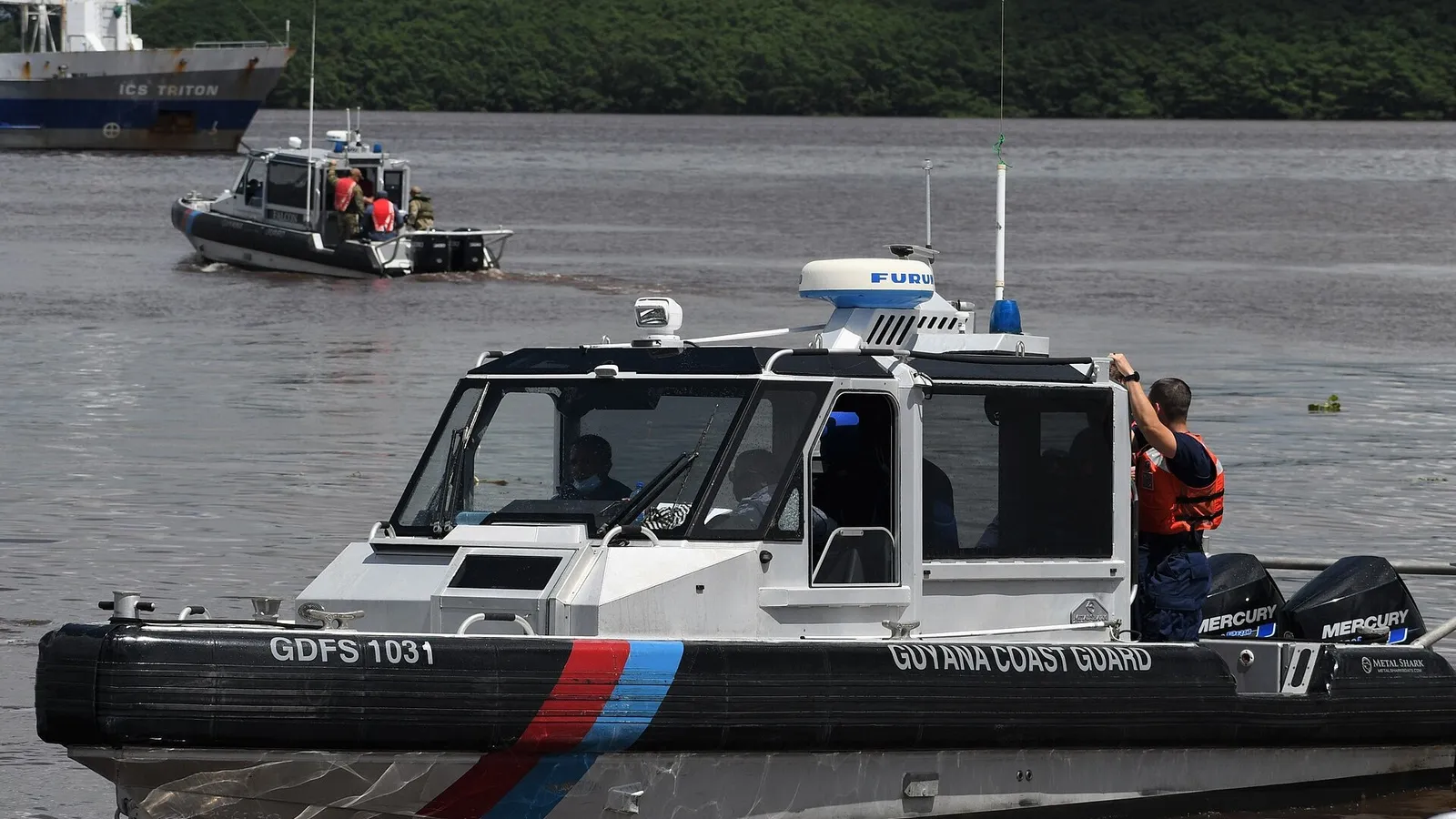
Cover photo: A Guyana Coast Guard boat and other boats on the Demerara River during the Tradewinds 2021 exercise. Illustrative photo, not from this rescue. Photo: Lt. Elizabeth Allen, US Navy/Wikimedia Commons, public domain (cropped).
Sources: Guyana Standard: Six rescued as cement boat runs aground at Clonbrook Foreshore (MARAD press statement, 11 Nov 2026), Demerara Waves: Cargo ship runs aground off Clonbrook, six rescued from life-raft (11 Nov 2026), Guyana Inquirer: Cement laden vessel grounded off Clonbrook, ECD (11 Nov 2026).
How we choose, write and correct our articles: editorial policy.