On Thursday, 5 November 2026, the Philippines Department of Migrant Workers (DMW) signed a new deal. It signed with the Philippine National Police Anti-Cybercrime Group (PNP-ACG). The deal aims to fight online job scams. These scams target overseas Filipino workers, including seafarers, and their families.
The signing took place at the DMW office in Mandaluyong City. DMW Secretary Hans Leo Cacdac signed for the department. Police Major General Andre Dizon signed for the PNP-ACG. The Philippine News Agency (PNA) and other Philippine media reported the news on 6 November.
What the deal changes
Until now, a report to the DMW about a fake online job offer could stay inside the department. Under the new memorandum of agreement (MOA), the DMW can send those complaints straight to PNP-ACG investigators. A memorandum of agreement is a written deal between two agencies on how they will work together.
The two agencies will also teach more about online scams. They will cover digital literacy, illegal recruitment and human trafficking. This will be part of the Pre-Employment Orientation Seminar (PEOS). That seminar is the briefing Filipino workers take before they leave for a job abroad.
They will train staff on new online crime methods. They will share information. They will also work together on cases of online illegal recruitment, trafficking, fraud and identity theft.

What the DMW told jobseekers
Secretary Cacdac said applicants must check that an agency is licensed. They must also check that the DMW has approved the job order before they apply. He said people should never pay fees into a personal bank account. If something looks wrong online, they should report it to the DMW.
"From today, your report will not stop at our desk — it will reach the cybercrime investigators who can act on it," he said, according to PNA.

Why this matters for seafarers
Filipino seafarers are often contacted on Facebook, WhatsApp or email with job offers that look real. Scammers may use the name of a real manning agency. They ask for money for a visa, a medical exam, biometrics or a "processing fee". Under the Maritime Labour Convention (MLC), you should not pay a fee to get a job on a ship.
Our guide explains how to check that a crewing agency is licensed in the Philippines or India. Crewboard also reported that the ITF warns of fake UK shipping firms that ask seafarers to pay for visas.
What to do before you apply or pay
Check the exact agency name on the DMW list of licensed recruitment agencies before you send money or passport copies.
Use the official list at the DMW licensed agencies page. Do not trust a logo on Facebook or a nice website alone.
Ask if the job order is approved by the DMW. If the person cannot show a clear DMW-approved job order, walk away.
Never pay a fee into a personal account, GCash wallet or foreign private account for a ship job.
Do not send photos of your passport, CDC or certificates to someone who contacted you first on social media.
To report a scam to the DMW Migrant Workers Protection Bureau, call (02) 8721-0619 or email mwpb@dmw.gov.ph.
The main DMW hotline is 8722-1144.
You can also email the ITF job-scam team at jobscam@itf.org.uk. Read the ITF ShipBeSure page on recruitment scams.
Keep emergency and help contacts from Crewboard useful links.
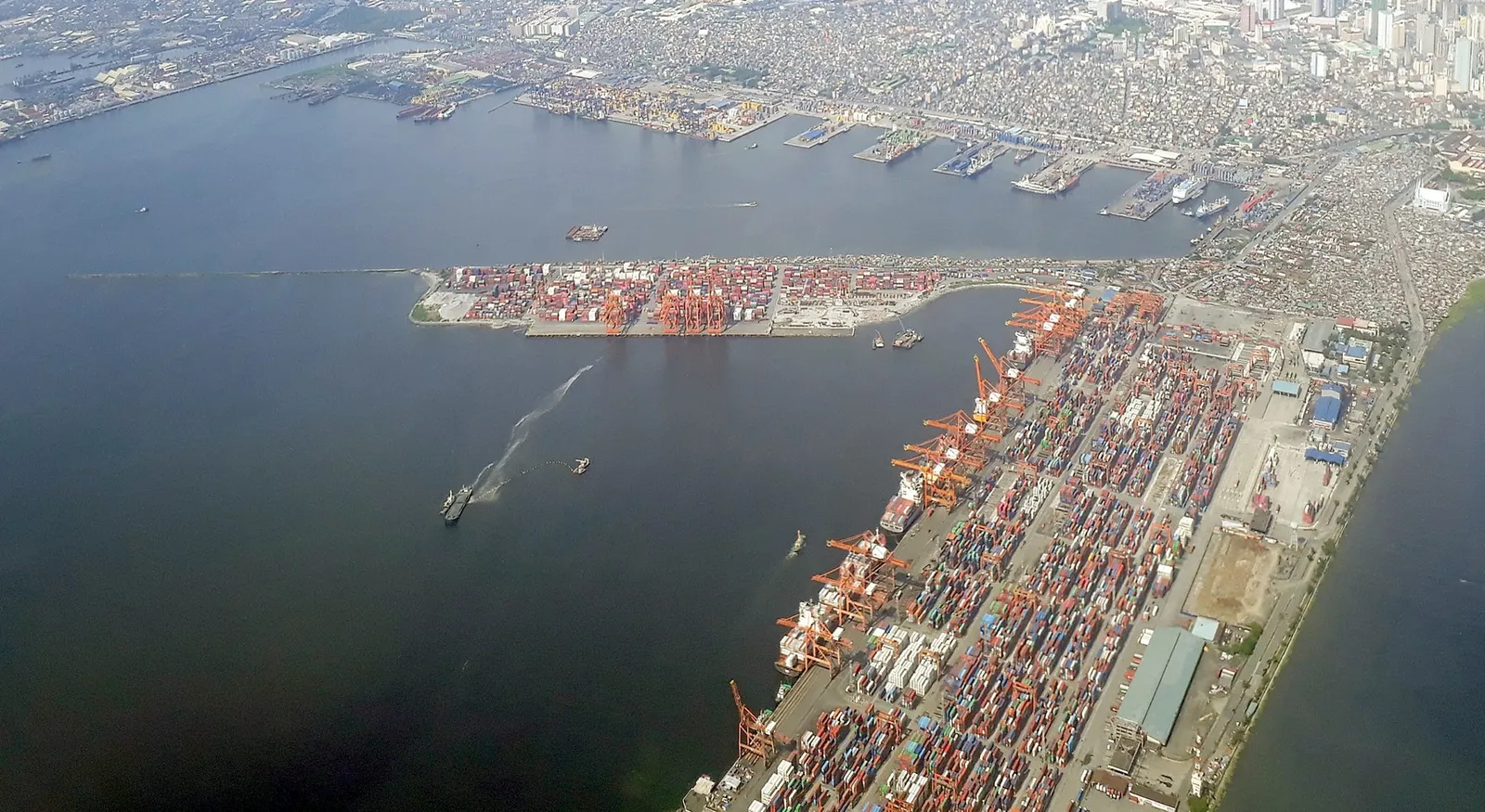
Cover photo: Aerial view of the Port of Manila, September 2019. Illustrative photo. Photo: Mosbatho/Wikimedia Commons, CC BY 4.0.
Sources: Philippine News Agency: DMW, PNP-ACG unite to strengthen crackdown vs online recruitment scams (6 Nov 2026), Daily Tribune: DMW, PNP-ACG team up vs. online recruitment scams (6 Nov 2026), The Global Filipino Magazine: OFW reports of online recruitment scams to go straight to PNP cybercrime unit (6 Nov 2026), DMW telephone directory (as of 6 July 2026): Migrant Workers Protection Bureau contacts, DMW: Licensed recruitment agencies inquiry, ITF ShipBeSure: Recruitment scams.
How we choose, write and correct our articles: editorial policy.