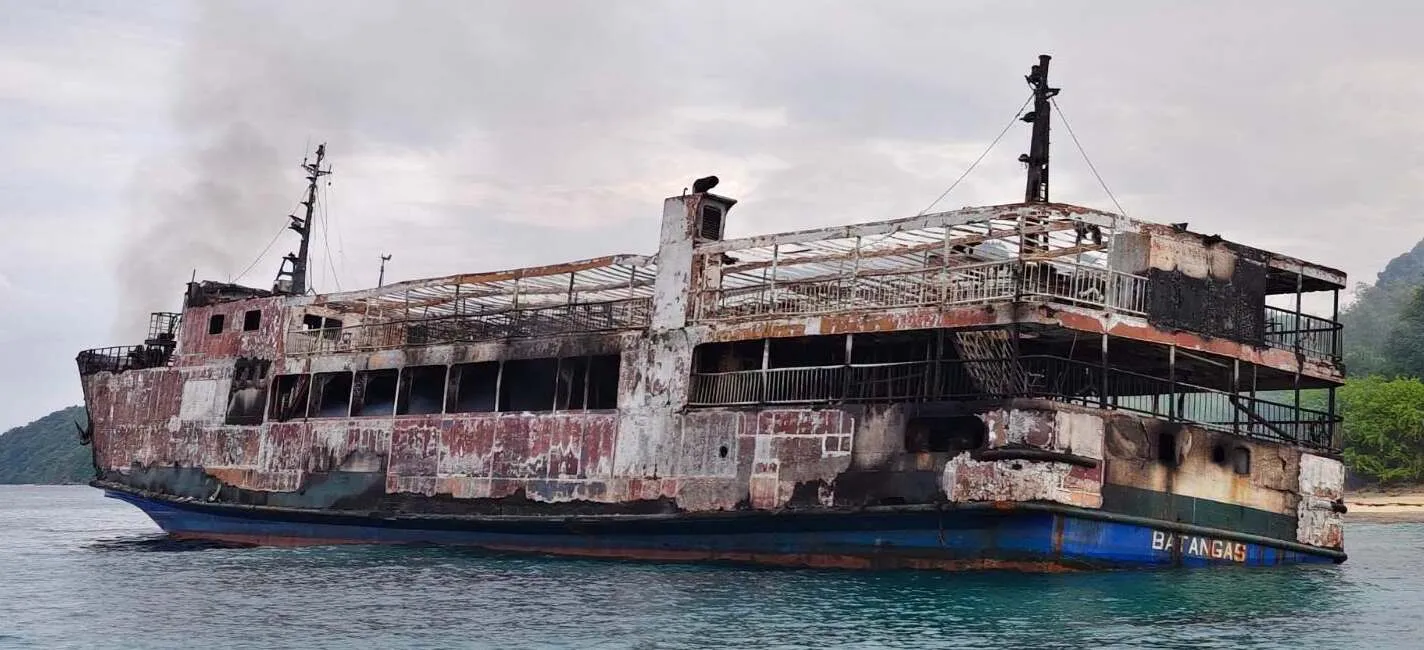
Fire investigators in the Philippines have said what probably started the fire on the ferry June Aster. The fire happened on 9 September 2026 near Coron in Palawan. It killed 77 people.
The Bureau of Fire Protection (BFP) says two cargoes spilled and mixed during rough seas. They were calcium hypochlorite, a chemical used to clean swimming pools, and asphalt. The cargo was stowed near the hot air exhaust from the engine room.
The BFP gave its findings at a government press briefing on 16 October. Officials are now looking at criminal charges. These could include the master, two deck officers, two able seamen and the safety officer.
What happened
June Aster was a ro-ro passenger ship. This is a ferry that carries passengers, vehicles and cargo, with ramps so vehicles can drive on and off. It was on its way to Coron, Palawan.
There were 128 people on board: 111 passengers and 17 crew, the BFP said. The Presidential Communications Office (PCO) gave the latest figures on 16 October. 77 people died, 43 were injured and 8 are still missing.
The fire started at about 6:30 p.m., about 1.2 nautical miles off Coron. Fishing boats pulled 43 survivors from the sea about two hours later. The BFP chief said toxic smoke may explain the many deaths. Many passengers may have been asleep.
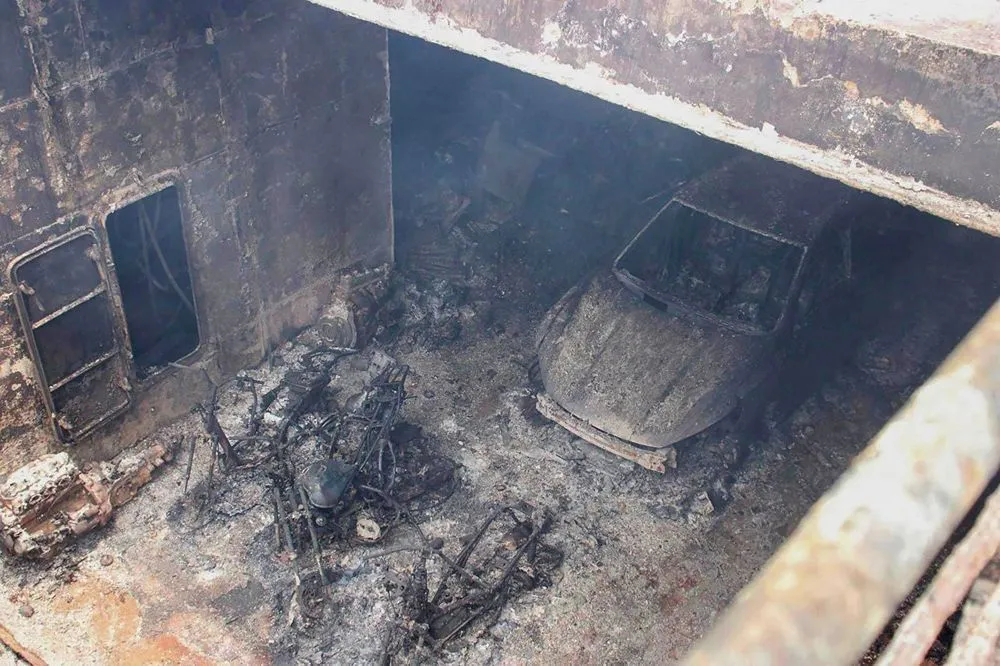
What the fire investigators found
The BFP chief, Fire Chief Superintendent Wilberto Rico Neil Ang Kwan Tiu, described the voyage. His account is based on statements from survivors and crew. The investigation is still going on.
The voyage was planned for 3 September but started four days late. The operator, Atienza Interisland Ferries Inc., said this was because of bad weather and low tide. Investigators also heard that the ship had engine problems.
During the delay, more cargo was loaded, including drums of cooking oil, asphalt and calcium hypochlorite.
The asphalt and the chemical were stowed at the back of the cargo deck. They were right in front of the hot air exhaust from the engine room. The BFP also found a problem with the ventilation, so heat could build up.
In rough seas, some cargo shifted and fell. A lashing failed at the front of the cargo deck. But no crew member checked the cargo at the back, the BFP said.
The ship had engine trouble on the way, and the crew repaired fuel lines. About 50 minutes before the fire, the master allegedly told the chief engineer to increase engine speed to 9 knots. The BFP said the longer voyage and higher engine speed may have made the exhaust hotter.
The BFP thinks the falling cargo spilled the chemical onto the asphalt. The heat near the exhaust may then have started the fire.
In September, the Philippine Coast Guard looked at several possible causes, including an electric car on board, Philstar reported. The BFP's new account points to the chemical cargo instead.
Possible charges
The BFP chief said people found responsible could face charges of reckless imprudence resulting in multiple homicide. This is a crime of serious carelessness that causes deaths. Government staff who did not do their duties could face charges under the anti-corruption law.
He named the master, the chief mate, the second mate, two able seamen and the safety officer. The owner and the cargo loading contractor could also be held responsible. The large amount of chemicals on board could make the charges more serious, he said. For now, these charges are only being considered.
One complaint has already been filed. On 23 September, the Philippine Coast Guard filed a complaint against the master for falsification of public documents, Philstar reported. It went to the Department of Justice. The coast guard said the passenger numbers in his declaration before departure did not match the people on board.
The BFP is also working with the Philippine Coast Guard and the Maritime Industry Authority (MARINA). They want to find out why the ship was allowed to sail after the reported mechanical problem.
Why calcium hypochlorite is dangerous
Calcium hypochlorite is a white powder or tablets used to clean water. At sea it is carried as dangerous goods. It has caused many fires and explosions on ships, says the UK P&I Club, an insurer of shipowners.
The club's guide explains the rules of the IMDG Code, the international code for dangerous goods at sea. Under the code, the chemical must be kept away from sunlight and all sources of heat. It must be in a place with good ventilation.
The chemical must not be packed together with combustible material, which is material that burns easily. It can break down by itself at about 30 to 55 °C or more, depending on the package size. It then gives off chlorine and oxygen. Chlorine is toxic. The oxygen makes a fire burn harder.
Many past fires came from poor stowage or packages damaged in heavy weather, the club says. Others came from stowage next to oils and similar goods. The code also limits this chemical on passenger ships. It is not yet public which rules applied to this domestic voyage.
Lessons for crews
Know what dangerous goods are on board and where they are. Ask for the dangerous goods list before loading, also on short domestic voyages.
Keep chemicals like calcium hypochlorite away from heat, such as engine exhausts, heated fuel tanks and direct sun. Keep them away from things that burn easily, such as asphalt and oil drums.
Check lashings on the whole cargo deck in rough weather, not only one part. Make regular fire rounds on vehicle and cargo decks.
Report engine and ventilation defects in writing to the company. Do not let a delay or a schedule push you to sail or run with a defect.
On passenger ships, plan in drills how to raise the alarm fast and wake sleeping passengers.
Read more on Crewboard: IMO warns that too many seafarers are detained for doing their jobs.
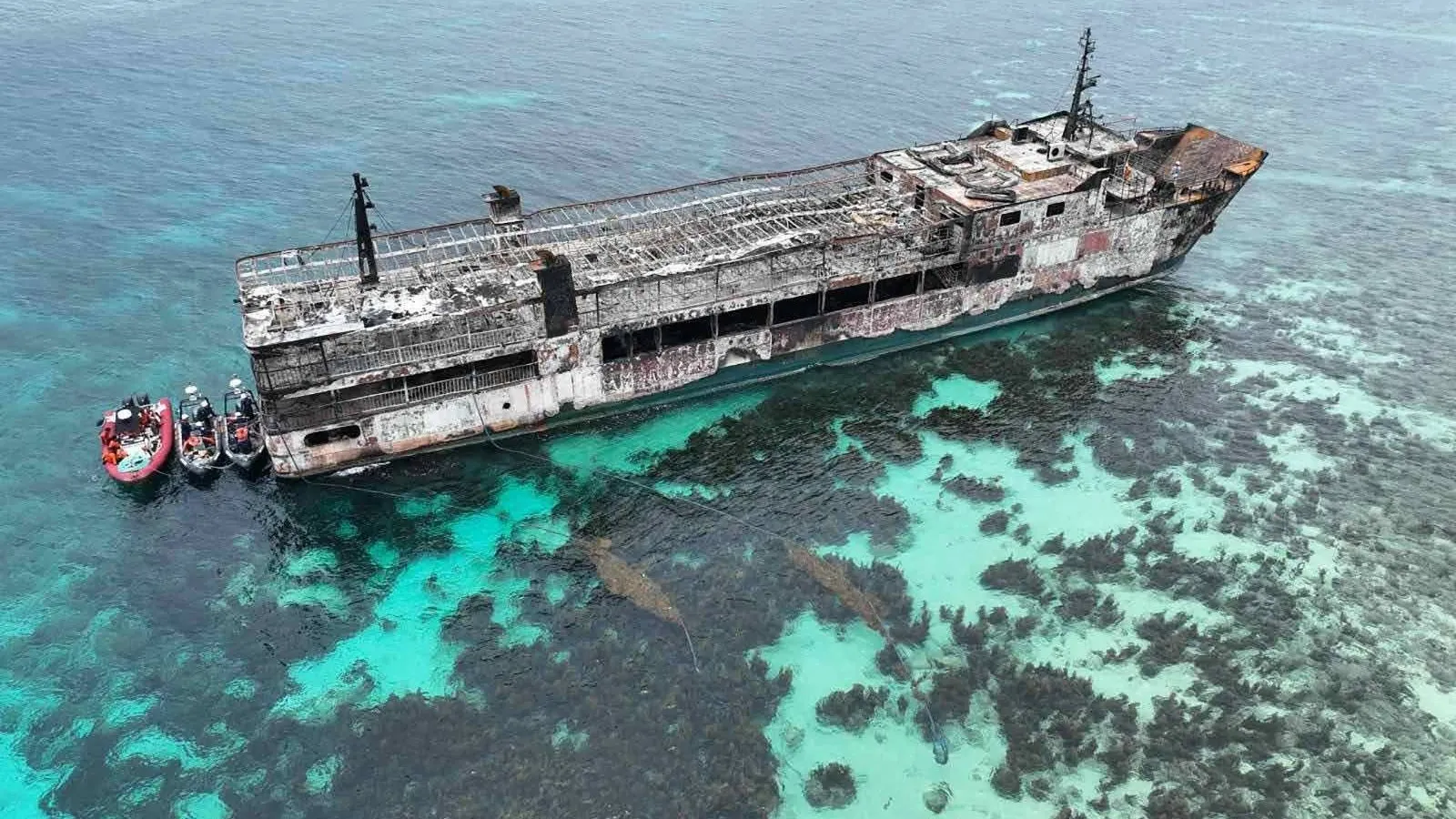
Cover photo: The burnt June Aster with coast guard boats at its stern, off Coron, on 11 September 2026. Photo: Philippine Coast Guard/Wikimedia Commons, public domain (Philippine government work) (cropped).
Sources: Presidential Communications Office: Charges vs. MV June Aster crew, owners, others eyed over Sept. 9 deadly fire (16 Oct 2026), Philstar: Chemical spill may have triggered MV June Aster fire — BFP (17 Oct 2026), ABS-CBN News: Chlorine, asphalt, faulty ventilation ignited MV June Aster deadly fire, BFP says (16 Oct 2026), Safety4Sea: Philippines ferry fire: Hazardous cargo handling under investigation after 77 deaths (20 Oct 2026), Philstar: Possible EV link in June Aster fire prompts ferry bans, safety review (19 Sep 2026), UK P&I Club: Carefully to Carry, Chapter 31 – Calcium Hypochlorite (2023), Philstar: PCG files case vs June Aster captain (29 Sep 2026).