A second engineer died on the Singapore-flagged bulk carrier Viyada Naree on 20 January 2026. Heavy crane parts slid off a raised platform when the ship rolled. They fell onto the main deck, where he was walking. The Transport Safety Investigation Bureau of Singapore (TSIB) published its final report on 6 October 2026.
What happened
The ship had just left dry dock at a shipyard in China. It was sailing without cargo in the Yellow Sea, with 24 crew, mostly from Thailand and some from India. The swivel hook of the No. 2 deck crane was jammed and did not turn. The crane was needed for cargo in a few days, so the chief officer planned to free the hook at sea.
At about 09:10 ship's time, the chief officer held a toolbox meeting and a risk assessment with five crew. The chief officer, the bosun and the fitter then worked on top of the No. 1 crane mast house. This platform is about 2.7 metres above the main deck. They took the swivel hook and two D-shackles off the crane block. Together these parts weighed about 35 kg.
Then the sea changed. Swells grew to about 1.5 metres, and the ship started to roll more. The loose hook, the shackles and a 10 kg chain block slid across the platform. The crane block swung from side to side and hit the fitter, who hurt his right leg.
On a later roll, the parts fell onto the port side of the main deck. The second engineer had checked the job a few minutes earlier and was walking past. The bosun found him unconscious and bleeding. The ship's CCTV did not cover this area, so nobody knows which part hit him. The report says the falling equipment likely struck him.
The crew gave first aid and CPR (chest compressions to restart the heart). The Chengshan Jiao Vessel Traffic Service (VTS) told the ship to go to Longyanwan Anchorage in China, where medical help would wait. The second engineer died at about 16:30 the same day. He was 41 years old and from Thailand. His helmet had no chinstrap and was found about 3 metres away from him.
What went wrong
The weather risk was rated "very low". The team did not expect the sea to get worse as the ship sailed into open water. The company's rules did not say what "clear weather" means.
The hook and shackles were not tied down before they were taken off the crane block.
There were no barriers or warning signs on the deck below the work. The work permit was ticked "warning notices posted", but there were none.
Nobody planned to change course to reduce the rolling. When it was needed, the ship was in a busy traffic separation scheme (TSS), an area with fixed traffic lanes. Other ships made it hard to turn quickly.
The crane block was overhauled in dry dock, but the swivel hook was not tested afterwards. The work was also not reported to the class surveyor, ClassNK. So the jammed hook was not found before the ship sailed.
Under the company's rules, only the safety officer (the chief engineer) could stop unsafe work. He was not at the work site.
The second engineer's helmet had no chinstrap.
What the company changed
The ship manager, Great Circle Shipping Agency, sent an urgent safety alert to its fleet about objects falling from mast house tops. Its ships must now stop work at height and crane maintenance when they roll or pitch. Officers must set up no-go zones with barriers and signs below and next to any work at height. All hooks, blocks and shackles must have a second restraint when they are taken apart.
TSIB recommends two more steps. Crane blocks should get a functional test after an overhaul, and the class society should be told about the work. Helmets should have a chinstrap, and crew should wear them properly. TSIB also says any crew member, not only the safety officer, should be allowed to stop unsafe work.
How to avoid this on your ship
Check the weather forecast for the whole job, not only the sea at the start. If the ship starts to roll, stop and secure everything.
Lash every loose part before you disconnect it, especially at height.
Put barriers and signs on the deck below the work. Tell the whole crew, including the engine department.
Before the job, agree with the bridge whether the ship can change heading to reduce rolling, and where it cannot.
Test lifting gear after any overhaul, and tell the class surveyor what was done in dry dock.
If you see unsafe work, say stop. Ask your company to give this right to every crew member.
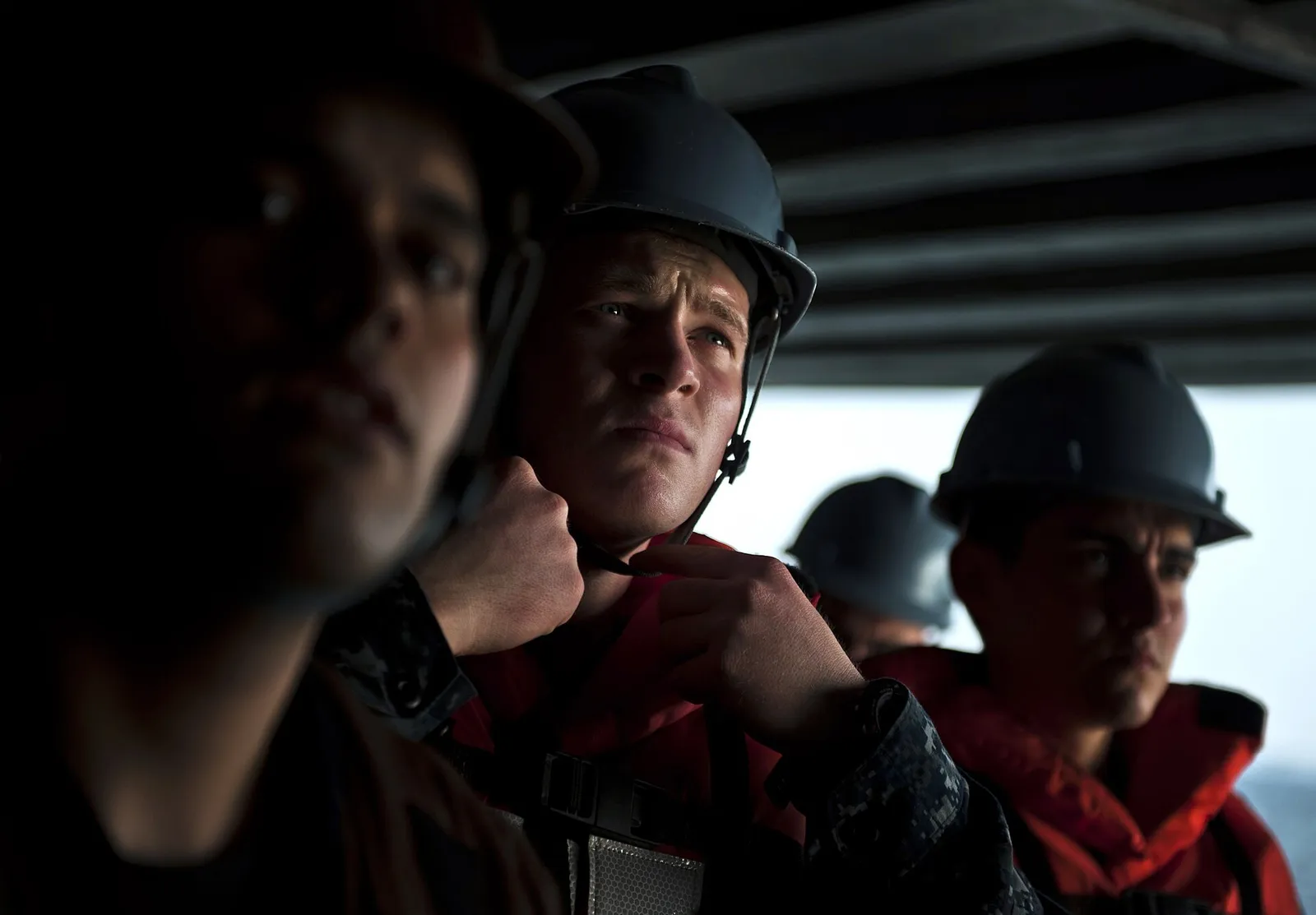
Wear your helmet with the chinstrap fastened.
The full report, TIB/MAI/CAS.224, is on the Singapore Ministry of Transport website. TSIB says its reports do not blame anyone. Their only aim is to prevent accidents.
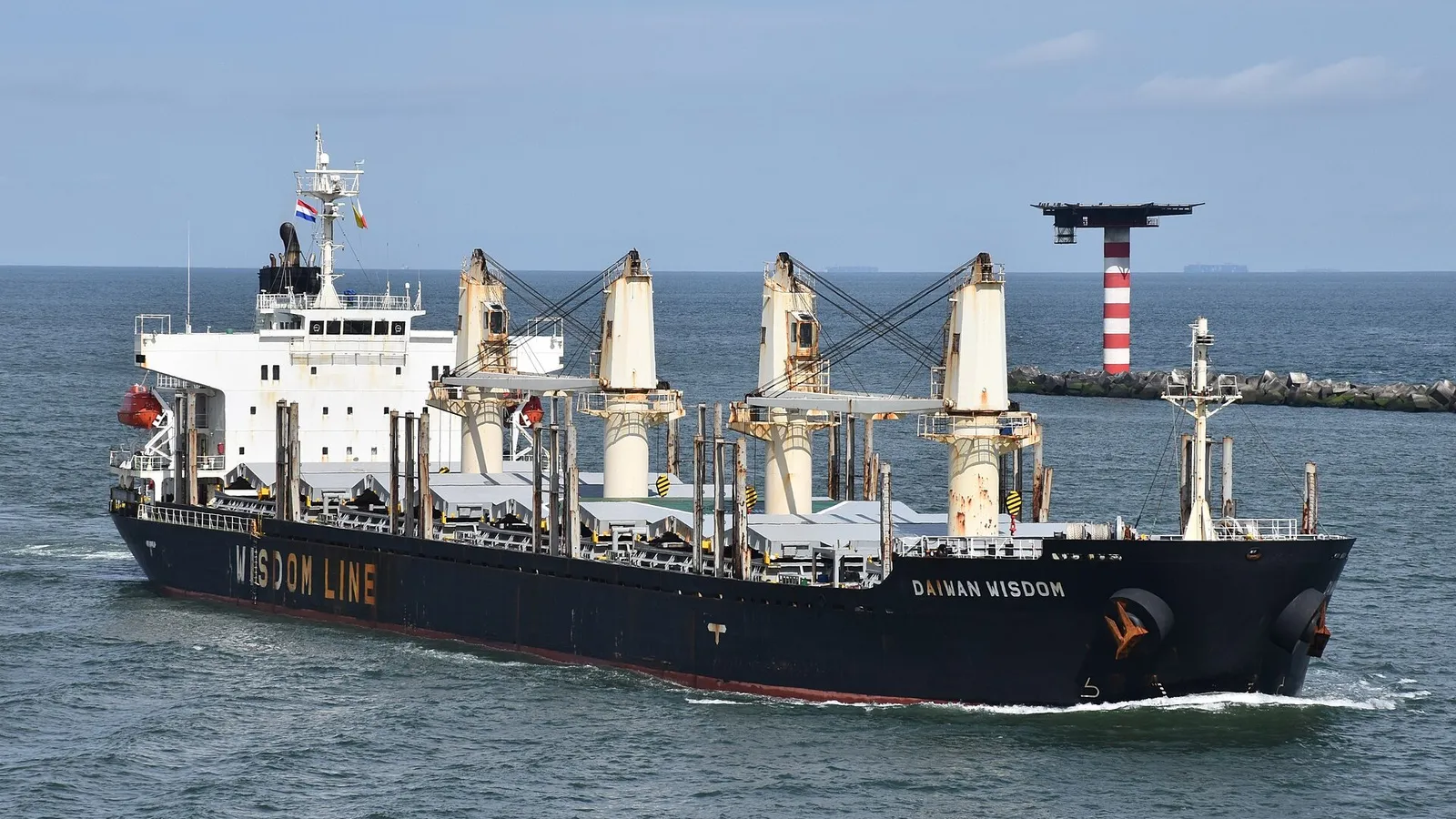
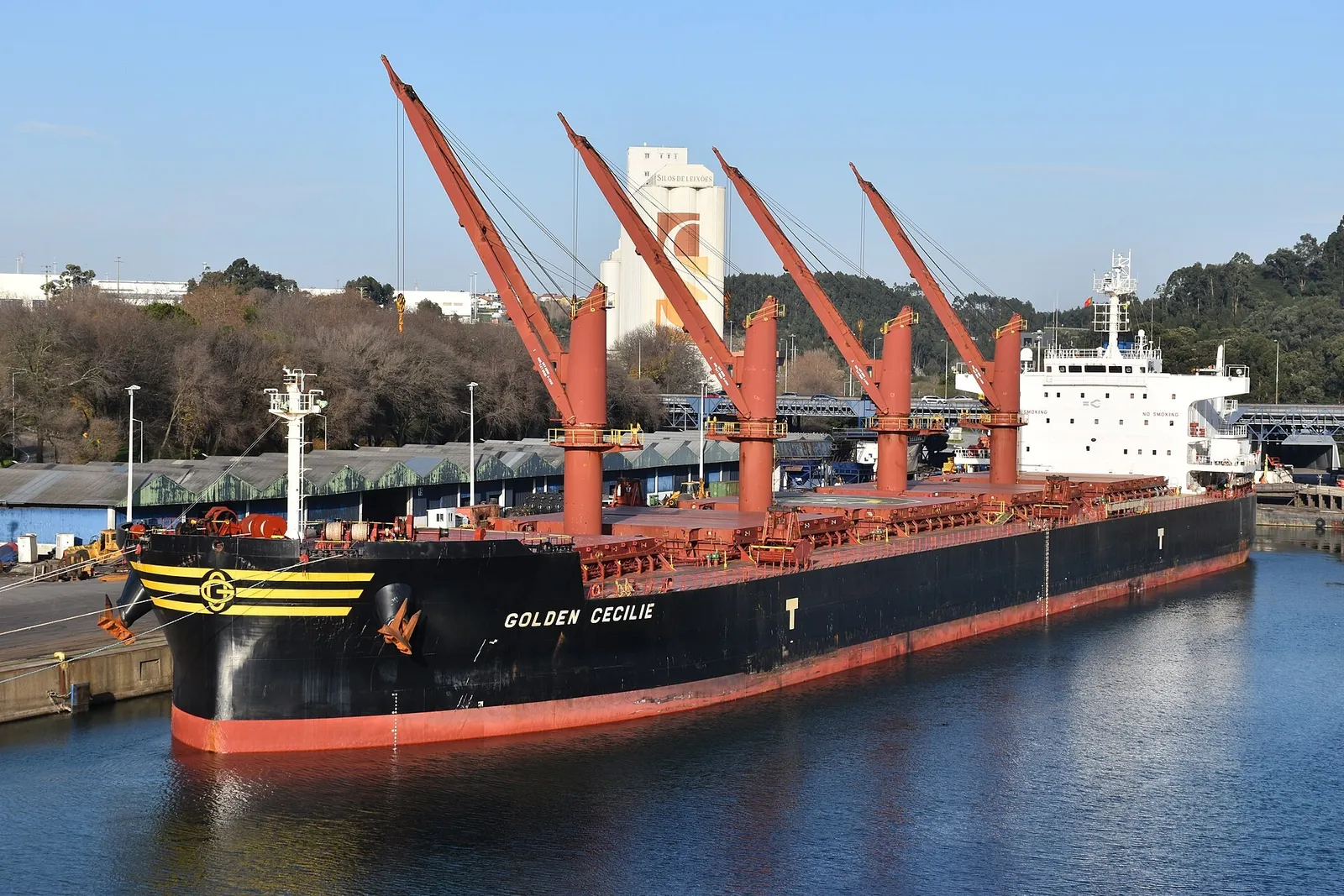
Cover photo: The bulk carrier Daiwan Wisdom, with four deck cranes, arriving at Rotterdam on 30 June 2022. The photo is illustrative and does not show Viyada Naree. Photo: Niels Johannes/Wikimedia Commons, CC BY-SA 4.0.
Sources: TSIB final report: Fatal injury of second engineer onboard Viyada Naree at sea on 20 January 2026 (TIB/MAI/CAS.224, 6 Oct 2026), Singapore Ministry of Transport: Marine safety investigation reports, SAFETY4SEA: TSIB Singapore: Fatal injury of second engineer (16 Oct 2026).