Six seafarers have been missing for six months after two cargo ships disappeared in the Persian Gulf. The ships are Bridge 1 and Bridge 2. They flew the flag of Bolivia. Reuters reported their story on 10 November 2026, after talking to families, shipping sources and Iraqi officials.
The two ships disappeared around 9 May 2026. Their families still do not know if the ships sank, or if the crews were detained. The six crew are two Indians, three Iraqis and one Pakistani, Reuters says.
What is known
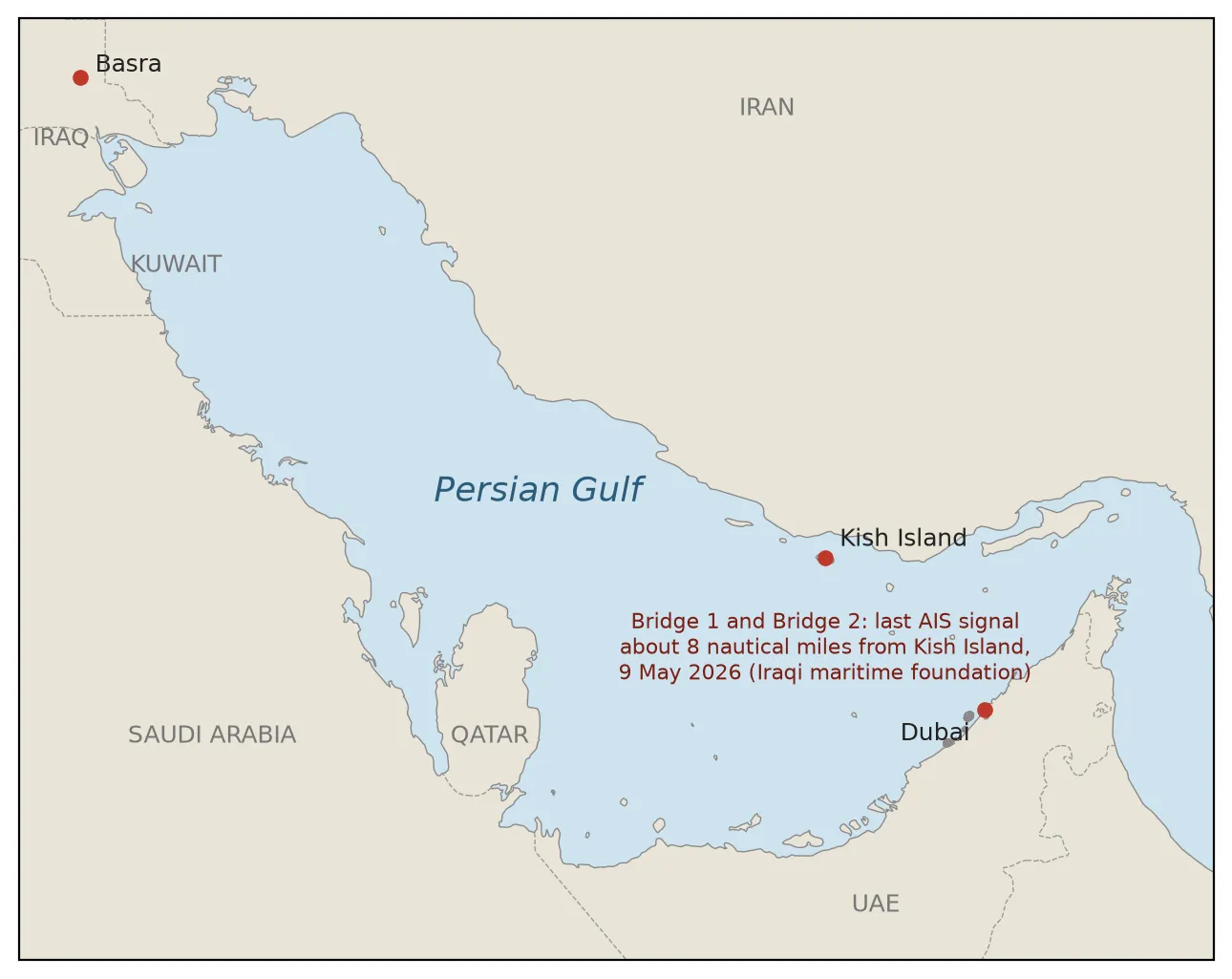
The head of an Iraqi maritime foundation in Basra spoke to Reuters. He said the ships last sent a signal on their Automatic Identification System (AIS) on 9 May at 4:50 p.m. AIS is the system that shows a ship's position to others. At that time, the ships were about 8 nautical miles from Iran's Kish Island.
No distress signal was received. Iraq said in May that it was following the case. Gulf ports asked for information after contact with the crews was lost. The day after, Iranian search and rescue looked for the ships but found nothing, the Iraqi official said.
Shipping sources told Reuters the ships were in Iranian trade and carried steel. The two ships are not on the IMO's list of attacks and incidents in the region. Some sources think the ships were hit and sank. Others think the crews were detained. Nobody has confirmed either idea.
A contract in Dubai that ended in Iran
One of the missing Indian seafarers is 23 years old and comes from Tamil Nadu. His family told Reuters he signed a six-month contract that he was told was based in Dubai. About a week later, he was in Iran. His family tried to bring him home even before the war started at the end of February.
The family borrowed about 1.5 million Indian rupees for his maritime training. At first, the agency that hired him said he would come home soon. Later, the agency said it had no information, and then stopped answering calls, the family said.
Reuters named the agency as Lascar Marine Services in Mumbai. It saw an order dated 22 May on an Indian government website. In it, India's Seamen's Employment Office withdrew the agency's recruitment licence. It also banned the agency's past and present directors from maritime business for five years. The reason given was repeated failures to bring seafarers home, including this young seafarer, or to pay their wages. The agency did not answer Reuters.
An Iraqi family also travelled to Iran to look for answers. They found the owner of the ships, who said he had no information. The Iranian agent who hired the Iraqi crew did not answer Reuters' calls.
High pay, high risk
The IMO has confirmed 130 incidents in the region since the war began on 28 February, mostly attacks. At least 25 seafarers have been killed. Read more in our post on the Persian Gulf war zone rules for seafarers.
A Dubai-based shipper told Reuters that the cost of hiring crews has tripled since the war began. Before the war, a master could earn about $8,000 to $13,000 a month, the shipper said. Now some earn three times that. Many crew members now work for only one voyage and then go home.
What to do before you join a ship in the Gulf
Check where the ship really trades. Ask for the ship's name and IMO number before you sign. Look up its flag and recent voyages. A contract "in Dubai" can still mean work in Iranian waters.
Be careful with unusual flags and unknown owners. Some ships sail under false or doubtful flags. Read our post on fake ship registries and false flags.
Check the agency's licence. In India, use only an agency with a valid RPSL (recruitment licence) from the DGMA. In other countries, check with your maritime authority. You can find official checks on Crewboard's useful links for seafarers.
Know your right to refuse. Under the IBF agreements, seafarers can refuse to sail into a warlike area. If you refuse, the company must send you home at its cost.
Keep your family informed. Give them a copy of your contract, the ship's name, its IMO number, the agency's address and the company's emergency number.
If contact is lost, act fast. Families can report to the national maritime authority (in India, the DGMA grievance system) and to the ITF. Keep every message, payment and document from the agency.
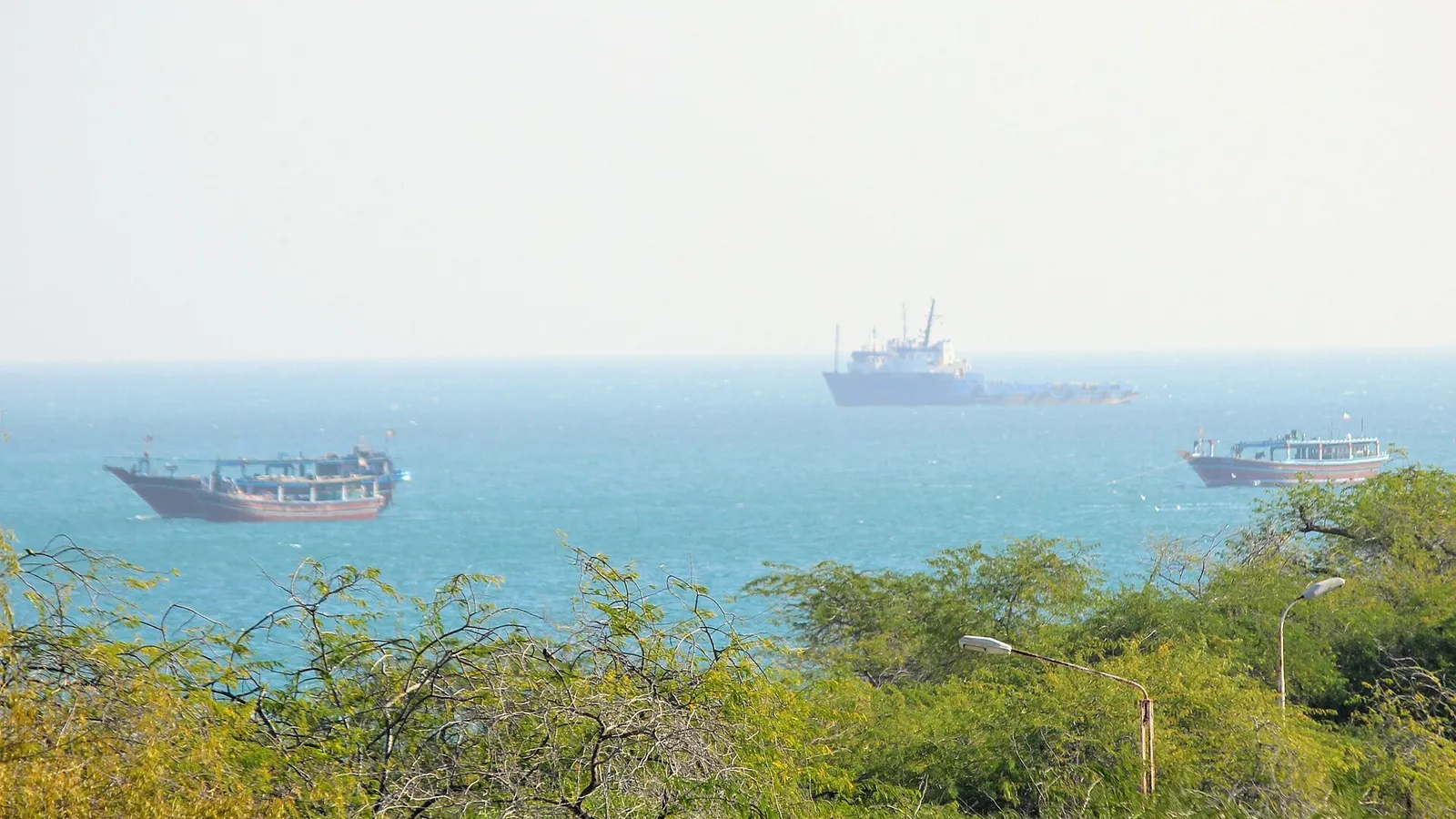
Cover photo: ships and dhows off Kish Island, Iran, in the Persian Gulf, January 2018. Illustrative photo, not the missing ships. Photo: Mehrraz/Wikimedia Commons, CC BY-SA 4.0.
Sources: Reuters via The Straits Times: Vanishing vessels and missing sailors: the Iran war's human cost at sea (10 Nov 2026), Reuters via ThePrint: Vanishing vessels and missing sailors (10 Nov 2026), Al-Monitor (Reuters text): Vanishing vessels and missing sailors (11 Nov 2026), Commons: Kish Island, Iran (cover photo).
How we choose, write and correct our articles: editorial policy.