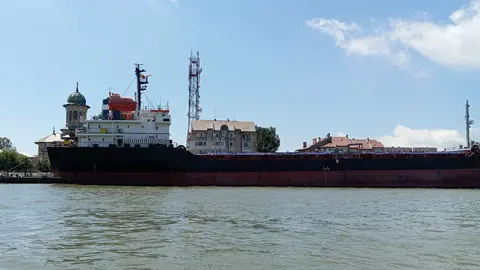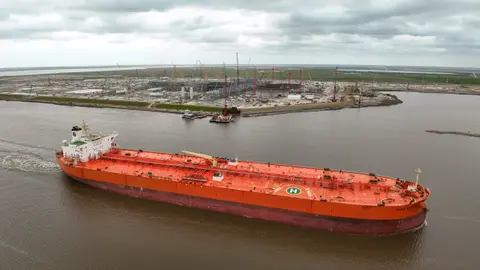
US Central Command said it disabled a commercial ship in the Gulf of Oman on 7 November 2026. This command is known as CENTCOM. It is the US military command for this region. It named the ship as the cargo vessel Huda. The ship flies the flag of St Kitts and Nevis.
CENTCOM said the ship's civilian crew ignored repeated warnings. It said the ship tried more than once to break the US naval blockade of Iran. A naval blockade means US forces are stopping ships from using Iranian ports. CENTCOM said the cargo ship had visited an Iranian port. It then tried to leave the area.
A US military aircraft fired guided weapons at the stern, which is the back of the ship. CENTCOM said this disabled the ship. Before that, US forces told the crew to leave the spaces that would be hit. CENTCOM did not say whether anyone on board was hurt.
What UKMTO reported
The same day, the UK Maritime Trade Operations centre (UKMTO) issued Advisory 198-26. UKMTO shares security reports with merchant ships. The advisory describes an incident involving a bulk carrier and military forces. A bulk carrier is a ship that carries dry cargo in large holds.
UKMTO placed the incident about 18 nautical miles east of Khor Fakkan, in the United Arab Emirates. That position is in the Gulf of Oman. The report date is 7 November 2026. The time of the incident was listed as still to be confirmed. The source was military authorities.
UKMTO said the status of the crew was unknown at the time of the report. It also said damage to the ship and any effect on the environment were unknown. It said authorities were aware and that investigations were continuing. Ships were advised to follow the latest security information and to stay alert.
Maritime Executive reports that the UKMTO position is the location given for this incident. Reuters, writing on gCaptain, also reported the CENTCOM statement on 7 November.
What CENTCOM says about the blockade
CENTCOM said it still enforces the US naval blockade of Iran. It said that since July, US forces have turned around 147 commercial ships that followed their orders. It said they have disabled five merchant ships that refused to comply. CENTCOM advised all mariners near Iranian coastal waters to follow blockade warnings from US forces.
Crewboard earlier reported a security note that says ships near Hormuz may be stopped and searched. That note also covers ships that are not trading with Iran.
What it means for crews
This incident shows what can happen if a crew does not follow military blockade warnings. US forces may then fire on the ship.
If US or other military forces call your ship, answer them and follow their directions.
They may tell you to leave certain spaces, such as the stern, before they act. Go there at once and take other people with you.
Keep a listening watch on VHF channel 16.
Report any warning, boarding or strike to your company security officer. Also report it to UKMTO at watchkeepers@ukmto.org or +44 (0)2392 222060.
If your ship has called at an Iranian port, or may do so, speak to the master and the company before you sail.
Ask what the company will do if US forces stop the ship.
The International Bargaining Forum (IBF) still lists the Gulf of Oman as a warlike area until 19 November 2026. That list can give extra pay and the right to refuse to sail. See the IBF warlike-area update on Crewboard.
Official help lines and security contacts are listed in Crewboard's useful links.
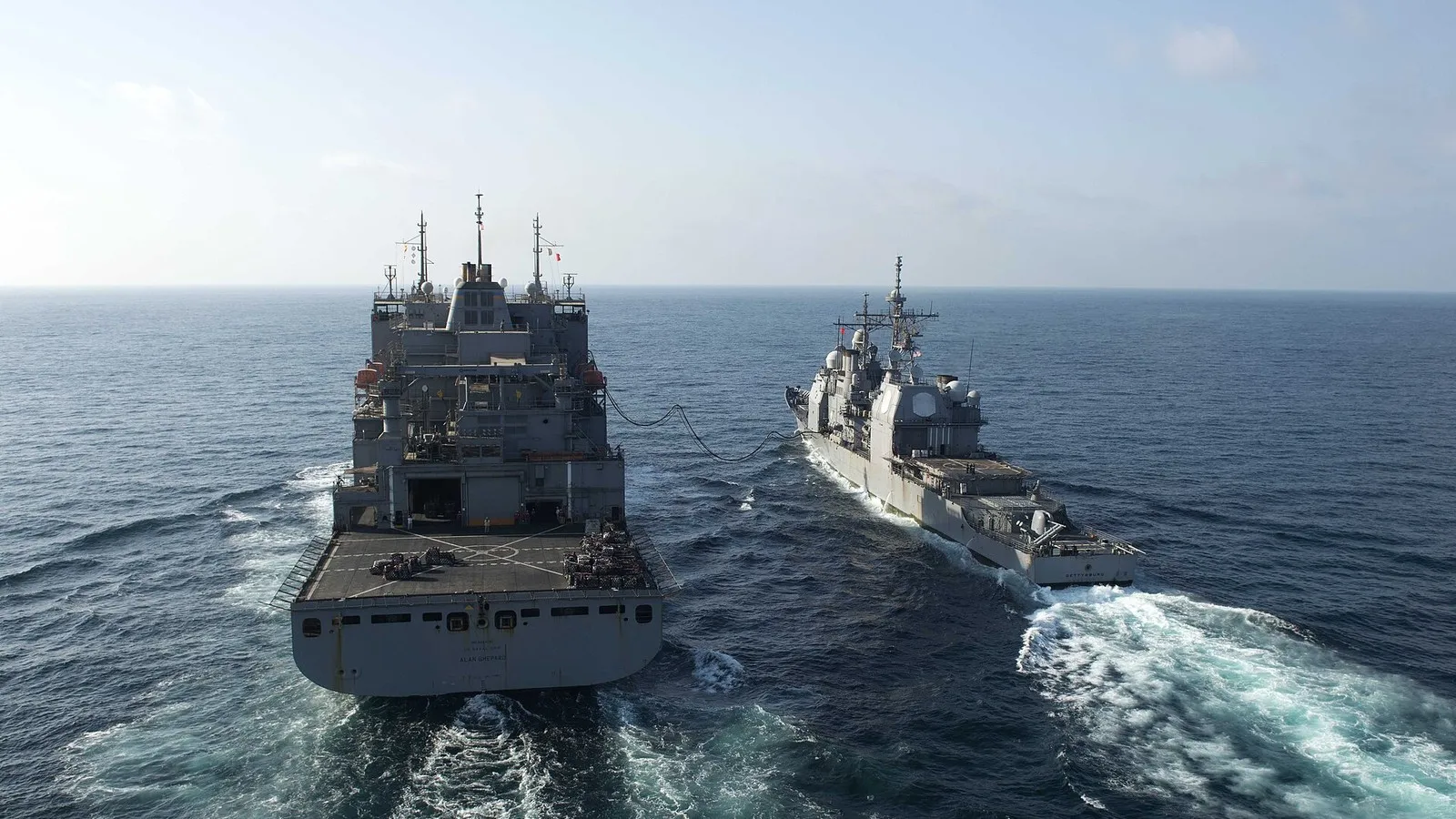
Cover photo: The US Navy ship USNS Alan Shepard transfers fuel to the cruiser USS Gettysburg in the Gulf of Oman on 23 October 2013. Illustrative photo of US Navy ships in these waters, not the cargo ship Huda. Photo: MC3 Jamie V. Cosby, U.S. Navy/Wikimedia Commons, public domain.
Sources: UKMTO Advisory 198-26, 7 November 2026 (PDF), US Central Command: U.S. Forces Disable Cargo Vessel Attempting to Violate Naval Blockade, 7 November 2026, Maritime Executive: US Forces Disable First Cargo Ship in a Month Sailing from Iranian Port, 7 November 2026, Reuters via gCaptain: US Military Says It Disabled Cargo Vessel In Gulf Of Oman, 7 November 2026.
How we choose, write and correct our articles: editorial policy.