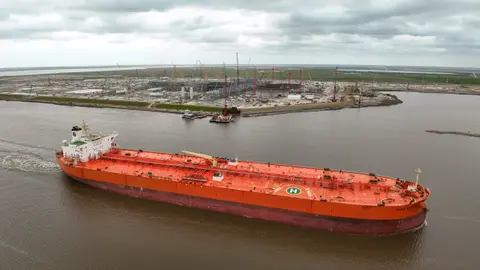
Iran has warned that all ships of the South Korean tanker company Sinokor will face "legal action" from 1 November 2026. The warning came on 27 October from the Persian Gulf Strait Authority (PGSA). Iran set up this body to control which ships may pass through the Strait of Hormuz.
The PGSA says Sinokor ships broke its passage rules more often than any other company in the last three months. It says it has already taken "enforcement measures" against at least seven of them. It did not say what the legal action will be.
Post on X
Loading it connects to X, which may set cookies and see your visit. See our Privacy policy.
Why this is new
Until now, the PGSA named single ships on a list of ships that it says broke its rules. Seatrade Maritime says the list has 123 entries. This is the first warning against the whole fleet of one company, Seatrade Maritime and Splash247 report.
The PGSA says ships on its list can face limits on future passages, fines, detention or confiscation. Confiscation means the ship is taken. Seatrade Maritime notes that Iran has also attacked ships with drones and missiles when it said they broke its rules.
Sinokor owns or charters a very large fleet of VLCCs, very large crude carriers. Lloyd's List Intelligence data shows Sinokor ships made 47% of VLCC trips through Hormuz in September, Seatrade Maritime reports. Seatrade lists seven Sinokor-linked tankers attacked during the conflict, between July and October 2026.
What the shipowners say
The Korea Shipowners' Association answered on 28 October, Reuters reports. It said the ships named in the dispute are not owned by Sinokor. They were chartered on to an oil company outside Korea. The association said these ships have no South Korean crew, only foreign seafarers.
Sinokor did not know about the warning of legal action and was checking the details, the association said.
The situation in the Gulf
October 2026 is the worst month for confirmed attacks on ships since the conflict began in February, Seatrade Maritime reports. It counts 30 confirmed attacks on the IMO list this month. UKMTO, the UK Maritime Trade Operations centre, has said many ships do not report attacks. So the real number may be higher. Crewboard follows the attacks in a separate post.
The Persian Gulf, the Strait of Hormuz and the Gulf of Oman are a warlike area under the IBF list until 5 November 2026. The IBF, the International Bargaining Forum, is where seafarers' unions and shipowner groups agree pay and conditions. Read our post on the IBF list for details.
What crews should do
Ask your company or crewing agency if your ship is owned or chartered by Sinokor, and if it will go to the Gulf.
Check your contract. On ships with an IBF agreement, you may refuse to sail into a warlike area. The company must then send you home at its cost, according to the IBF rules published by IMEC.
If you want to refuse, tell the company in writing and keep a copy.
Follow the security plan and the master's orders. Take part in drills and know your safe place on board.
Report any threat, warning by radio or attack to UKMTO. The emergency phone is +44 2392 222060 and the email is watchkeepers@ukmto.org.
If you have problems, contact your union or ITF Seafarer Support.
Crewboard will follow this story after 1 November.
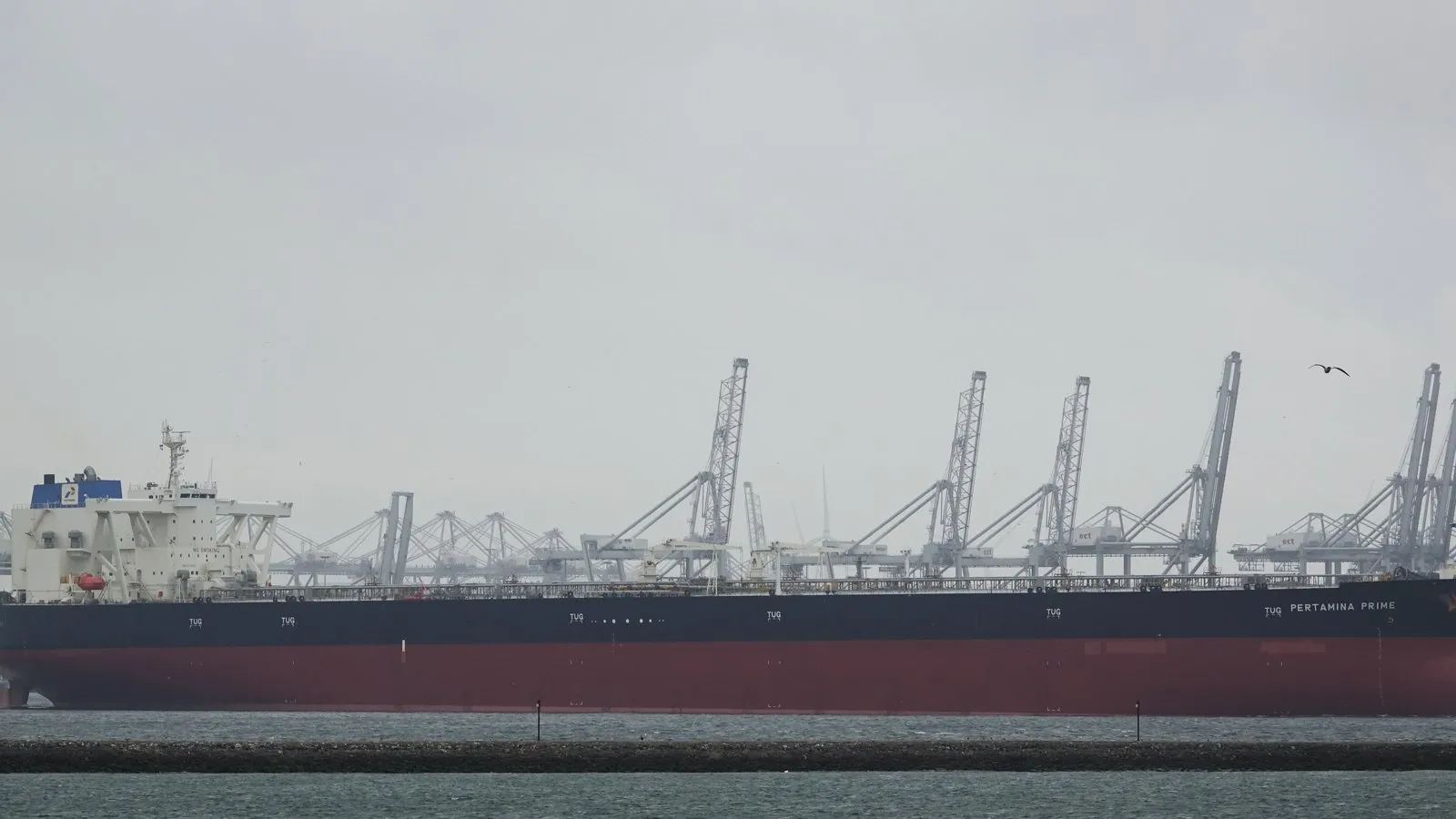
Cover photo: The VLCC Pertamina Prime, a very large crude carrier, at a terminal in the Netherlands, July 2022. Illustrative photo, not a Sinokor ship. Photo: kees torn/Wikimedia Commons, CC BY-SA 2.0 (cropped).
Sources: Seatrade Maritime, 27 Oct 2026: Iran's Hormuz authority to take 'legal action' against Sinokor fleet, Splash247, 28 Oct 2026: Iran singles out Sinokor, Arab News (Reuters), 28 Oct 2026: Iran says Sinokor vessels face legal action; South Korean shipowners deny link, Mehr News Agency, 27 Oct 2026: PGSA to lodge complaint against Sinokor Shipping Co. vessels, Persian Gulf Strait Authority on X, 27 Oct 2026, IMEC: IBF risk areas.
How we choose, write and correct our articles: editorial policy.