Seafarers on busy ferry routes between the UK and France, and between the UK and the Channel Islands, will get new protections. From 1 December 2026, they must be paid at least the UK minimum wage for the whole journey. They also may not stay on board longer than 14 days at a time.
The UK Department for Transport published its decision on 4 November 2026. It said the regulations go to Parliament on the same day. This follows a public consultation that ran from 5 June to 17 July 2026.
Which ships and crews are covered
The rules cover services between the UK and France, and between the UK and the Channel Islands. A service is covered when it calls at a UK port at least 120 times a year. In practice these are mainly ferry services.
The rules work as a condition for using UK ports. They protect the seafarers who work on these services. Ships on other international routes are not covered for now.
Pay: UK minimum wage for the whole journey
Since 2024, these ferries have had to pay the equivalent of the UK National Minimum Wage, but only while in UK waters. Under the new rules, this rate applies for the whole journey. As of November 2026, the UK minimum wage for workers aged 21 and over is £12.71 per hour. It is £10.85 for ages 18 to 20.
Operators may not count a charge for the cabin on board against this minimum. Seafarers must sleep on the ship and cannot find other housing, so the UK Low Pay Commission advised against such a deduction. The rate goes up every year with the UK minimum wage.
France has its own law with a French minimum wage on the same routes. Operators must follow both laws.
Time on board: 14 days on, then the same time off
A seafarer may work on board for 14 days at most. After that, they must rest ashore for at least the same number of days. During this rest they must not work or be on call.
Trainees who are working towards an officer or rating certificate may stay on board up to 21 days. They then also get an equal time ashore. A longer stay is allowed only for reasons the operator could not control or avoid. It must last only as long as needed.
France has had the same 14-day and 21-day limits since March 2024. The UK copies them so both countries have one rule on these routes.
What seafarers said
The government received 119 answers. Most supported minimum wage pay for the whole journey: 83% of those who answered that question agreed.
The 14-day limit was much less popular: 81% of those who answered disagreed. Many were ferry seafarers. They said two weeks on and two weeks off is normal, but they want to swap shifts sometimes for family reasons. The government kept the limit for safety and fatigue reasons. It asked operators to find flexibility inside the rules. Fatigue is a real risk at sea, as the Wooyang Venus case with false rest records in Australia shows.
How the rules are enforced
Each year, UK harbour authorities ask operators for two declarations. One confirms the pay rule and one confirms the time-on-board rule. The year runs from 1 December to 30 November.
An operator that gives no declaration, or breaks it, must pay a surcharge each time its ship calls at the port. If it does not pay, the port must refuse the ship entry. The Maritime and Coastguard Agency (MCA), the UK maritime safety authority, is responsible for enforcement.
What it means for crews
If you work on a UK–France or UK–Channel Islands ferry, check your pay from December. Divide your pay for the period by your hours on board. The result should not be below the UK minimum wage for your age.
Keep your own record of the days you join and leave the ship. More than 14 days in a row (21 for trainees) is allowed only in real emergencies.
Report concerns about pay or time on board on a covered service to the MCA at mcainvestigations@mcga.gov.uk. You can also contact your union.
The government's guidance on the seafarer wage rules explains how pay is checked.
If you get no wages at all, read our guide what to do if your wages are not paid or your ship is abandoned.
Looking for ferry or other jobs? See the external vacancies on Crewboard.
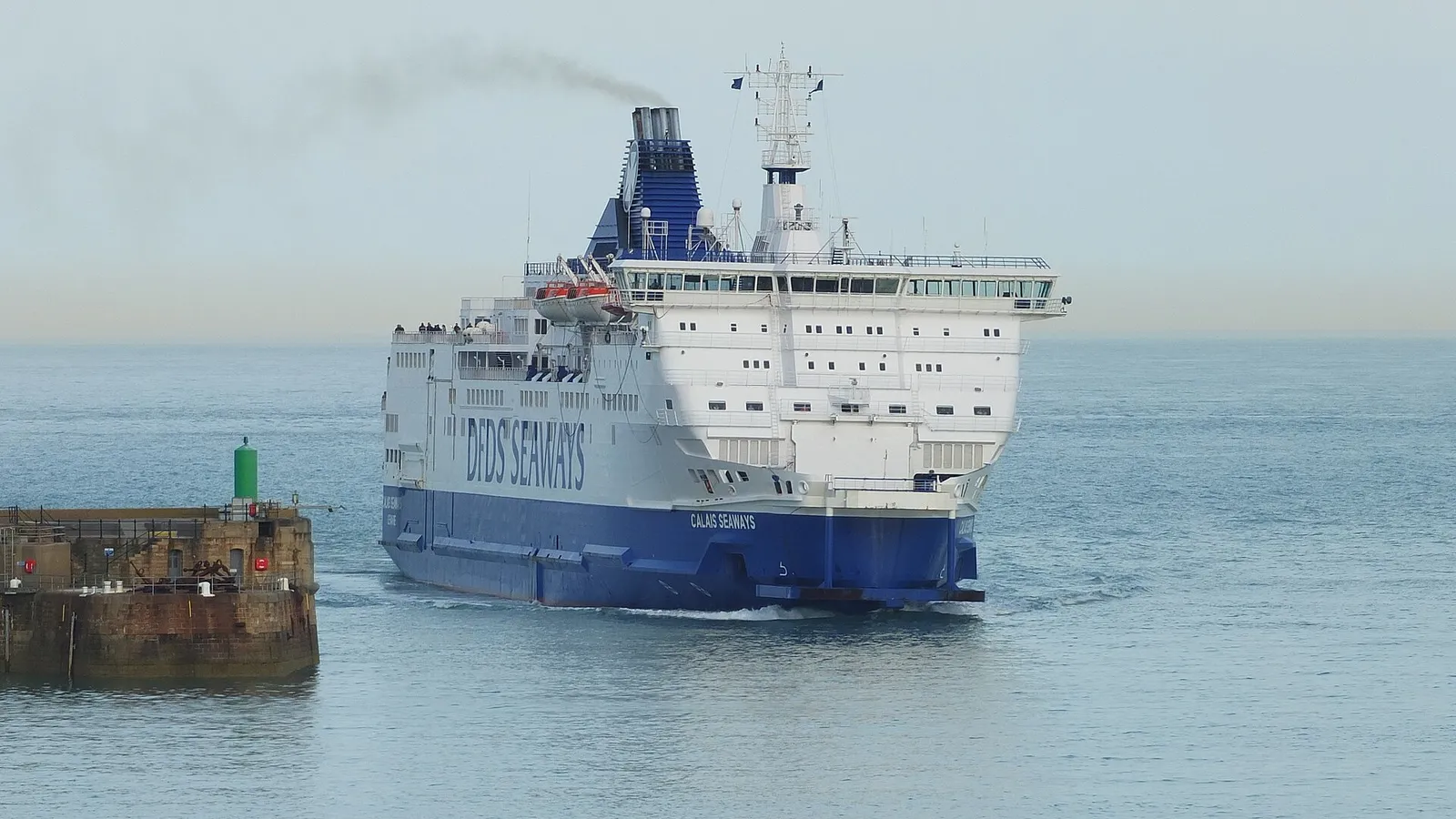
Cover photo: The DFDS ferry Calais Seaways enters the port of Dover, UK, in August 2015. Illustrative photo. Photo: Ad Meskens/Wikimedia Commons, CC BY-SA 4.0 (cropped).
Sources: GOV.UK, Department for Transport: Strengthening seafarer protections on UK-France routes, consultation outcome (4 Nov 2026), Department for Transport: Strengthening Seafarer Protections, government response to consultation (November 2026, PDF), GOV.UK: Complying with seafarer wage requirements (guidance), GOV.UK: National Minimum Wage and National Living Wage rates.
How we choose, write and correct our articles: editorial policy.