India's shipping minister has told the maritime regulator to do more to protect Indian seafarers in dangerous waters. Sarbananda Sonowal gave the order at a review meeting in New Delhi on 19 November 2026. The government news service DD News published the details from the official press release.
The order follows many attacks on merchant ships with Indian crews. There were at least five incidents between 10 and 18 November, The Times of India reports. They hit ships with Indian crews in the Persian Gulf and near the Strait of Hormuz. Indian crew members were injured, and one is missing.
What the minister ordered
Sonowal told the Directorate General of Maritime Administration (DGMA) to make safety and security measures stronger. DGMA is India's maritime regulator, earlier called DG Shipping. The measures include:
closer monitoring of high-risk sea areas;
sending out security advisories on time;
regular contact with shipping companies and ship operators;
making Indian seafarers more aware of threats and of the steps to stay safe.
DGMA must also work closely with the Ministry of External Affairs and Indian embassies. The aim is fast help when something happens to an Indian ship or an Indian seafarer. The minister also checked how compensation for victims is going. He asked the Director General to brief him in person, and asked how families of victims get help on time.
The numbers
Nine Indian-flagged or Indian-interest ships are in the Persian Gulf, west of the Strait of Hormuz. The ministry watches them closely. The Times of India says they have 161 Indian seafarers on board.
Indian-flagged ships, or ships with cargo for India, have made 86 trips through the Strait of Hormuz, the ministry says.
DGMA's e-Navik system tracks more than 800 ships in the Persian Gulf. It tracks more than 200 in the Gulf of Oman.
The ministry follows more than 1,200 ships and nearly 9,500 Indian seafarers in high-risk areas, The Times of India reports. It uses a live dashboard.
According to the same report, 104 incidents in the Persian Gulf have killed 12 Indian seafarers so far. In the Black Sea, 37 incidents have killed five Indian seafarers.
The Indian Express reported the same main facts. Our post on the latest Gulf attacks follows each new attack reported by UKMTO, the UK Maritime Trade Operations centre.
How the tracking system works
DGMA started the seafarer tracking module on its e-Navik portal in September 2026, with DGMA Circular 56 of 2026. Licensed crewing agencies (called RPSL in India) and shipowners must enter each ship with Indian crew in high-risk areas. They give the ship's details, the names of the Indian crew and the agency.
After that, they must update the ship's position every day, and every sign-on and sign-off. The circular names five areas. They are the Persian Gulf, the Gulf of Oman, the Red Sea, the Gulf of Aden and the Black Sea. DGMA says the position data is confidential.
What it means for crews
Is your ship going to one of these areas? Ask your crewing agency if the ship and its Indian crew are in the e-Navik tracking module. The agency must do this, not you.
Check that the agency and the company have your correct phone number and the details of your next of kin. This helps if your family needs news or help.
Save the DGMA 24x7 helpline in your phone before you join. The numbers are 1800-889-7768 (toll-free in India), +1-888-988-0256 (toll-free from abroad), WhatsApp +91 8655856830, and the email is enavik.24x7@gov.in. They are in DGMA Circular 67 of 2026.
Before you sign, ask in writing where the ship will trade. Also ask if your contract follows the IBF rules for warlike and high-risk areas.
Check the ship's flag before you sign. Our post explains how to check a ship's flag and avoid false-flag ships.
On board, know your muster station and the safe place for the crew in an attack. Join every drill.
More helplines for seafarers and their families are on our page of useful links for seafarers.
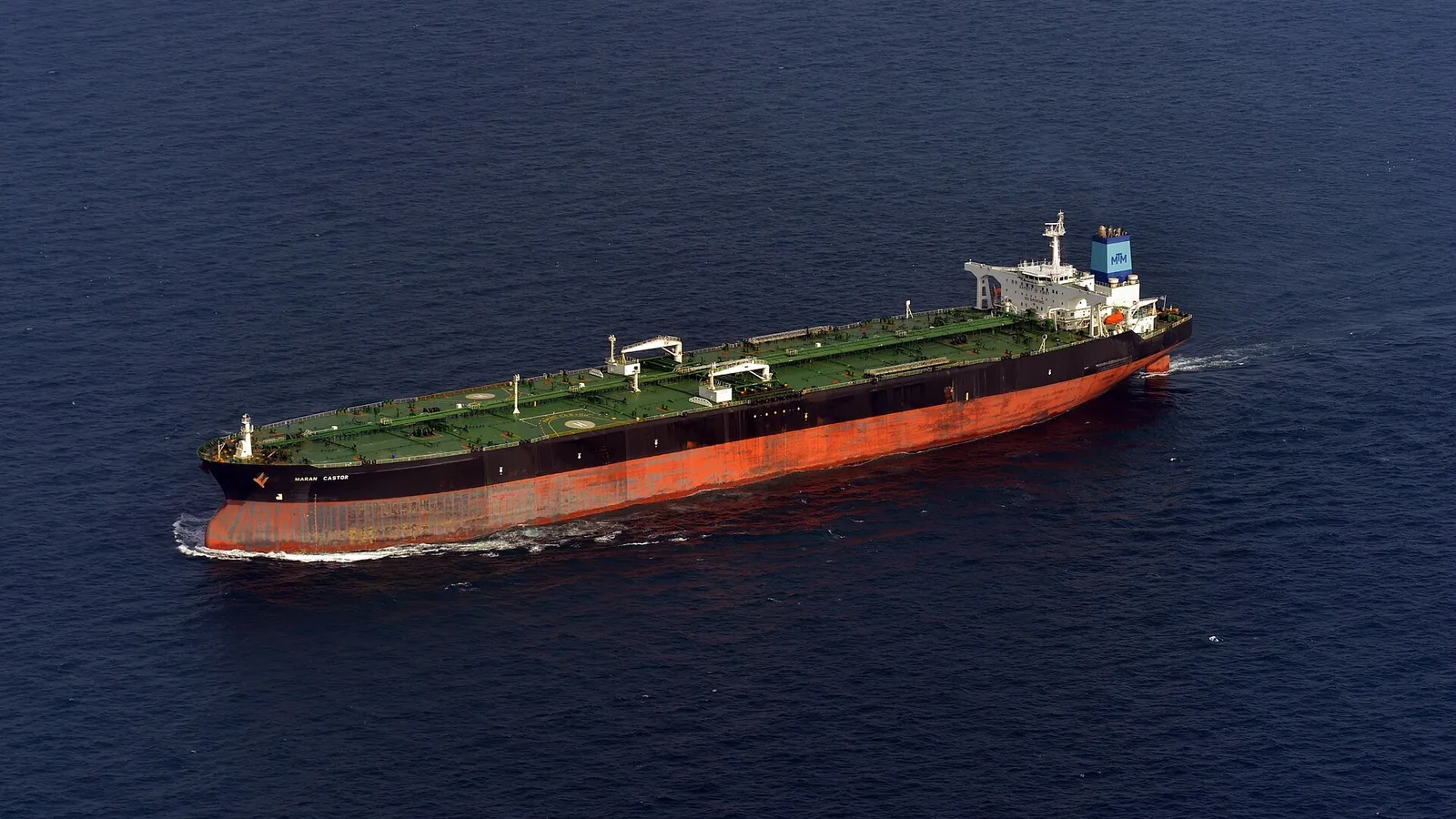
Cover photo: The crude oil tanker Maran Castor under way in the Arabian Sea, December 2012. Illustrative photo, not a ship from this story. Photo: Mass Communication Specialist 3rd Class Jumar T. Balacy, U.S. Navy/Wikimedia Commons, public domain (cropped).
How we choose, write and correct our articles: editorial policy.