Hackers may have broken into the computer networks of up to 50 merchant ships in recent weeks. US officials are investigating if Iran is behind the attacks, NPR reported on 24 November 2026. The Wall Street Journal first reported the story.
The ships carried oil, liquefied gas and other dangerous cargo, TechCrunch reports. They were sailing in Asia and Europe. At least one of the ships was an LNG tanker. Iran's role has not been confirmed.
How the hackers got in
The hackers used known security holes in Fortinet FortiGate devices, a US official told NPR. These devices are firewalls and VPN routers. A firewall protects a network from outside access. A VPN (virtual private network) gives a safe connection to the ship from ashore. Many ships use these devices.
From the ship's office computers, the hackers moved to operational technology (OT). OT is the equipment that controls machines on board. The official said the hackers could have affected propulsion, steering, navigation and cargo systems. The official gave no example of this happening.
The FBI and the US Coast Guard say there are no reports of damage, danger to crews or pollution so far. In August, their specialist team boarded two foreign ships heading to US ports to deal with the threat. They thanked the captains, crews and company staff for their help.
The signs crews noticed
On some ships, the crew first suspected a problem themselves, NPR says. They noticed these signs:
email stopped working properly;
people could not log in to their accounts;
on at least one ship, all communications were down for a long time.
The Coast Guard and the FBI warned the industry about attacks on these devices in a bulletin in September. "These are not sophisticated attacks," the US official told NPR. The official said basic cyber hygiene could stop them. In November, the Marshall Islands also warned about attacks on ship firewalls and VPNs.
What to do on board
Report strange IT problems at once to the master and the company security officer (CSO). Examples are email failures, login problems, a communications blackout, or screens that act strangely.
Do not ignore a problem because it looks small. On the hacked ships, these small signs were the first warning.
Never share your passwords. Do not plug personal phones or USB sticks into ship computers, ECDIS (electronic chart system) or engine control systems.
If the company sends a software update for the firewall or VPN, make sure it is installed. The September alert asked companies to install updates, change passwords and use two-step login.
Practise steering by hand and navigating without the integrated systems. Ships have backup controls in case automatic systems fail or are hacked. Our post on navigating when GPS is jammed has more tips.
In US waters, cyber incidents on ships must be reported. The US Coast Guard asks for reports to the National Response Center: +1 800 424 8802. More information is on the Coast Guard maritime cyber page.
Electro-technical officers often help with IT on board. You can find current ETO vacancies on Crewboard.
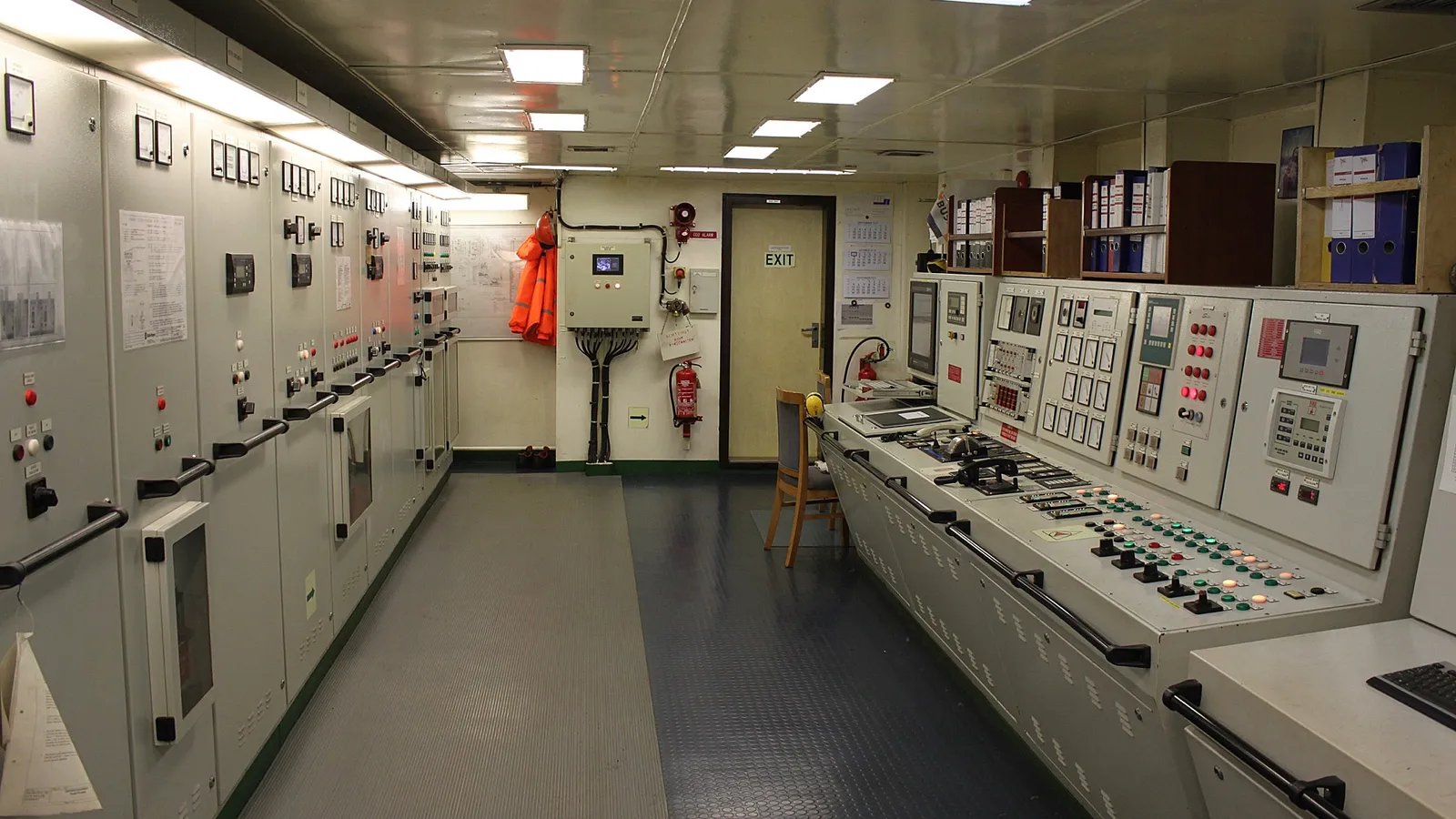
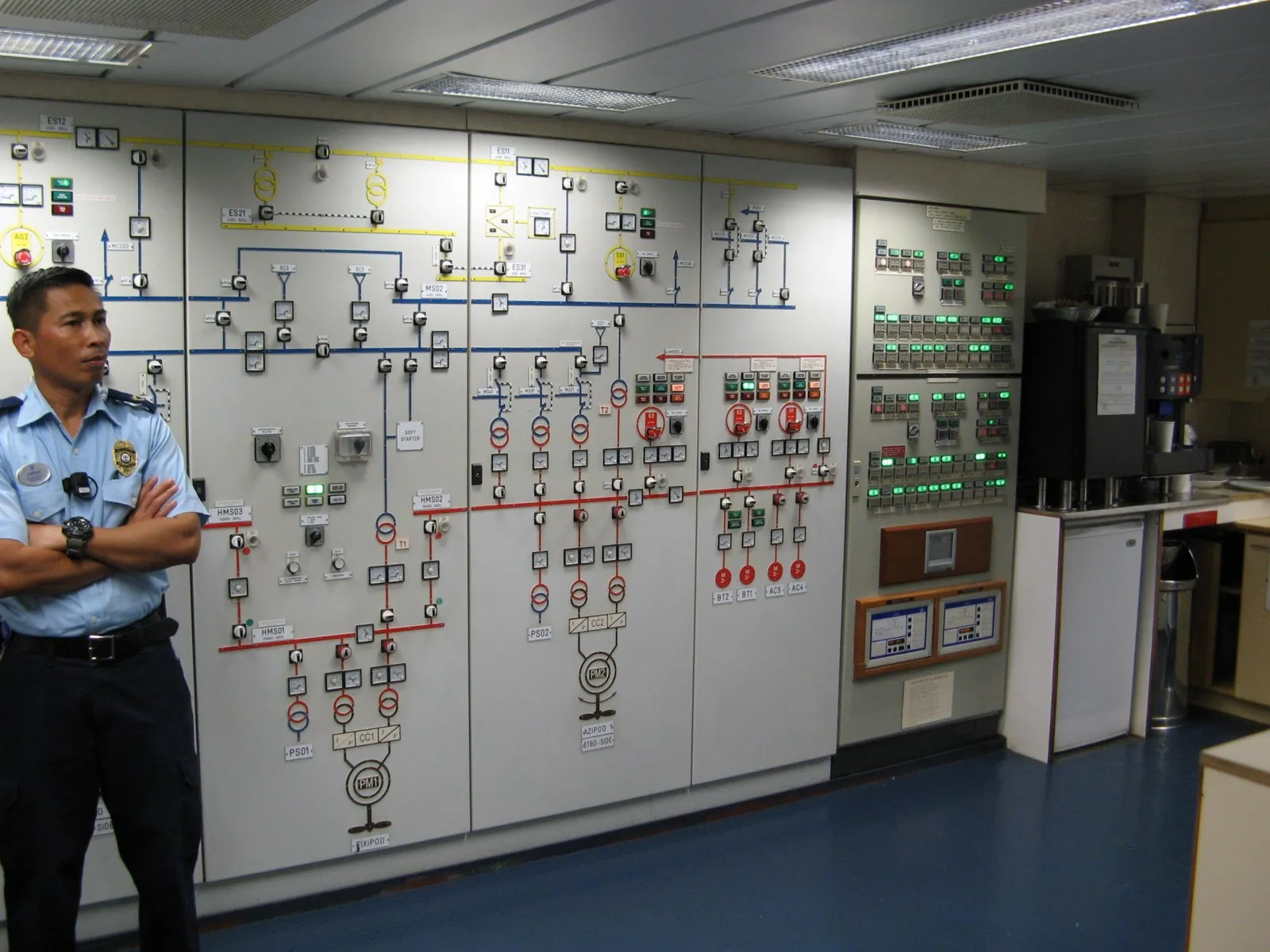
Cover photo: engine control room of the cargo ship Pollux, 2018. Illustrative photo, not one of the hacked ships. Photo: NAC/Wikimedia Commons, CC BY-SA 4.0 (cropped).
Sources: NPR: The U.S. government is investigating Iranian ties to as many as 50 hacked commercial vessels (24 Nov 2026), TechCrunch: Dozens of oil and shipping tankers hacked in recent weeks, per report (24 Nov 2026), US Coast Guard: Maritime Industry Cybersecurity Resource website (cyber alerts, bulletins and incident reporting), Cydome: Maritime Cybersecurity Bulletin, 11 September 2026 (summary of USCG/FBI Maritime Cyber Alert 02-26 on FortiGate devices).
How we choose, write and correct our articles: editorial policy.