The UK Maritime and Coastguard Agency (MCA) now issues Flag State Endorsements (FSEs) as electronic certificates. It has done this since 1 September 2026, says a new MCA notice of 16 November 2026.
An FSE lets an officer with a certificate of competency (CoC) from another country work on a UK-registered ship. This is allowed under Regulation I/10 of the STCW Convention.
From 16 November 2026, the MCA also issues two UK national licences electronically. These are the Boatmasters' Licence (BML) and the Marine Engine Operators Licence (MEOL).
What changes and what stays the same
Electronic certificates have the same legal status, validity and acceptance as paper ones, the MCA says.
Your old FSE, BML or MEOL stays valid until its expiry date. You get the electronic one when you next revalidate or renew.
Old certificates with no expiry date stay valid. You do not need to replace them.
For up to 5 years and 6 months, paper and electronic certificates will both be in use.
The notice only moves FSEs, BMLs and MEOLs to electronic format. UK CoCs have used a photo-card design since January 2021.
If you qualify for more than one capacity, you may get several certificates. Each one has its own certificate number.
How to apply for a UK FSE
You need an STCW CoC from a country that the MCA accepts. Check the list of accepted countries. India, the Philippines, Ukraine, Myanmar and many EU countries are on it.
Use form MSF 4203 for a first FSE, a revalidation or an upgrade. A company can send it for you, but you must sign it yourself.
Email the form and scans of your papers to fse@mcga.gov.uk, and pay the fee.
Send your CoC with all its endorsements, the identity page of your passport or discharge book, and a colour passport-style photo.
Deck officers also send their GMDSS certificate. GMDSS is the radio and distress system used at sea. Send tanker endorsements if you have them.
You also need proof of your English. Officers from some countries, for example India, Myanmar and South Africa, do not need it. The country list shows this.
The MCA aims to deal with an application in 20 working days, about four weeks.
While you wait, your company can ask for a confirmation of receipt of application (CRA). With a CRA you can serve on a UK ship for up to three months.
The MCA issues a CRA within two working days if all papers are correct. In an urgent case, a company can ask for an emergency CRA. It costs £74 and is valid for one month.
Applying for a UK CoC by email
For most UK CoCs, you can apply or revalidate by email. Put the documents in the email or in a zip file.
The MCA does not accept .rar files or links to OneDrive, Google Drive or Dropbox.
If your CoC needs a training record book (TRB), you must post the paper TRB to Seafarer Operations in Southampton. If you used an electronic TRB, say so on the form.
The MCA asks some applicants to post their original documents. Wait for their request before you send originals.
What it means for crews
When you get an electronic certificate, check your name, CoC number and limitations at once. Ask the MCA to correct any mistake.
Save the file in a safe place, for example on your phone and in your email. Ask your company if it needs a copy for the ship's papers.
Before you join a UK-registered ship, ask the company if your FSE or CRA is ready. Without one, you cannot serve as an officer on board.
Do not pay an agent extra money to get an FSE. You apply directly to the MCA by email.
For questions, call MCA Seafarer Operations on +44 333 399 0040. Lines are open 8:30 to 17:00 UK time, Monday to Friday.
UK ratings can read how to apply for an Able Seafarer certificate by email. A recent report explains why paper and PDF certificates slow down crew changes.
Find official certificate checks and help lines on the Crewboard useful links page.
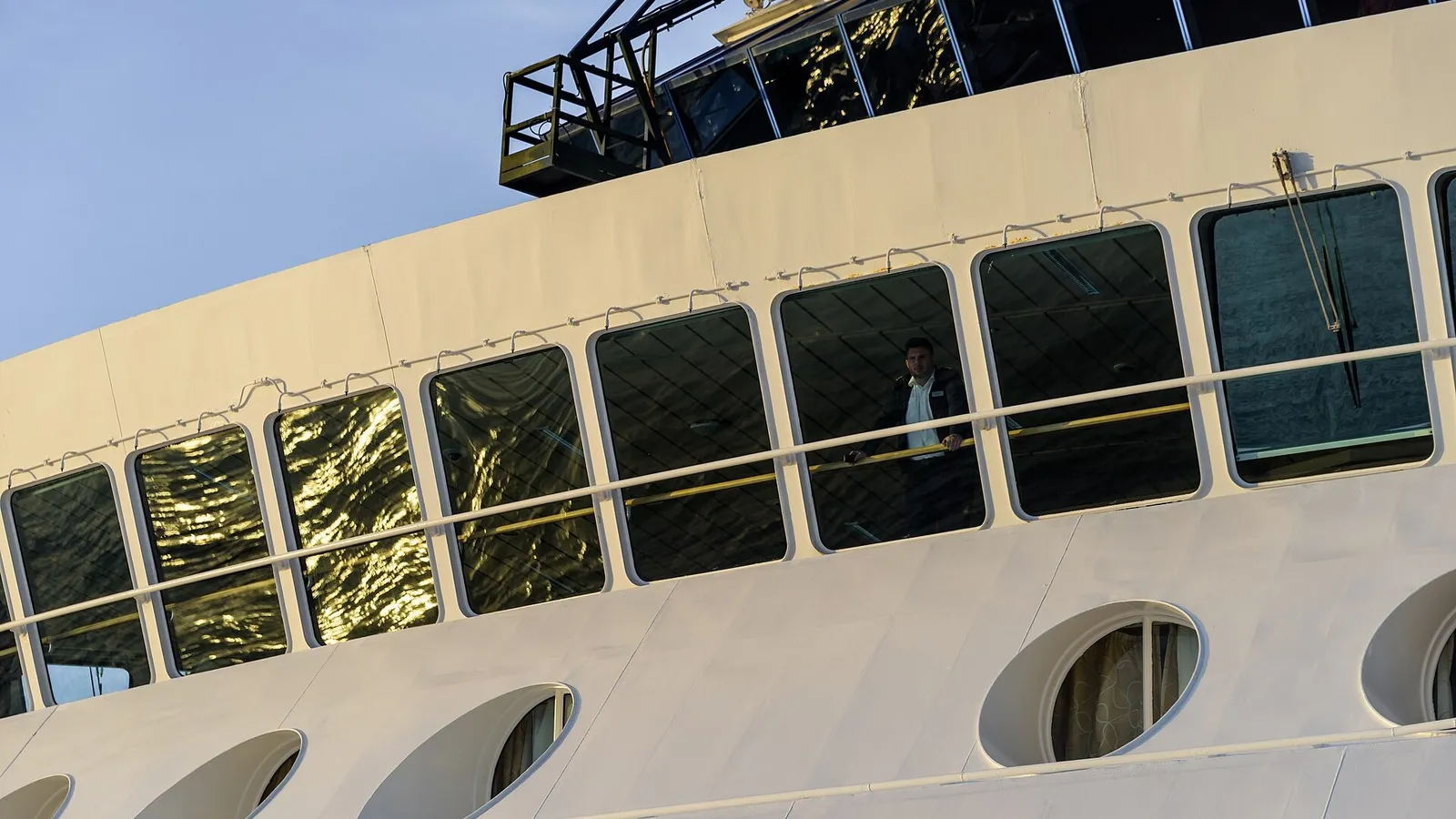
Cover photo: An officer on the bridge of a cruise ship, 2025. Illustrative photo, not linked to this story. Photo: Julian Lupyan/Wikimedia Commons, CC0 (cropped).
How we choose, write and correct our articles: editorial policy.