Three seafarers died from toxic gas in a small empty space at the front of a Chinese cargo ship. One of them was a 19-year-old trainee on his first ship. He went in to help the other two. China's maritime authority has now published its investigation report. It says the crew went in without a permit, a gas test or breathing equipment.
The ship is the container ship Zhong Gu 20. It is 179 metres long, with a gross tonnage of 20,474, and it is registered in Shanghai. It works on the Chinese coast. On 24 April 2026 it was sailing in the Yellow Sea from Rizhao to Xiamen, with 22 crew on board. The accident happened between about 08:03 and 08:33 local time.
The investigation was led by the Shanghai Maritime Safety Administration (MSA), with the Lianyungang MSA. The report is dated October 2026. The Shanghai MSA website published it on 9 November 2026. Splash247 reported on it on 19 November.
What happened
At about 06:47, the chief officer gave the morning work. The bosun, the carpenter and two trainee ratings were to remove rust on deck near the bow.
At about 07:52, the bosun, the carpenter and one trainee left their tools near the anchor windlass. They decided by themselves to look into the No. 1 void space first. A void space is an empty closed space between other tanks or holds. They wanted to see if it still leaked after a repair.
Nobody told the master or the chief officer. There was no risk assessment, no entry permit and no gas test.
The bosun and the carpenter found water inside. They sent the trainee to get a ladder. They also brought a fire hose and the cable of a portable pump to the hatch.
At about 08:07, the trainee came back with the ladder. He called the two men, but they did not answer. He went down to look. He also collapsed and fell on top of the carpenter.
The second trainee came to the bow later and could not find them. He worked alone. At about 10:00 he told the chief officer. At about 10:20 the open hatch was found, with the hose and cable going inside.
The crew ventilated the space with a fan. From 11:04 to 13:27, their gas detector still showed 200 ppm of hydrogen sulphide (H2S). That was the highest number the detector could show, so the real level was higher. Oxygen was normal.
At about 13:14, four crew wearing breathing apparatus went in. They brought the three men out between 13:28 and 15:11 and gave CPR. At about 16:00 the ship confirmed that all three had died. The cause of death was H2S poisoning.
Where the gas came from
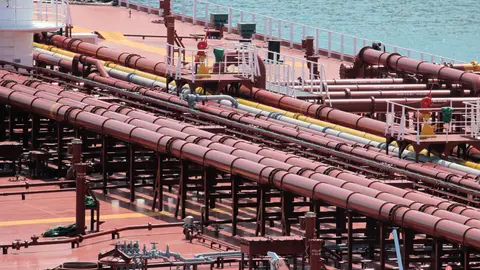
The ship did not carry dangerous cargo. The gas came from the ship's own bilge system. The bilge main is the pipe that collects dirty water from the holds and spaces.
The void space had a small bilge well with a pipe to the bilge main. The chief officer did not know about this pipe.
Two valves between the void space and the bilge main did not close fully. The rubber seals of two other valves near the bilge pump were broken.
The overboard valve, below the waterline, was open. So sea pressure pushed dirty bilge water back through the pipes and into the void space.
The ship often carried coal, fertiliser and grain. Cargo remains go into the bilge water. Bacteria in this water make H2S when there is no air. Warm weather in April, up to 29°C, helped the bacteria grow.
H2S stays in still water. When people walk in the water or move it, and when the ship rolls, the gas comes out fast. The report says the men probably stirred the water.
The highest reading was about twice the level that Chinese rules call immediately dangerous to life or health.
What else went wrong
The void space was on the ship's list of enclosed spaces. Its hatch had a sign: no entry without permission. The company rules said the chief officer must approve entry after a risk assessment, a gas test and a permit.
The rules were not followed on board. On 2 April 2026, crew had already gone into the same void space to pump out water. They did not use the enclosed space procedure and did not report it to the company.
The three men had no portable gas detector and no protective equipment. There was no rescue equipment at the hatch: no tripod, lifeline, breathing apparatus, resuscitator or first aid kit.
Training before joining was weak. The master had only about one hour of training by telephone. The chief officer, the bosun, the carpenter and both trainees did their pre-joining training only by self-study. Chinese guidance says this is not enough.
The report gives the main blame to the bosun and the carpenter, who died. The master and the chief officer have a smaller share of the blame. The investigators propose fines or other penalties for the master, the chief officer and the ship management company. They also propose an extra safety management audit of the company and the ship.
What to do on your ship
Void spaces, cofferdams, chain lockers, bilge wells and sewage tanks are enclosed spaces. They can kill on any ship, also on ships with "clean" cargo.
Never go into an enclosed space without a permit signed by the responsible officer. A "quick look" is also an entry.
Before entry, ventilate the space. Then test the air for oxygen, H2S, flammable gas and carbon monoxide. Test at the top, middle and bottom.
Carry a personal gas detector inside and keep it on all the time.
Keep a standby person at the entrance, with a radio, a lifeline and breathing apparatus ready.
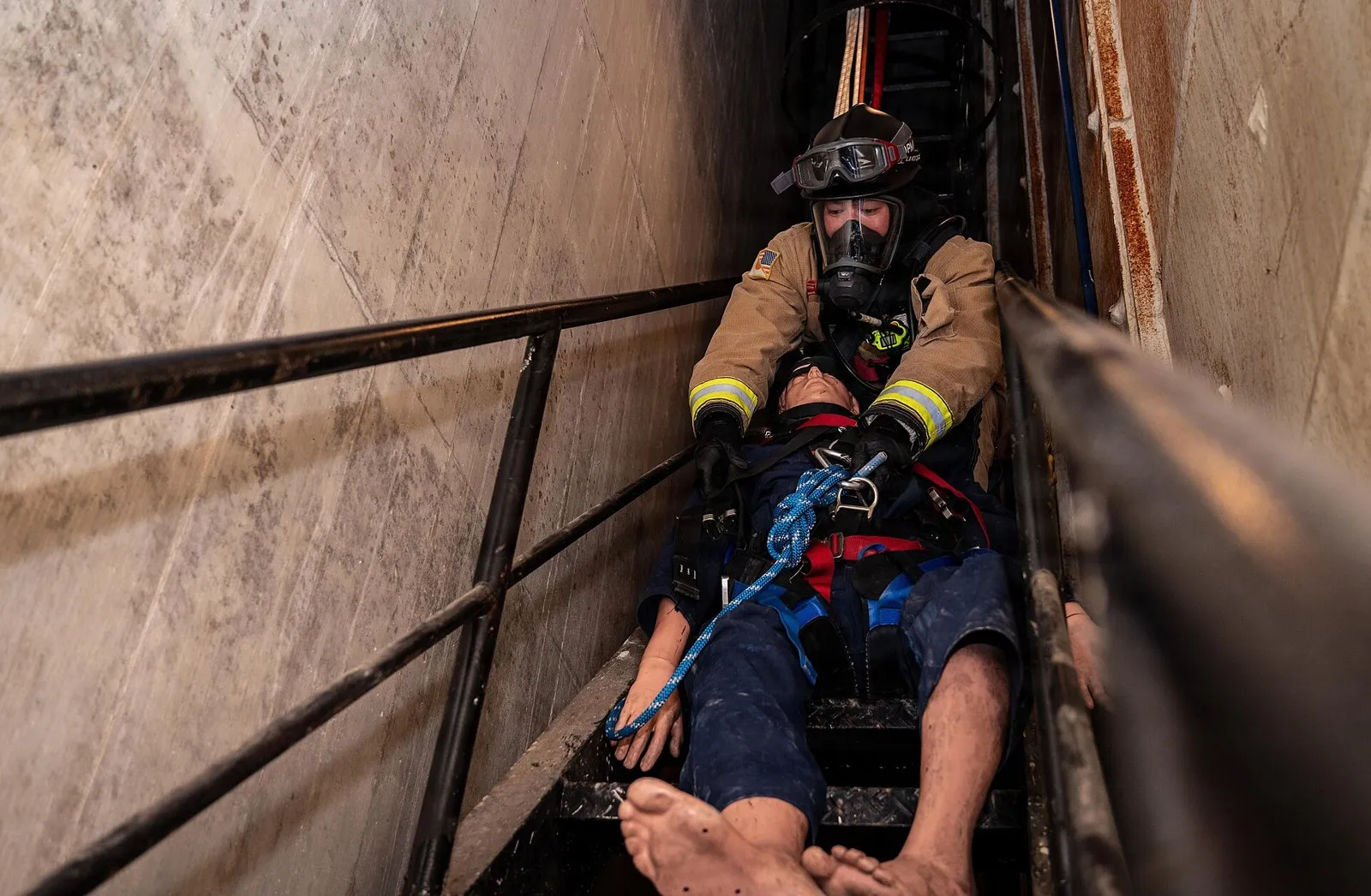
If someone collapses inside, do not go in after them. Raise the alarm and call the bridge. Go in only with breathing apparatus and a rescue team.
Do not trust your nose. H2S smells like rotten eggs, but at high levels you stop smelling it.
If you find water in a void space or cofferdam, think that it may hold gas. Report it. Ask where the water comes from, and check the valves on the bilge and sewage lines.
Take part in the enclosed space entry and rescue drills seriously. Ask for real training before you join, not only papers to read.
Trainees and new crew: you can say no to unsafe work. Ask an officer first.
H2S has also killed seafarers outside enclosed spaces. Read our earlier post on hydrogen sulphide deaths outside enclosed spaces. If you work on deck, see bosun vacancies on Crewboard and AB pay by vessel type.
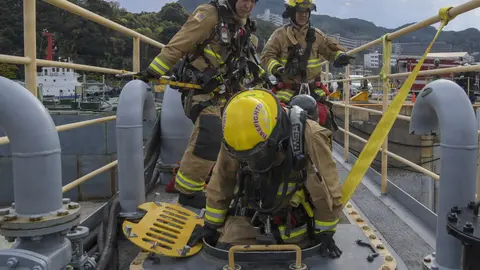
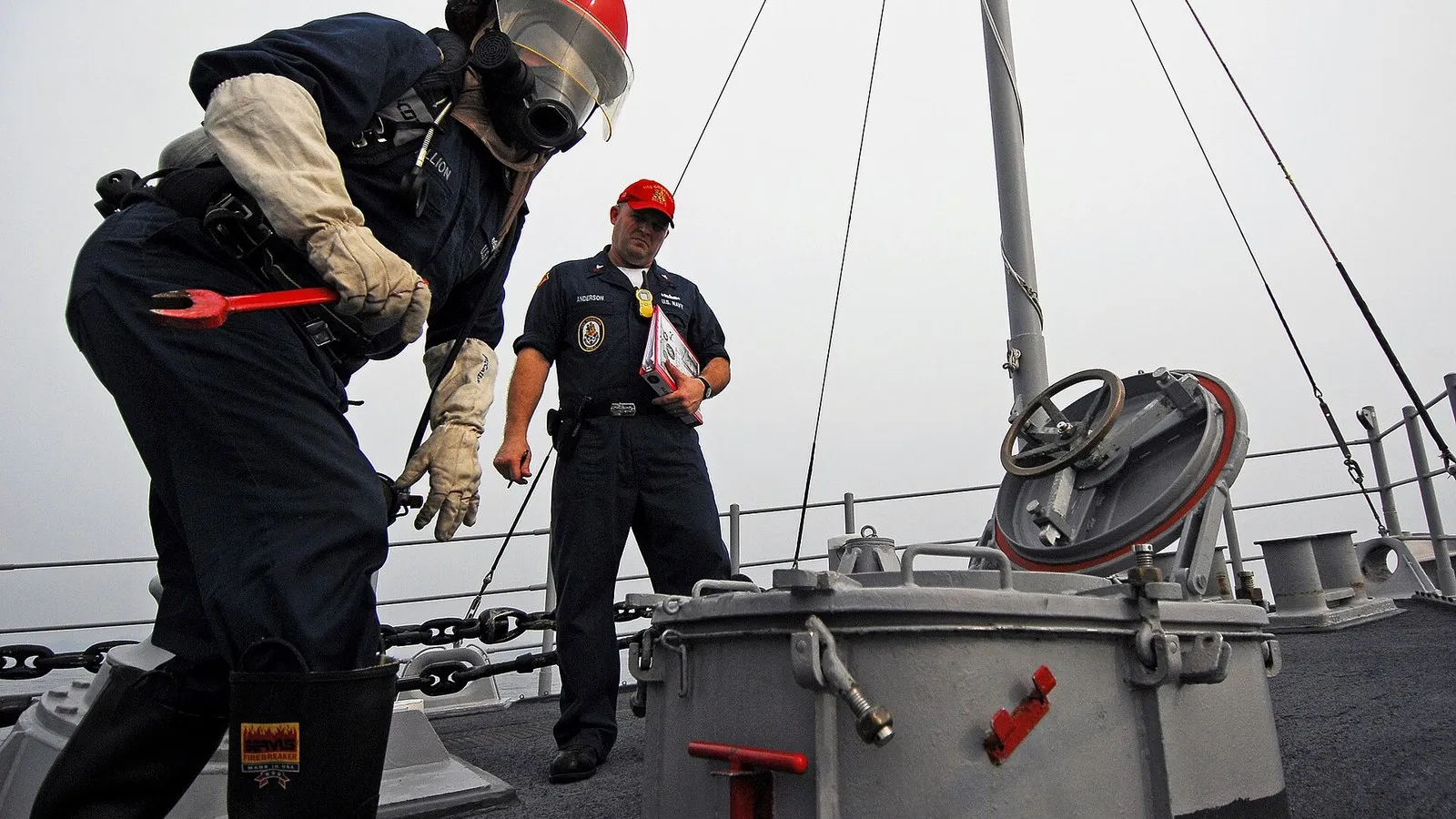
Cover photo: A sailor wearing breathing apparatus gets ready to open a deck scuttle during a fire drill on the US Navy ship USS Guardian, August 2008. Illustrative photo, not from Zhong Gu 20. Photo: Joshua J. Wahl/U.S. Navy via Wikimedia Commons, public domain (cropped).
How we choose, write and correct our articles: editorial policy.