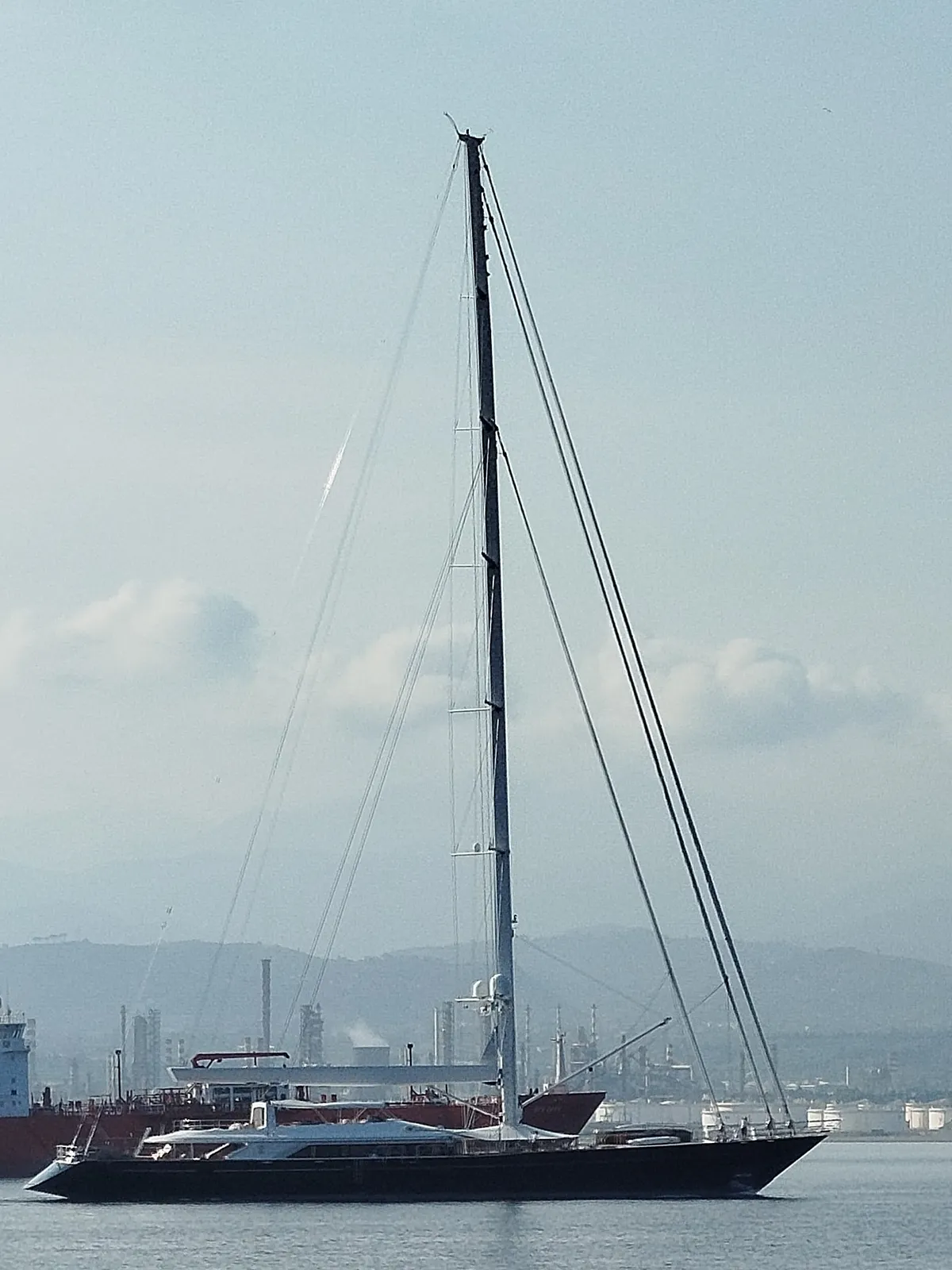
A sudden storm wind pushed the sailing yacht Bayesian onto its side while it was at anchor. It could not come back upright, and it sank. Seven people died. The UK Marine Accident Investigation Branch (MAIB) published its final report on the accident on 19 November 2026. The MAIB is the UK agency that investigates accidents at sea.
Bayesian was a 56-metre private sailing yacht under the UK flag, built in 2008. It was at anchor 0.5 nautical miles south-east of Porticello, in Sicily, Italy. There were 22 people on board. Six guests and one crew member died. The other 15 people survived.
What happened
Thunderstorms were forecast for the night of 18 to 19 August 2024. The forecast did not warn of very strong winds with them.
The master knew strong wind was possible. In his night orders, he asked the watchkeepers to wake him if the wind rose or the anchor started to drag.
The wind was light and the sea calm when people went to bed. At about 03:52 local time, the weather was still calm.
At about 03:57 the wind rose and the yacht started to drag its anchor. The master and the off-duty crew were woken up.
Some crew started to prepare the main engines. Others secured loose items on deck. The coast was about 5 nautical miles away, so they did not see an urgent danger.
At 04:06 a downburst hit the yacht. A downburst is a very strong wind that rushes down from a thunderstorm cloud. The winds reached at least 68 knots. In less than 15 seconds, the yacht was pushed onto its right (starboard) side.
Water came in, and the yacht sank in 50 metres of water about 18 minutes later.
What went wrong
Nobody had checked how the yacht would behave in very strong wind with no sails up. So the crew did not know about this risk. The yacht's stability booklet did not show it.
Because they did not know the risk, the crew did not close all outside doors and deck hatches before the storm. The MAIB says water coming in probably did not decide the outcome until the yacht was already on its side.
The weather forecast was mostly correct. But it did not say how dangerous the thunderstorms could be. The guidance books for mariners also did not give enough detail about downbursts.
The UK training for masters of large sailing yachts did not cover enough about the risk near strong thunderstorms.
Escape and liferafts
Everything happened very fast. People in the cabins below deck had little time. The yacht was on its side, so floors became walls. Things fell, and water came in fast. This made escape very hard.
None of the liferafts released and inflated by themselves. Their hydrostatic release units worked, but the way the liferafts were stowed held them on board. A hydrostatic release unit is a device that frees a liferaft automatically when a ship sinks. One crew member released a liferaft by hand. All 15 survivors got into it.
The crew also switched on the EPIRB by hand. An EPIRB is a distress beacon that sends the ship's position to rescuers by satellite. They gave first aid to injured people. Distress flares were fired. The crew of a nearby sailing ship saw the flares and sent a boat to pick up the survivors.
The drills on board had not prepared the crew for an accident this fast. The survivors' safety depended a lot on the training, experience and quick thinking of individual crew members, the MAIB says.
What the MAIB recommends
The Red Ensign Group, the group of UK and related flag registries, should study this risk and change its Yacht Code.
The UK Maritime and Coastguard Agency (MCA) should add downbursts and severe gusts to the training for yacht masters.
The UK Met Office should ask the World Meteorological Organization to look at how rare but very dangerous weather is shown in forecasts.
The UK Hydrographic Office should improve its guidance on such extreme weather in its books for mariners.
The MAIB also published a safety flyer and a statement. It asks owners, managers and crews of large yachts to check how their vessel reacts to extreme weather. Crews should know the warning signs, and the procedures on board should cover these risks.
What it means for crews
The report is about a large yacht. But many lessons fit any vessel at anchor, in port or at sea.
When thunderstorms are forecast, expect sudden strong gusts, even if the forecast gives no wind speed.
Know your vessel's stability limits in all conditions, also at anchor with no sails or cargo work. Ask to see the stability booklet and what it says about wind.
Close outside doors, hatches and other openings early when a storm is coming. Do not wait until the wind arrives.
Night orders should give clear wind limits. Watchkeepers should call the master early, not late.
Know how to release each liferaft by hand. Check that nothing stops a liferaft from floating free.
Know where the EPIRB is and how to switch it on by hand.
Know your escape route from your cabin. Think about how you would get out in the dark, or if the vessel lies on its side.
In drills, practise sudden events too, not only planned musters.
Stability problems also sank a small fishing boat in Alaska. Read our lessons from the Wind Walker report. If you look for a command job, see Master vacancies on Crewboard and ask about the vessel's stability information before you sign. For help lines and safety contacts, see our useful links for seafarers.
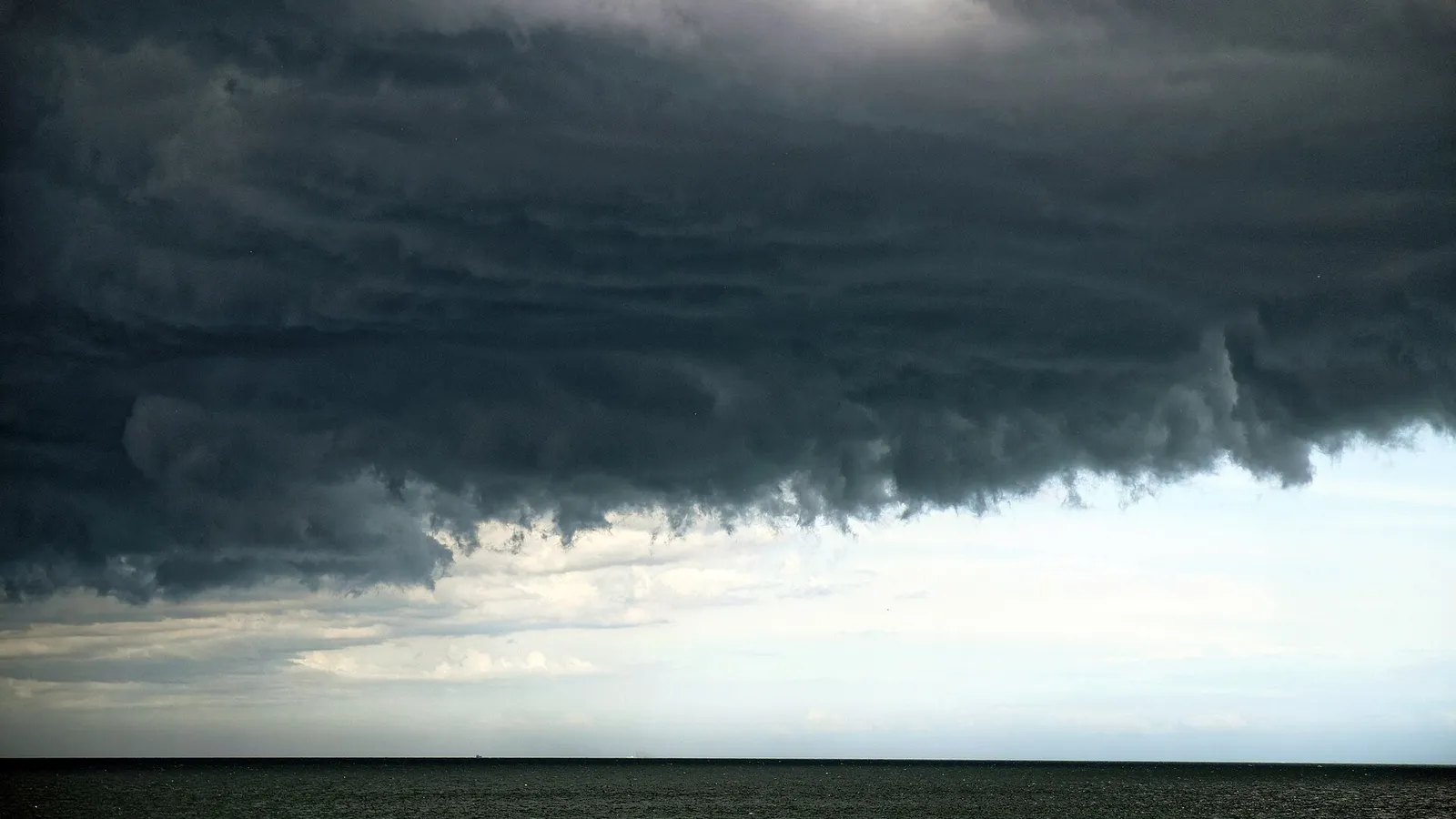
Cover photo: A dark storm cloud front moves over the sea at Viking Bay, Broadstairs, England. Illustrative photo, not from the Bayesian accident. Photo: Acabashi via Wikimedia Commons, CC BY-SA 4.0 (cropped).
How we choose, write and correct our articles: editorial policy.