All seven crew of a South Korean fishing boat are safe after their boat started to flood far out at sea. It happened on the morning of Monday, 9 November 2026.
The water came in through a broken cooling water pipe of the boat's generator, the news agency Newsis reports. The generator makes electricity on board.
What happened
The boat is a 32-tonne longline fishing boat from Jeju island. Longline boats catch fish with long lines that carry many hooks. It left Jeju on 7 November.
At about 07:12 local time, the boat reported flooding. It was about 49 nautical miles (about 90 km) south of Yokjido island, near Tongyeong.
The Tongyeong Coast Guard got the report from the Jeju fishing boat safety centre. It sent a patrol ship. It also asked fishing boats and ships nearby to help.
A fisheries patrol ship of the Ministry of Oceans and Fisheries arrived first. It checked that the crew were safe. The crew used the boat's own pumps to pump the water out.
The flooding did not get worse, the news agency Yonhap reports. The sea was rough, with a strong north-east wind and waves of 2 to 2.5 metres.
The Coast Guard patrol ship arrived at about 09:33. Rescuers went over to the fishing boat in a fast boat. Nobody was hurt.
The rescuers made a quick repair of the broken pipe and checked the main engine. After that, the generator and the engine worked normally.
The boat then sailed on its own to Geomundo island, near Yeosu. The Coast Guard stayed close to it until it reached port.
"When an accident happens far out at sea, the first response matters most," said Ok Hyun-jin, head of the Tongyeong Coast Guard. He asked crews to check the engine and other key equipment carefully before they sail.
Engine room problems are a common cause of trouble on small fishing boats. On 5 November, eight crew were rescued after an engine room fire on a fishing boat off Gunsan.
What crews can do to stop flooding from pipes
A broken sea water or cooling pipe can sink a small boat fast. Quick action by the crew usually decides how it ends.
Before each trip, check cooling water pipes, hoses, clamps and sea valves in the engine room. Replace pipes that are rusty, thin or leaking.
Know where every sea valve is. Make sure each one opens and closes easily. If a pipe breaks, close its sea valve first.
Test the bilge pumps and the bilge alarm before you sail. A bilge alarm warns you when water collects at the bottom of the boat.
Carry spare hoses, clamps, wooden plugs and repair tape on board. Everyone in the engine room should know where they are.
Check the engine room often during the trip, also at night. Look for water, leaks and strange noises.
If water comes in, report it at once. Call the coast guard on VHF channel 16 or press the distress button on the boat's radio or tracking device.
Put on lifejackets while you fight the flooding. Know your country's emergency numbers. Many are on Crewboard's useful links page.
On the same day, two fishermen off Tongyeong survived because the captain pressed the SOS button before the boat turned over.
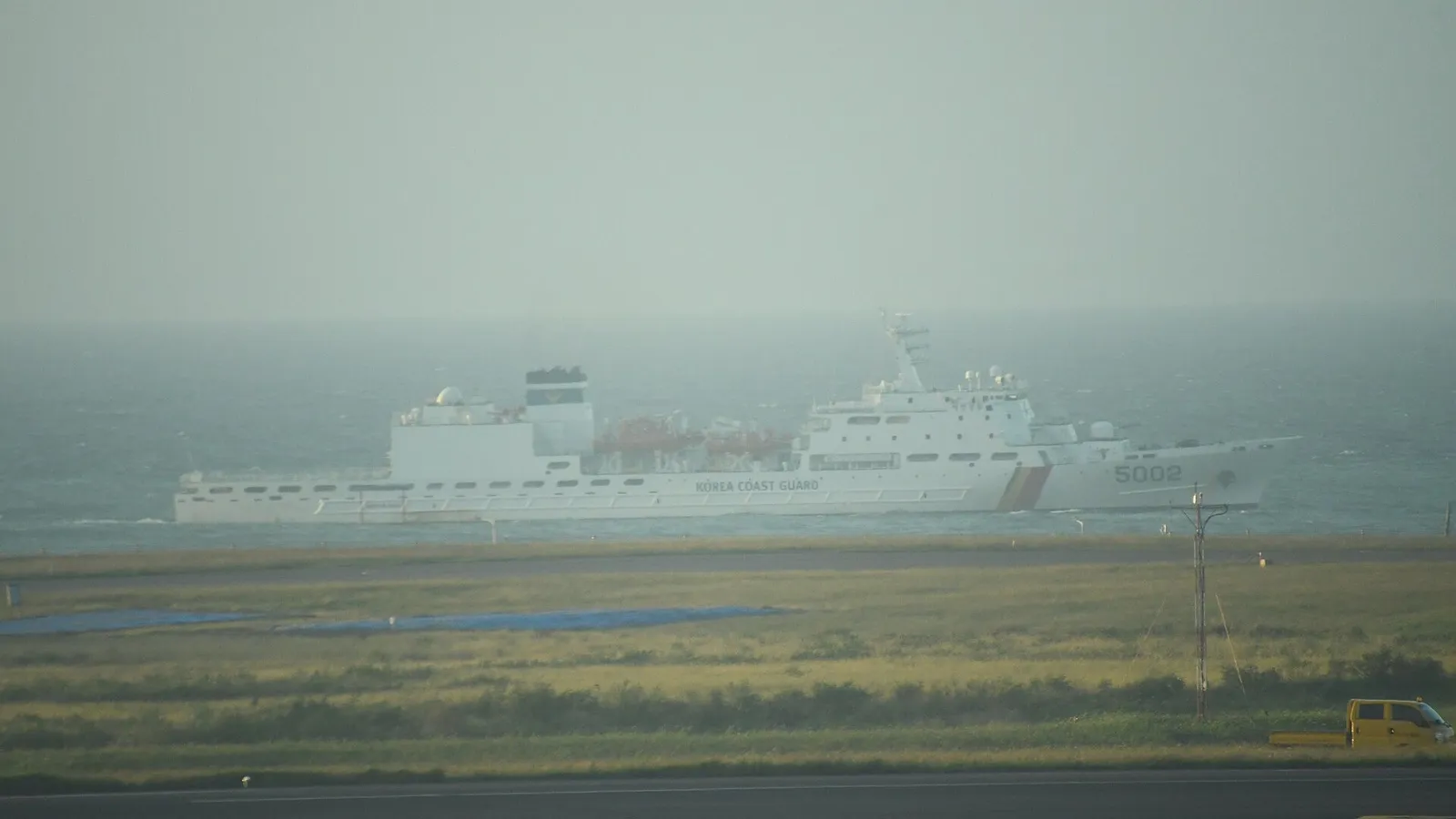
Cover photo: The Korea Coast Guard rescue ship Lee Cheong Ho (5002) off Jeju, 6 October 2018. Illustrative photo, not a ship in this story. Photo: Hunini/Wikimedia Commons, CC BY-SA 4.0 (cropped).
Sources: Newsis: 32-tonne fishing boat flooded south of Yokjido, Tongyeong, no casualties (9 Nov 2026, in Korean), Yonhap: Flooding reported on fishing boat with seven on board off Yokjido, no casualties (9 Nov 2026, in Korean).
How we choose, write and correct our articles: editorial policy.