The UK Marine Accident Investigation Branch (MAIB) has published its report on the loss of the fishing vessel Argos Georgia. The ship sank on 22 July 2024 in the South Atlantic. This was about 190 nautical miles east of Port Stanley in the Falkland Islands. Of the 27 people on board, 13 died. The report was published on 25 September 2026.
Argos Georgia was a 54-metre longline fishing vessel, built in 2018 and registered in St Helena. She was going from Port Stanley to fishing grounds near South Georgia. On board were 25 crew and 2 fishery observers from Indonesia, Peru, Russia, Spain and Uruguay. The MAIB investigated for the St Helena government.
What happened
At about 13:00, a hatch in the starboard side opened by itself. This hatch is where the fishing line comes on board. The weather was very bad: wind of 40 to 75 knots, waves of 7 to 10 metres and a sea temperature of 3.5°C. Sea water poured into the line hauling room.
The crew could not close the hatch. Its manual locking bolts had probably not been put in before the ship left port. Its drive mechanism probably also failed. A door from the room was open and hooked back. Two sliding watertight doors did not close, probably because water caused short circuits in their controls. Flood water stopped the crew from reaching the manual controls.
Water spread to more spaces, and the ship leaned more and more to starboard. At about 15:51 the engine stopped. From about 16:00 the crew abandoned ship into two liferafts. The ship sank at about 19:00. By the next morning, other ships had picked up 14 survivors and 9 dead. Four crew are still missing.
Why so many people died
The distress alert came late. The ship had full GMDSS radio equipment and trained operators. GMDSS is the Global Maritime Distress and Safety System. It sends a distress alert by radio or satellite to rescue centres and nearby ships. But no formal alert was sent from the ship in the first hours. Instead, the crew used phone calls and WhatsApp messages to nearby fishing vessels and to the company.
The situation was clearly treated as a distress only at 15:29. That was about 1 hour 45 minutes after the first signs that the ship could sink. By then the ship had a heavy list, and the captain could no longer safely reach the radio station. Another company ship sent a "Mayday Relay" for Argos Georgia at 15:52. The MAIB says the delay made it less likely that rescuers would arrive in daylight.
The crew had not practised for this. There were no procedures or drills for fast flooding. The ship had a monthly drill plan. But on 12 June 2024 only a muster drill took place; the other drills were put off because of the weather.
Abandoning ship came late and was hard. The ship was leaning 60 to 70 degrees. To reach a liferaft, crew usually had to go into the water first. One liferaft was damaged against the ship. The other drifted away once people were inside. Everyone who got into and stayed in the good liferaft survived. Of the six people in the damaged liferaft, only one survived.
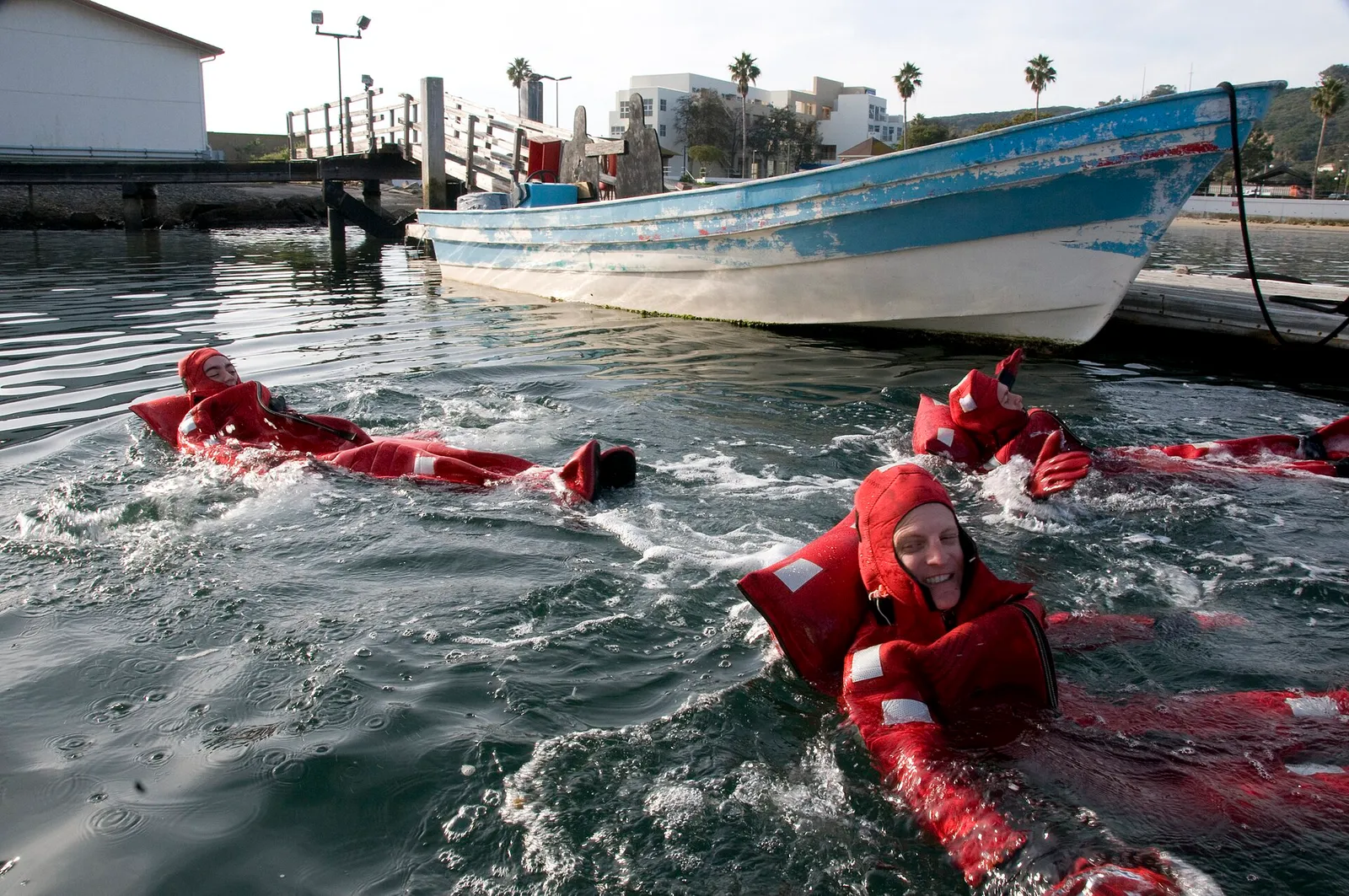
Immersion suits help, but only for a short time. All nine dead who were found wore immersion suits. Eight were found face down in the water and had drowned. Survivors said nobody checked each other's suits before going into the water, and some had trouble closing the zip. In MAIB pool tests, small gaps at the face, zip or wrists let in a lot of water. A computer model showed that, in those conditions, people in soaked suits could survive about 3 hours at most.
Rob Loder is the UK Chief Inspector of Marine Accidents. He said that fishing in remote and hostile waters needs strict care to keep a vessel watertight. He said a quick, clear emergency plan, training and drills give the best chance of survival.
What the investigators want changed
The UK Maritime and Coastguard Agency (MCA) should change its code for fishing vessels of 24 metres and over. Doors in the ship's side should have automatic locks that keep them closed.
The ship manager, Argos Froyanes Limited, should bring in a written safety management system for all its fishing vessels.
The Falkland Islands government should improve its rescue radio links, so it can speak directly with ships in distress in its area.
For more lessons from a recent report, read our post on the bosun who died rigging a pilot ladder on World Prize.
What it means for crews
Most of these lessons apply on any ship, not only on fishing vessels.
Before you leave port, check that every hatch and door in the ship's side is closed and locked, including the manual bolts. Keep weathertight and watertight doors closed at sea unless you are passing through.
If water is coming in and you cannot stop it quickly, send the distress alert early. Use the DSC distress button on the VHF or MF/HF radio, or the satellite alert. DSC is digital selective calling, a button that sends your position to all ships and rescue centres. You can cancel a false alert later. You cannot get back lost time.
Phone calls, WhatsApp and company messages are not a distress alert. They do not reach the rescue centre or the ships near you.
Ask for flooding and damage control drills, not only muster drills. If a drill is put off because of weather, make sure it is done soon after.
When you put on an immersion suit, ask a crewmate to check yours. The zip must be fully closed and the face seal tight. Then check theirs.
Try to board the liferaft without going into the water. Once inside, stay inside and hold on. In cold water you have only a short time.
Know where the EPIRB is and how to take it with you. An EPIRB is an emergency beacon that sends your position to rescuers by satellite.
Find official maritime helplines and safety contacts on our useful links page. If you work on fishing vessels, see the Deck Hand vacancies on Crewboard.
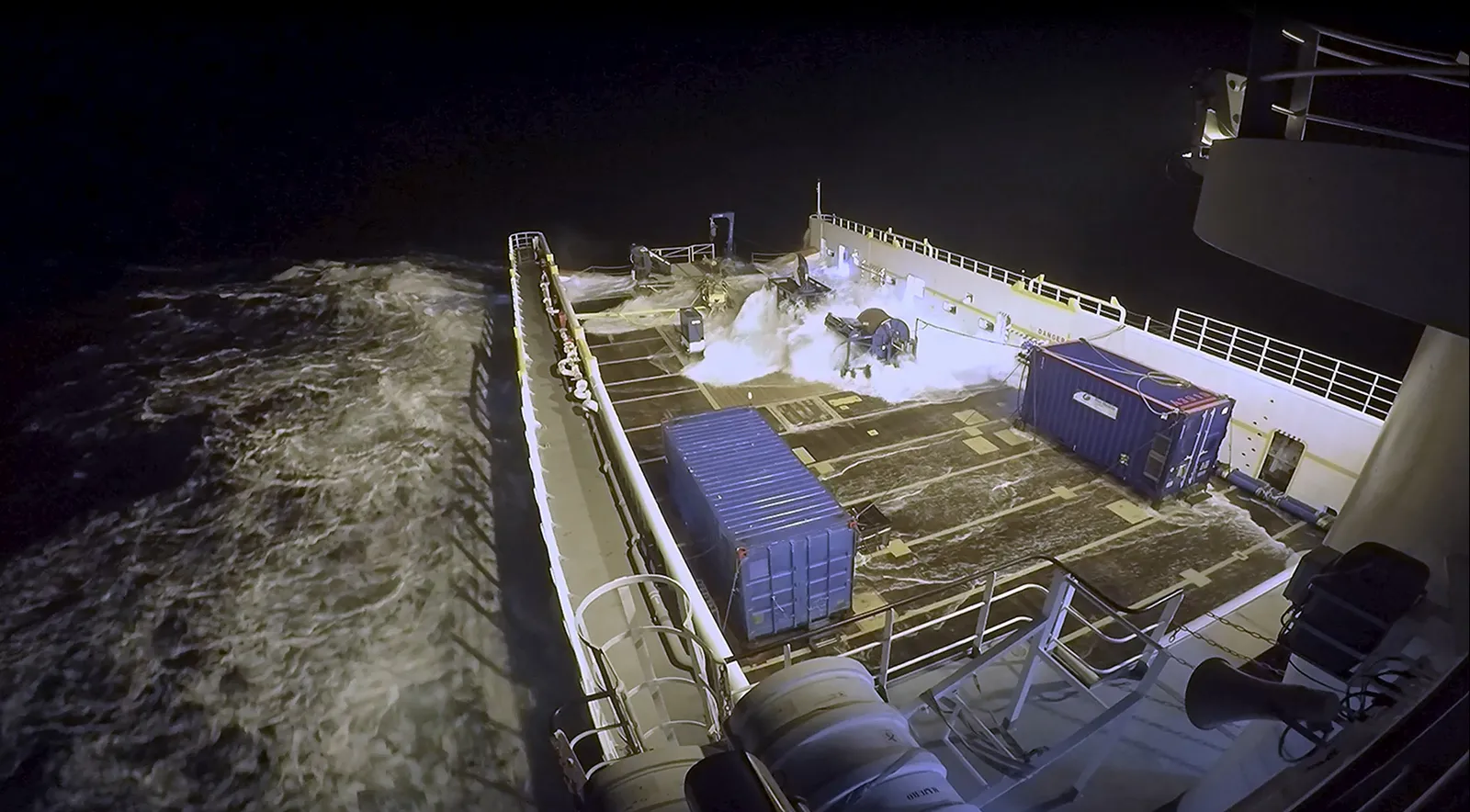
Cover photo: heavy seas wash over the deck of the survey ship GO Phoenix in the southern Indian Ocean, June 2015. Illustrative photo, not from Argos Georgia. Photo: Rayn Galloway, Joshua Philips/Australian Transport Safety Bureau via Wikimedia Commons, CC BY 4.0.
Sources: MAIB: Foundering of the fishing vessel Argos Georgia with the loss of 13 lives, report 19/2026 (25 September 2026), MAIB investigation report 19/2026, full report and annexes (PDF), GOV.UK: Argos Georgia report and safety flyer published (25 September 2026), gCaptain: Hatch failure triggered deadly fishing vessel sinking that killed 13, MAIB finds.
How we choose, write and correct our articles: editorial policy.