In the United States, a ship pilot now faces a criminal charge after a deadly collision. A pilot is a local expert who comes on board to guide a ship through a port or channel. Investigators say he was on a long personal phone call just before the crash.
The bridge team of the ship could hear the call. Nobody asked him to stop. The case is a lesson for every officer and rating who keeps a watch with a pilot on board.
What happened
On 19 July 2024, the bulk carrier Yangze 7 was going up the Houston Ship Channel in Texas, near Lynchburg. A Houston pilot was directing the ship.
The small towing vessel Miss Peggy was going the same way, ahead of the bulk carrier. It had five crew on board.
The bulk carrier hit the towboat from behind. The Miss Peggy turned over and sank.
Another boat pulled four crew members out of the water. The fifth, deckhand Aquarius Lowman, 25, was later found dead in the wreck.
One survivor was seriously hurt. Oil leaked into the channel. Damage and clean-up cost about 3.7 million dollars.
What the investigators found
The US National Transportation Safety Board (NTSB) published its report in August 2026. It found these main points:
The pilot was on a personal phone call with another pilot for 39 minutes. The call ended only 2 minutes and 16 seconds before the collision.
He gave helm and engine orders while still on the phone. The second officer and the helmsman repeated his orders, but he went back to his call and did not confirm them.
Because of the call, the pilot did not keep a proper lookout. He did not see the towboat ahead.
The ship's bridge team also did not keep a proper lookout. They saw the towboat only when it was less than one ship's length ahead.
The bridge team could hear the call. At least one of them knew it was not about work. Nobody raised a concern. The master's own standing orders banned phones on the bridge.
The captain of the towboat did not see the big ship coming from behind.
The local pilots' group had no written rule against personal phone use while guiding a ship.
The NTSB says that if the bridge team had spoken up, the pilot might have ended the call. It calls their silence a failure of bridge resource management. This means using all people and equipment on the bridge as one team. Phones and other personal devices played a part in at least 10 accidents between 2009 and 2024, the NTSB says.
The criminal charge
On 10 November 2026, a federal grand jury in Houston charged the pilot, Darris Ornel Jefferson, 39. The charge is "misconduct or neglect of ship officers". It is often called seaman's manslaughter. It is used when the mistakes of an officer or other person on duty cause a death, KPRC 2 Houston reports.
If he is found guilty, he could get up to 10 years in prison and a fine of up to 250,000 dollars. US officials say it is the first case of this kind against a ship pilot, gCaptain reports. The charge is not proven. He is innocent unless a court finds him guilty. His first court hearing is due in late November.
What it means for crews
A pilot gives advice and orders, but the master stays responsible for the ship. The bridge team must keep working as a team when a pilot is on board. These steps can help.
Keep your own lookout, by eye and by radar, even when the pilot has the con. Do not leave the watch to the pilot alone.
Speak up early if the pilot is busy with a phone, does not answer your readbacks, or seems to miss traffic. Say it politely and clearly.
If the pilot does not react, tell the master at once. The master can ask the pilot to stop the call or can take back control.
Report any other vessel close ahead or behind, even a small towboat or fishing boat. Small craft are easy to miss in a busy channel.
Follow the master's standing orders about phones. They apply to everyone on the bridge, and the master should brief the pilot about them.
Use the master–pilot exchange at the start. Agree the plan, the speed and how you will tell each other about dangers.
Write down what happened in the logbook if a pilot does something unsafe. Tell your company, so it can report it.
Read more about why crews are afraid to speak up and how this makes ships less safe. There are also lessons on bridge watches from a deadly collision in Türkiye. You can also see open jobs for 2nd officers on Crewboard.
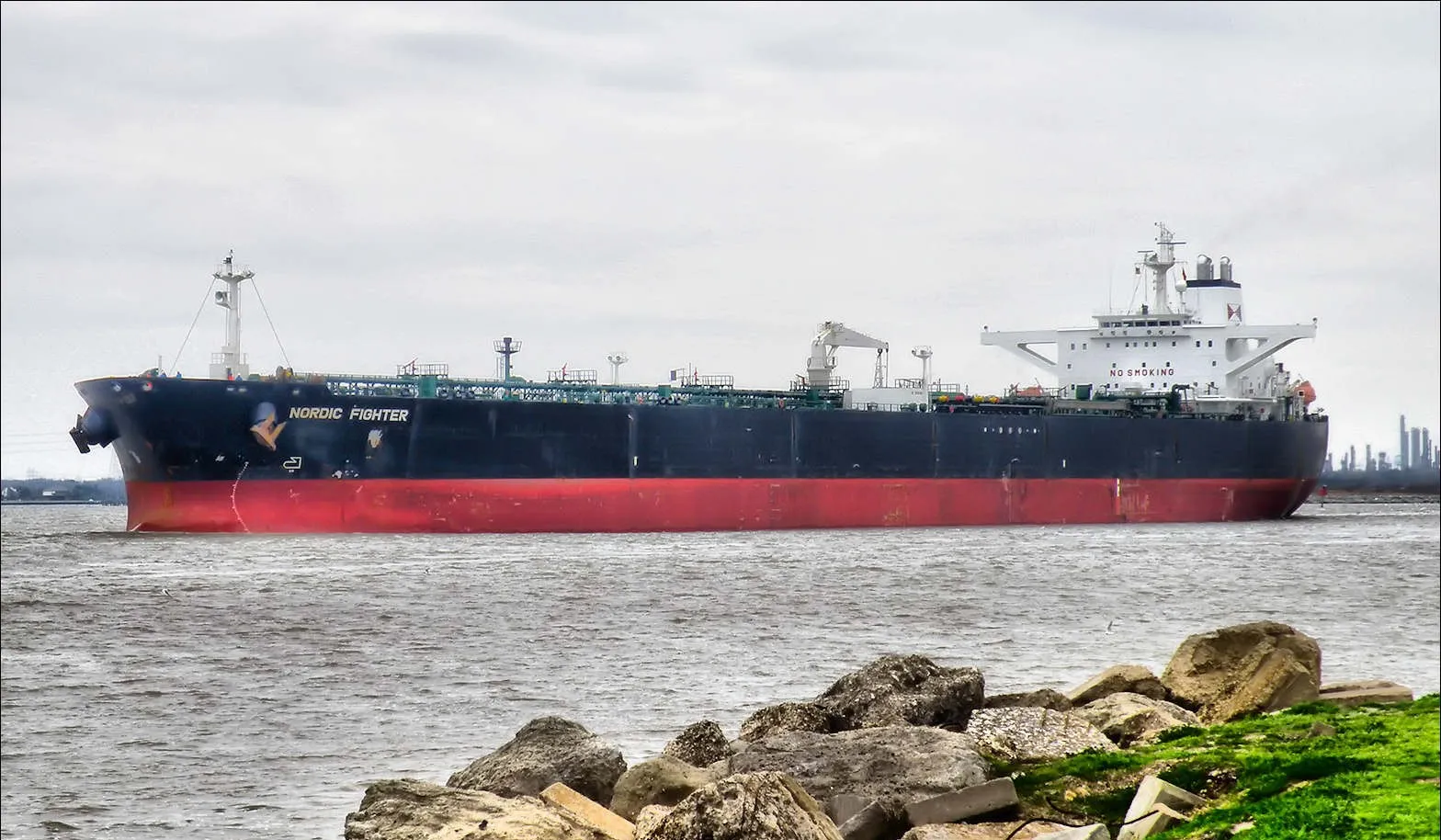
Cover photo: The tanker Nordic Fighter passes the Lynchburg Ferry landing on the Houston Ship Channel, near where the collision happened, February 2010. Illustrative photo, not a ship in this story. Photo: Michael Martin/Wikimedia Commons, CC BY-SA 2.0 (cropped).
Sources: NTSB Marine Investigation Report: Collision between bulk carrier Yangze 7 and towing vessel Miss Peggy (August 2026), NTSB press release: Cellphone use and lack of proper lookout leads to fatal vessel collision in Texas (6 Aug 2026), NTSB investigation page DCA24FM051, gCaptain: Houston ship pilot faces historic manslaughter charge after fatal collision (18 Nov 2026), KPRC 2 Houston: Ship pilot indicted in deadly 2024 Houston Ship Channel collision (17 Nov 2026), FreightWaves: Ship pilot indicted after fatal Houston collision linked to cellphone distraction (Nov 2026).
How we choose, write and correct our articles: editorial policy.