Large lithium-ion battery units broke loose in the holds of the cargo ship Genius Star XI in heavy weather. Three of them caught fire, in two holds, on 25 and 28 December 2023. The ship was in the North Pacific, on the way from Vietnam to Long Beach, California. No one was hurt.
The US National Transportation Safety Board (NTSB) found that the hooks on the lashing belts did not fit the D-rings on deck. A D-ring is a strong metal ring, welded to the deck, for lashing cargo. The NTSB report is dated 2 December 2025. The Nautical Institute shared its lessons with crews again on 30 October 2026, in its Mariners' Alerting and Reporting Scheme (MARS).
The ship and the cargo
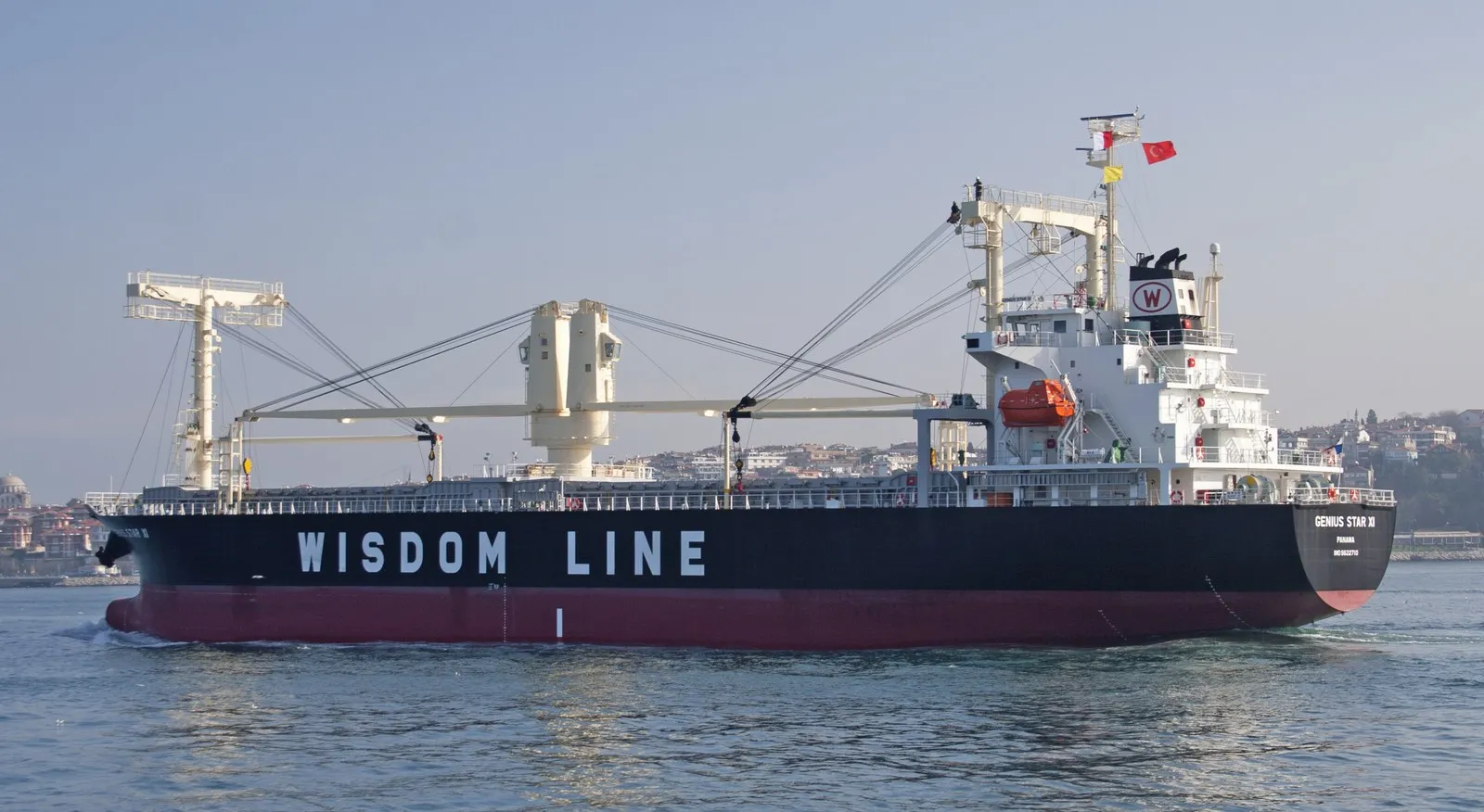
Genius Star XI is a 125-metre bulk cargo ship flagged in Panama, built in 2012. She had 19 people on board. Wisdom Marine of Taiwan operated her, and the Danish company Norden had chartered her.
In Hai Phong, Vietnam, the ship loaded 192 battery energy storage system (BESS) units. A BESS unit is a large metal cabinet full of battery packs, made to store power for an electricity grid on land. Each unit weighed about 9.5 tonnes. Most units stood on the tween decks, the upper decks inside the two holds.
Each unit was held by four polyester lashing belts with a steel hook at each end. The battery maker asked for belts instead of chains or wires, so the units would not get scratched. The approved lashing plan gave the strength of the belts and D-rings. It said nothing about whether the hooks and rings fitted each other.
What happened
On 24 December the ship met a gale near the Bering Sea. Waves were about 6 metres high, and sea water washed over the hatches. The crew had last checked the lashings that morning, before the weather got worse.
On 25 December the master changed course so the crew could safely check the cargo. They found that units in one hold had moved. At the same time, the chief officer saw black smoke in the other hold. The master made sure the hold was empty and its ventilation was closed. Then he ordered the fixed carbon dioxide (CO2) fire system to be released into it.
The fire went out. But the ship had only enough CO2 for one hold. The crew lashed the loose units again with chain falls from the ship's stores. The ship then headed for Dutch Harbor, Alaska.
On 28 December, again in heavy weather, the fire alarm went off for the second hold. Smoke came out of its vents. With no CO2 left, the master changed course to reduce the rolling. The crew cooled the outside of the hold with fire hoses for about 4 hours. They checked the heat with an infrared thermometer. The ship anchored off Dutch Harbor on 29 December, and the fire was found to be out. The damage was about 3.8 million US dollars.
What went wrong
Investigators found that 41 of the 160 units on the tween decks had broken loose. The D-rings were too thick for the throat of the hooks. So only the tip of each hook held the ring. The load sat on the bend of the hook, and the hooks broke as the ship rolled.
When one hook broke, the other three on the unit took more load. More hooks broke, and some welded D-ring brackets tore off the deck. The loose units then hit each other and the ship.
Inside the moving units, shelves bent and fell. Battery packs hit metal parts and short-circuited. This started thermal runaway in three units. Thermal runaway is when a damaged battery cell heats up by itself, and the heat spreads to the next cells. Such fires are very hard to put out with the equipment on a cargo ship.
The NTSB said the crew's response was right. The crew used the CO2 for the first fire. For the second, they closed the ventilation and cooled the hold. The NTSB said this likely stopped the fires from spreading. The crew, the stevedores and the cargo surveyor had all checked the lashings. None of them saw that the hooks did not fit.
This is another case where cargo or heavy gear moved as a ship rolled. Read also the Singapore report on a second engineer killed by falling crane gear on a rolling bulk carrier.
What it means for crews
These points come from the NTSB report and the Nautical Institute's lessons.
Do not only check the numbers in the lashing plan. Look at each fitting. A hook must sit fully inside the D-ring, shackle or lashing point, not just on its tip.
If a hook does not seat fully, it will not hold its rated load. Stop and report it to the chief officer before departure. Ask for the right hooks, shackles or chain falls.
Inspect the lashings during loading, after loading and every day at sea. Check again before heavy weather is expected, and after it, when it is safe to go on deck.
Battery units that have moved can be damaged inside, even when the outside looks fine. Watch them closely for heat and smoke for the rest of the voyage.
Know how much fixed CO2 your ship has. If it is enough for only one hold, plan with the master what you will do if a second fire starts.
Before releasing CO2, count everyone and make sure the space is empty and its vents are closed. Then cool the hold boundaries with hoses and check temperatures often.
On this ship, the chief officer had to review the lashing plan. See Chief Officer salaries on Crewboard, and find official safety contacts in Crewboard's useful links for seafarers.
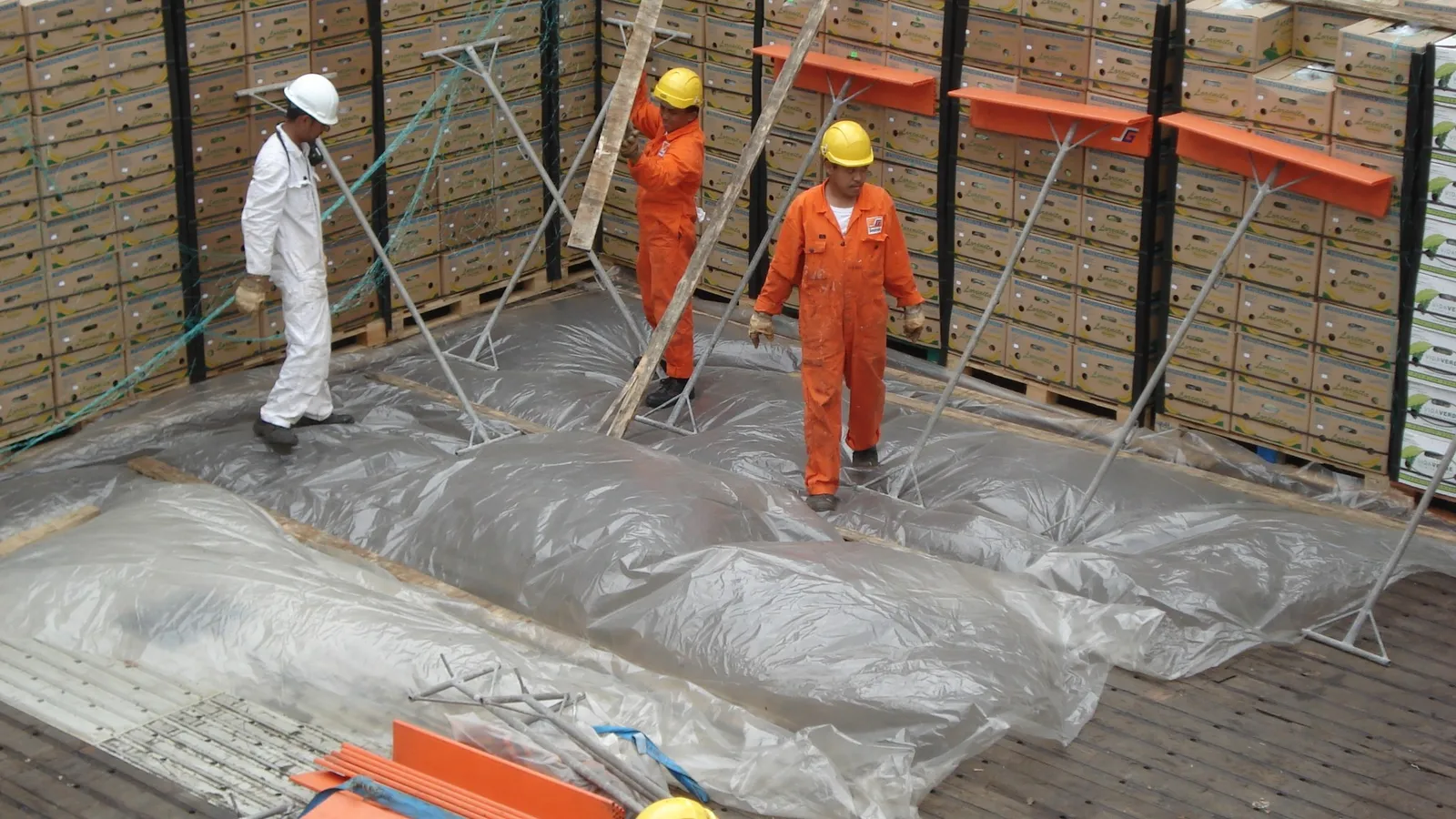
Cover photo: Crew secure cargo between stacks of boxes in a ship's hold, 2007. Illustrative photo, not the Genius Star XI. Photo: Andrea Guerra/Wikimedia Commons, CC BY-SA 2.0 (cropped).
Sources: NTSB Marine Investigation Report MIR-25-41: Lithium-ion Battery Fires aboard Cargo Vessel Genius Star XI (2 Dec 2025), NTSB investigation page DCA24FM013: Genius Star XI, The Nautical Institute, MARS 202635: Have you looked at your lashing hook? (30 Oct 2026).
How we choose, write and correct our articles: editorial policy.